
Realizing children’s rights in Cyprus
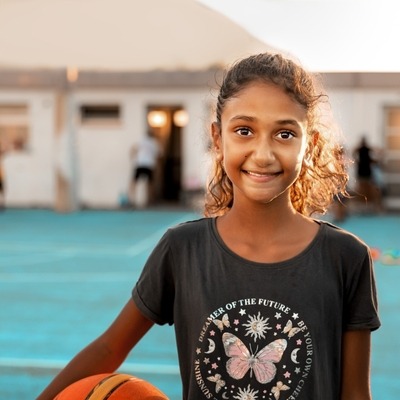
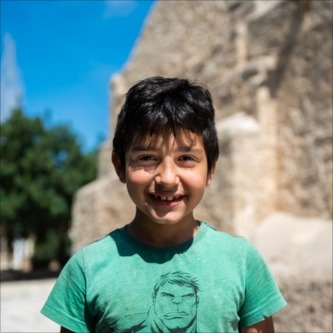
Cyprus has made progress in protecting children’s rights through the ratification of international treaties and national reforms in healthcare, education, and child protection. However, unequal access to services, limited support for unaccompanied minors, and rising concerns around child labor, identity documentation, and adolescent substance use highlight the need for more inclusive policies and consistent implementation across all sectors.
Population: 1.3 million
Pop. ages 0-14: 16%
Life expectancy: 81.9 years
Under-5 mortality rate: 3.5 ‰
Cyprus at a glance
The Republic of Cyprus is an island nation in the eastern Mediterranean Sea, known for its rich history and diverse culture. Its capital and largest city is Nicosia. Geographically, Cyprus is situated south of Turkey, west of Syria and Lebanon, northwest of Israel, north of Egypt, and southeast of Greece. The official languages are Greek and Turkish, reflecting the island’s primary ethnic communities (Hadjicostis, 2025).
Cyprus gained independence from British colonial rule in 1960, establishing a constitutional republic. However, intercommunal tensions between Greek Cypriots and Turkish Cypriots escalated, leading to significant conflicts. In 1974, a coup d’état by Greek Cypriot nationalists aiming for union with Greece prompted a military intervention by Turkey (Hadjicostis, 2025). Since the 1974 division, Cyprus has actively sought reunification through various negotiations, most notably the 2004 Annan Plan. While Turkish Cypriots accepted the plan, Greek Cypriots rejected it, resulting in the Republic of Cyprus joining the EU that same year (Bowman & Hunt, 2025).
Nowadays, the island remains divided, with the northern third occupied by Turkish forces and the southern part under the control of the Republic of Cyprus. The self-declared Turkish Republic of Northern Cyprus was proclaimed in 1983, recognized only by Turkey. Efforts to resolve the division have been ongoing, with recent discussions facilitated by the United Nations aiming to restart peace talks (Hadjicostis, 2025).
Despite ongoing political divisions, the country has achieved significant economic growth, emerging as a leader in solar heating. The solar industry has created jobs, supported low-income families, and reduced electricity costs, contributing to economic growth (Smith, 2024). However, much remains to be done in the field of children’s rights, as systemic gaps and persistent inequalities continue to hinder the full realization of their protections and opportunities.
Status of children’s rights [1]
Cyprus has demonstrated a strong commitment to protecting children’s rights by ratifying several key international conventions. These agreements ensure that all children in Cyprus, regardless of their background, are entitled to safety, education, healthcare, and protection. In 1991, Cyprus ratified the Convention on the Rights of the Child (CRC), a pivotal United Nations treaty that outlines the fundamental rights of children (Refworld, 1995).
To further strengthen child protection, Cyprus has also ratified the Optional Protocols to the CRC. In 2006, the country adopted the protocol addressing the sale of children, child prostitution, and child pornography, reinforcing its stance against child exploitation. Additionally, in 2010, Cyprus ratified the protocol banning the recruitment and involvement of children under 18 in armed conflict (United Nations, 2025).
Cyprus has also ratified the Minimum Age Convention, 1973 (No. 138), which sets the minimum age for employment, and the Worst Forms of Child Labor Convention, 1999 (No. 182), aimed at eliminating severe forms of child labor. These ratifications have led to the establishment of national regulations that define the minimum working age and protect children from hazardous work conditions (Department of Labor Relations, n.d.).
Incorporating these international standards into its domestic legal framework, Cyprus has enacted laws that reflect the principles of the CRC and its Optional Protocols. The Cypriot Constitution stipulates that ratified international treaties and conventions hold superior force over national law, underscoring the country’s dedication to aligning its legal system with global human rights standards (CRIN, n.d.).
Addressing the needs of children
Right to health
Cyprus has undergone notable demographic and economic shifts that continue to influence child health outcomes. A declining birth rate and an aging population have contributed to a rise in the median age of mothers at childbirth, while economic instability, particularly following the 2011–2013 financial crisis, placed additional strain on public health funding and contributed to growing rates of poverty (Efstathiou et al., 2020).
In response to longstanding disparities, the government introduced the National Healthcare System (GeSY) in 2017, aiming to provide universal coverage and integrate public and private healthcare services. While GeSY has improved access, there is still more work to be done. Nearly half of the country’s 336 registered pediatricians are over the age of 60, raising concerns about future capacity and the sustainability of specialized care for children (Efstathiou et al., 2020).
Prior to GeSY, Cyprus was the only EU country without a universal health system. Pediatric care was divided between a government-funded public sector, offering free emergency services, and a private sector that required out-of-pocket payment or private insurance. Acute care was accessible through five public hospitals, but primary care was not universally free (Efstathiou et al., 2020).
Today, pediatric services are delivered through a mix of public and private providers. Primary care is available via outpatient departments and private pediatric practices, while secondary care is concentrated in public hospitals. Tertiary care, including specialist treatments and complex pediatric interventions, is centralized at a university-affiliated maternity and children’s hospital in Nicosia (Efstathiou et al., 2020).
While access to services has improved overall, disparities persist. Rural communities encounter limited access to specialist care, and financial barriers continue to affect families who cannot afford private treatment. With only 127 pediatric beds available in public hospitals nationwide, the current infrastructure remains insufficient to meet growing demand, particularly for children with complex conditions (Efstathiou et al., 2020).
Right to identity
The right to identity is a fundamental children’s right enshrined in Article 7 of the UN Convention on the Rights of the Child (CRC). It entails the right of every child to be registered immediately after birth, to have a name, and to acquire a nationality. This right ensures that children are recognized as individuals before the law and have access to essential services such as healthcare, education, and social protection.
While Cyprus has enshrined these rights in law, systemic barriers continue to deny identity documentation and nationality to specific groups. Among the most affected are children of mixed marriages between Turkish Cypriots and nationals from Turkey or other foreign countries living in the northern part of the island (Charalambidou, 2023).
An exception introduced into Cypriot nationality law in 1999 states that children born to a Cypriot parent and a non-Cypriot deemed to have entered or resided in Cyprus “illegally” are no longer entitled to automatic citizenship. Instead, their nationality is subject to the discretionary approval of the Council of Ministers (Charalambidou, 2023).
In practice, this exception disproportionately impacts Turkish Cypriot families residing in the non-government-controlled areas of the north, where the Republic of Cyprus considers all residents to be in breach of immigration law. As a result, an estimated 10,000 children—many born and raised in Cyprus—remain in legal limbo, denied Cypriot nationality despite having cultural ties to the country (Charalambidou, 2023).
Despite legislative efforts such as the draft Law for the Welfare, Care and Protection of Children, discrimination against minorities remains a persistent concern. International bodies have repeatedly urged Cyprus to adopt clear, inclusive procedures that guarantee equal treatment in birth registration and nationality acquisition—regardless of descent or parental status (CRIN, n.d.).
Right to education

Education in Cyprus is governed by a well-established national framework that guarantees free and compulsory schooling from primary through lower secondary levels. The system includes public and private institutions at all levels, from early childhood to higher education. In recent years, the government has launched reforms under the National Plan for Recovery and Resilience, aiming to modernize the education system through digitalization and inclusive practices (EU, 2023). Despite these policy commitments, long-standing structural issues, intensified by the island’s political division, continue to hinder equal access to quality education for all children.
In the Republic, Turkish-speaking students often attend private schools due to perceived higher quality, but they encounter discrimination, language barriers, and biased curricula that emphasize divisive historical narratives (Erk, n.d.).
In Northern Cyprus, the education system is heavily influenced by Turkey, with curricula often promoting propaganda and biased historical perspectives. This undermines the quality of education and perpetuates mistrust between the two communities. Additionally, issues like inadequate funding for special needs education, and institutionalized gender disparities further hinder educational quality (Erk, n.d.).
Cyprus has high early school leaving rates and underperformance in basic skills, as highlighted by PISA results. A large proportion of students lack proficiency in reading, mathematics, and science, with underachievement rates increasing over the past decade (European Commission, 2024).
This issue is even more severe for the Cypriot Roma community, who are classified as part of the “Turkish community” under the Constitution and experience significant barriers in education. The divided and ethnocentric education system, coupled with poor living conditions, has led to low enrolment, high dropout rates, and near-illiteracy among Roma children (European Commission, 2009).
Even with ongoing issues, Cyprus has made strides in certain areas, such as sustainability education. It is the only EU country where learning for sustainability is a compulsory subject in primary education, with a national strategic framework in place since 2008. However, Cypriot students score below their European peers in sustainability knowledge, highlighting a gap between policy and implementation (European Commission, 2024).
Risk factors → Country-specific challenges
Poverty
Children in Northern Cyprus still deal with daily problems, especially those without parents or living in poverty. Although children under 18 make up around 19% of the population, nearly one in five live in poverty, especially in single-parent households or those where no adults are employed. About 9% experience severe material deprivation, limiting access to essentials like food and healthcare (SOS Children’s Villages, n.d.).
These challenges are compounded by Cyprus’s ongoing political division, which affects access to services and international funding in the north. Migrant and refugee children are especially vulnerable, with many arriving unaccompanied and living in overcrowded, unsafe conditions (SOS Children’s Villages, n.d.).
This stands in contrast to recent national trends showing improvement. According to Eurostat data released in 2025, 14.8% of children in Cyprus (around 26,000) were at risk of poverty in 2024. This marks a noticeable improvement from 2023, when the rate stood at 16.7%, affecting approximately 29,000 children. The 1.9-point drop highlights progress in reducing child vulnerability, positioning Cyprus as the second-best performer in the EU (Kathimerini, 2025).
Government officials have credited this progress to targeted social policies introduced since 2023, which expanded support for families through increased child benefits, subsidies for preschool tuition and meals, and utility discounts for large or single-parent households. These efforts reflect a broader government commitment to reducing economic hardship and ensuring that no child in Cyprus is left behind (Damaskinos, 2025).
Child labor
Cyprus is still struggling with ensuring universal access to education due to the prevalence of child labor, which is socially and legally tolerated in both the Republic of Cyprus and the Turkish Republic of Northern Cyprus. While basic education is free for children over age three or four in the Republic of Cyprus, the Turkish Republic restricts free education to children aged six to 15 (White, 2017).
Both communities permit child labor, with laws allowing children as young as 11 to work after-school hours and those aged 15 and older to work full-time instead of attending school. This tolerance of child labor perpetuates a cycle of poverty, as children often drop out of school to contribute financially to their families, devaluing the importance of education (White, 2017).
The Government of the Republic of Cyprus has taken steps to address child labor through the Protection of Young People at Work Law (No. 48(I)/2001), which sets the minimum working age at 15 and prohibits hazardous work for those under 18. However, the law permits exceptions for vocational training under strict supervision, although no such licenses have been granted so far (Government of the Republic of Cyprus, 2004).
Efforts to combat child labor include aligning national laws with international standards, such as the Minimum Age Convention and the Worst Forms of Child Labor Convention. The government has also established a committee to amend existing legislation to address concerns raised by international bodies. However, enforcement requires further action to close loopholes and ensure all children are protected from exploitation (Government of the Republic of Cyprus, 2004).
Unaccompanied minors
In early 2024, Cyprus experienced a sharp rise in boat arrivals, primarily of Syrians fleeing worsening conditions in Lebanon. In response, the government declared a “state of serious crisis,” calling for EU intervention while simultaneously implementing restrictive measures. Amid human rights concerns, Cyprus stepped up maritime patrols, reportedly blocking migrant boats without food or water (Litzkow, 2024).
This increase has overwhelmed the existing support system, leading to limited access to legal representation and inadequate reception conditions. There is a persistent shortfall in legal representation for youth reaching adulthood.
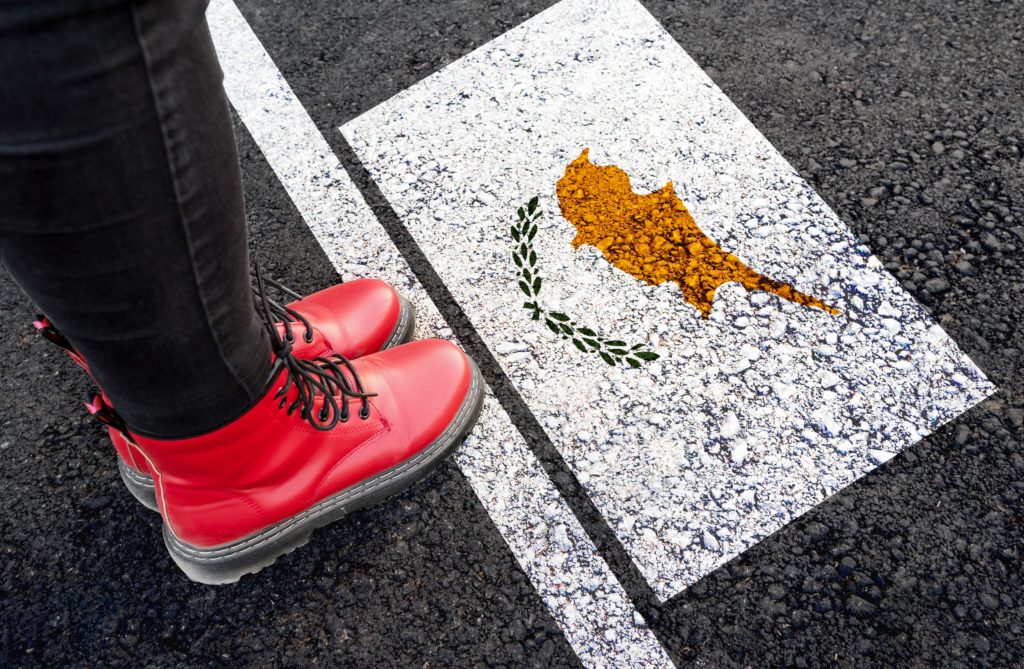
Once a child reaches 18, they are no longer eligible for legal support, even if their asylum case remains unresolved (Cyprus Refugee Council, 2024). Despite repeated calls for reform from the national Ombudsman and the Commissioner for Children’s Rights since 2014, significant issues remain unresolved. No substantial improvements were recorded in 2022 or 2023, leaving many unaccompanied child migrants in a precarious situation with limited support and uncertain futures (Cyprus Refugee Council, 2024).
Children and addictions
An HBSC survey on health behavior among school-age children in Cyprus revealed alarming trends in substance use, including alcohol, cigarettes, e-cigarettes, hookah, and cannabis. The 2021-2022 survey of 4,800 students aged 11-15 found that 73% of 15-year-olds have tried alcohol, with 48% of boys and 44% of girls reporting alcohol use at least once. Additionally, 15% of children admitted to drinking to the point of intoxication (Pitta, 2023).
Factors contributing to substance abuse include family issues (e.g., divorce, abuse, financial instability), peer pressure, and social environment. To address this, the Cyprus Ministry of Education and the Addictions Authority have implemented prevention programs, including school-based interventions, web programs for students, and initiatives like free sports equipment and reading bags for vulnerable families (Pitta, 2023).
Despite being an EU member with relatively high living standards, Cyprus struggles with addressing substance abuse due to limited mental health resources. The country has only 11 psychiatrists per 100,000 people, well below the EU average of 16, underscoring a serious shortage in specialized care. While progress has been made in expanding treatment options, resource allocation and long-term care remain pressing issues (Samartzis, 2018).
Written by Lidija Misic
Last updated on June 1, 2025
Bibliography:
Bowman John & Hunt David (2025), Efforts toward reunification. Retrieved from Britannica at https://www.britannica.com/place/Cyprus/Efforts-toward-reunification, accessed on February 16, 2025.
Charalambidou Nicoletta (2023), In search of a legal bond: Turkish Cypriot children of mixed marriages in Cyprus. Retrieved from European Network on Statelessness at https://www.statelessness.eu/updates/blog/search-legal-bond-turkish-cypriot-children-mixed-marriages-cyprus, accessed on February 17, 2025.
CRIN (n.d.), Cyprus: National Laws. Retrieved from CRIN at https://archive.crin.org/en/library/publications/cyprus-national-laws, accessed on February 17, 2025.
CRIN (n.d.), CYPRUS: Persistent violations of children’s rights. Retrieved from CRIN at https://archive.crin.org/en/library/publications/cyprus-persistent-violations-childrens-rights.html, accessed on February 23, 2025.
Cyprus Refugee Council (2024), Country Report: Legal representation of unaccompanied children. Retrieved from The Asylum Information Database (AIDA) at https://asylumineurope.org/reports/country/cyprus/asylum-procedure/guarantees-vulnerable-groups/legal-representation-unaccompanied-children/, accessed on February 17, 2025.
Damaskinos Iole (2025), Cyprus’ child poverty rate on ‘steady decline’. Retrieved from CyprusMail at https://cyprus-mail.com/2025/05/29/cyprus-child-poverty-rate-on-steady-decline, accessed on June 1, 2025.
Department of Labour Relations (n.d.), International Labour Organisation. Retrieved from https://www.mlsi.gov.cy/mlsi/dlr/dlr.nsf/intlaborganisation_en/intlaborganisation_en?opendocument=&utm, accessed on February 17, 2025.
Erk Derin Pervin (n.d.), Cyprus Education System: a native’s perspective. Retrieved from Broken Chalk at https://brokenchalk.org/cyprus-education-system-a-natives-perspective/, accessed on February 23, 2025.
European Commission (2009), The Cypriot Roma and the Failure of Education: Anti-Discrimination and Multiculturalism as a Post-accession Challenge. Retrieved from European Comission at https://migrant-integration.ec.europa.eu/library-document/cypriot-roma-and-failure-education-anti-discrimination-and-multiculturalism-post-0_en, accessed on February 23, 2025.
Efstathiou Elisavet et al. (2020), The child healthcare system in Cyprus. Retrieved from National Library of Medicine at https://pmc.ncbi.nlm.nih.gov/articles/PMC7488188/, accessed on February 17, 2025.
European Union (2023), Cyprus: Organisation and governance. Retrieved from EU at https://eurydice.eacea.ec.europa.eu/eurypedia/cyprus/organisation-education-system-and-its-structure, accessed on February 17, 2025.
Government of the Republic of Cyprus (2004), Government of the Republic of Cyprus second report on article 7 of the revised European social charter the right of children and young persons to protection. Retrieved from Council of Europe at https://rm.coe.int/CoERMPublicCommonSearchServices/DisplayDCTMContent?documentId=090000168048a272, accessed on February 23, 2025.
Hadjicostis Menelaos (2025), Ethnically split Cyprus’ rival leaders say they’re ready for UN-led meeting to restart peace talks. Retrieved from AP News at https://apnews.com/article/cyprus-turkey-greece-peace-talks-ethnic-division-0e69d3a7669bdfb4809cb21bdedb965c, accessed on February 16, 2025.
Kathimerini (2025), Cyprus sees drop in child poverty rate, ranks second lowest in EU. Retrieved from Kathimerini at https://knews.kathimerini.com.cy/en/news/cyprus-sees-drop-in-child-poverty-rate-ranks-second-lowest-in-eu, accessed on June 1, 2025.
Litzkow Julia (2024), Cyprus’ migration dilemma: hardline measures, regional conflict and rising pressures. Retrieved from Mixed Migration Centre at https://mixedmigration.org/cyprus-migration-hardline-measures-regional-conflict-and-rising-pressures/, accessed on February 17, 2025.
PCCPWC (n.d.), Children’s Rights in Cyprus. Retrieved from Eurochild at https://eurochild.org/uploads/2024/03/Cyprus-Childrens-Rights-Political-will-or-wont.pdf, accessed on February 23, 2025.
Pitta Antigoni (2023), ‘Alarming data’ from alcohol, drugs survey on kids. Retrieved from CyprusMail at https://cyprus-mail.com/2023/11/16/alarming-data-from-alcohol-drugs-survey-on-kids, accessed on February 23, 2025.
Refworld (1995), UN Committee on the Rights of the Child: State Party Report: Cyprus. Retrieved from UNHCR at https://www.refworld.org/reference/statepartiesrep/crc/1995/en/47346, accessed on February 17, 2025.
Samartzis Lampros (2018), Advances in the treatment of substance use disorder in Cyprus. Retrieved from National Library of Medicine at https://pmc.ncbi.nlm.nih.gov/articles/PMC6690259/, accessed on February 23, 2025.
Smith Helena (2024), ‘You basically have free hot water’: how Cyprus became a world leader in solar heating. Retrieved from The Guardian at https://www.theguardian.com/environment/2024/sep/20/cyprus-solar-thermal-heating-water-rooftop-renewable-energy-climate, accessed on February 16, 2025.
SOS Children’s Villages (n.d.), Northern Cyprus. Retrieved from SOS Children’s Villages at https://www.sos-childrensvillages.org/where-we-help/europe/northern-cyprus, accessed on June 1, 2025.
Turkish Archives of Pediatrics (2020), The child healthcare system in Cyprus. Retrieved from ResearchGate at https://www.researchgate.net/publication/344089328_The_child_healthcare_system_in_Cyprus, accessed on February 17, 2025.
United Nations (2025), Optional Protocol to the Convention on the Rights of the Child on a communications procedure. Retrieved from United Nations at https://treaties.un.org/pages/ViewDetails.aspx?src=TREATY&mtdsg_no=IV-11-d&chapter=4&clang=_en, accessed on February 17, 2025.
White Brianna (2017), Child Labour Impedes Education in Cyprus. Retrieved from The Borgen Project at https://borgenproject.org/child-labour-impedes-education-in-cyprus/, accessed on February 23, 2025.
[1] This article by no means purports to give a full or representative account of children’s rights in Cyprus; indeed, one of the many challenges is the scant updated information on Cypriot children, much of which is unreliable, not representative, outdated, or simply non-existent.