
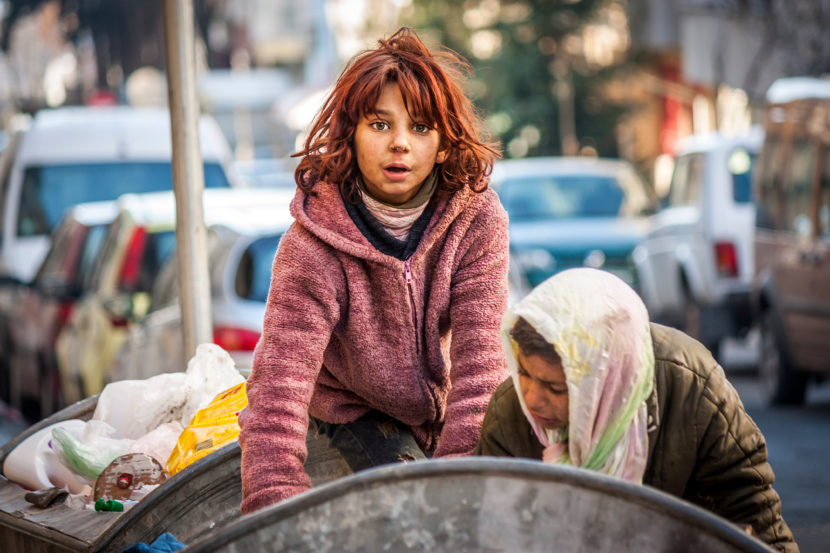
Bulgaria’s education system does not offer the same opportunities to all children. Many Bulgarian children leave school before completing their education, and some do not enrol in the first place. Poverty, limited access to preschool, and language difficulties affect large numbers of Roma and Turkish-speaking children. Once in school, separation from Bulgarian peers and uneven learning conditions further widen differences in educational results.
How children learn and progress through schools in Bulgaria
Bulgaria has a centralized education system, which means that almost all decisions are made by the Ministry of Education and Science. The Ministry sets the national curriculum, approves textbooks, and hires regional education directors. Each of the country’s 28 regions has a regional office that supervises schools, and each municipality has an education department that helps manage kindergartens (Mavrodieva, 2023).
Schooling in Bulgaria is compulsory from ages 7 to 16, though children can start at age 6 if they meet the school-readiness requirements. Education is organised into several stages. Kindergarten is for children aged 3 to 6, and the compulsory preschool years begin at age 5 (European Commission, n.d.). Primary education includes Grades 1 to 4, followed by lower secondary. After completing Grade 12 and passing national exams, students can enter universities, where bachelor’s programmes usually last four years.
Bulgaria uses a national curriculum, meaning all students study the same subjects and follow the same learning standards. At the end of Grade 4, Grade 7, and Grade 12, students take national assessments that measure what they have learned. These exams also play an important role in admission to specialized high schools and universities (Mavrodieva, 2023).
Although Bulgaria’s education system is well-structured, not all children benefit from it in the same way. Roma children, many Turkish-speaking children, and some children from low-income Bulgarian families often grow up in conditions that make it harder to participate fully in education.
Why Bulgarian children leave school early
One major factor behind early school leaving is poverty. Bulgaria has the highest child poverty rate in the European Union, with 35.1% of children at risk of poverty or social exclusion (Eurostat, 2025). Children growing up in low-income households often miss out on early education, experience more interruptions in their schooling, and have weaker learning results, which increases the likelihood that they leave school before completing their education.
Another important reason is language barriers. In September 2025, the Education Minister said that poor Bulgarian language skills were a main cause of learning problems and dropouts. Many Roma children and children from Turkish-speaking families start first grade without knowing enough Bulgarian (Pavlov, 2025).
Because many Roma and Turkish-speaking children begin school without knowing Bulgarian, they often make slow progress in the early years. When this difficulty is combined with late enrolment or irregular attendance, some children do not acquire basic reading and writing skills. According to the OECD, around 12% of Roma and 3% of Turkish people over age 8 are unable to read or write, compared with 0.5% among ethnic Bulgarians (OECD, 2025).
These language difficulties don’t start in first grade, but much earlier. Many Roma children never make it into preschool, and that missing year or two shows later on. In 2021, just 58% of Roma children were enrolled in preschool, while the national rate was above 80%. As children move through school, the distance between groups becomes clearer.
Many Roma and Turkish-speaking students leave school before the later grades, and only a small share continue after that. About 16% of Roma students finish upper-secondary school. For Turkish students, the figure is 43%. Among ethnic Bulgarian students, it’s 53%. At the university level, the numbers spread out even more. Just 1% of Roma and 11% of Turkish young people finish a degree, compared with 34% of ethnic Bulgarians.
How segregated schools in Bulgaria deny Roma children equal education
Only 64% of Roma children have attended preschool, compared with 94% of Bulgarian children. In many neighborhoods, there are not enough kindergarten places, and families cannot secure a spot even when they want their children enrolled. As a result, many Roma children start school without Bulgarian language skills and with early developmental delays linked to missing preschool (Dzhambazova, n.d.).
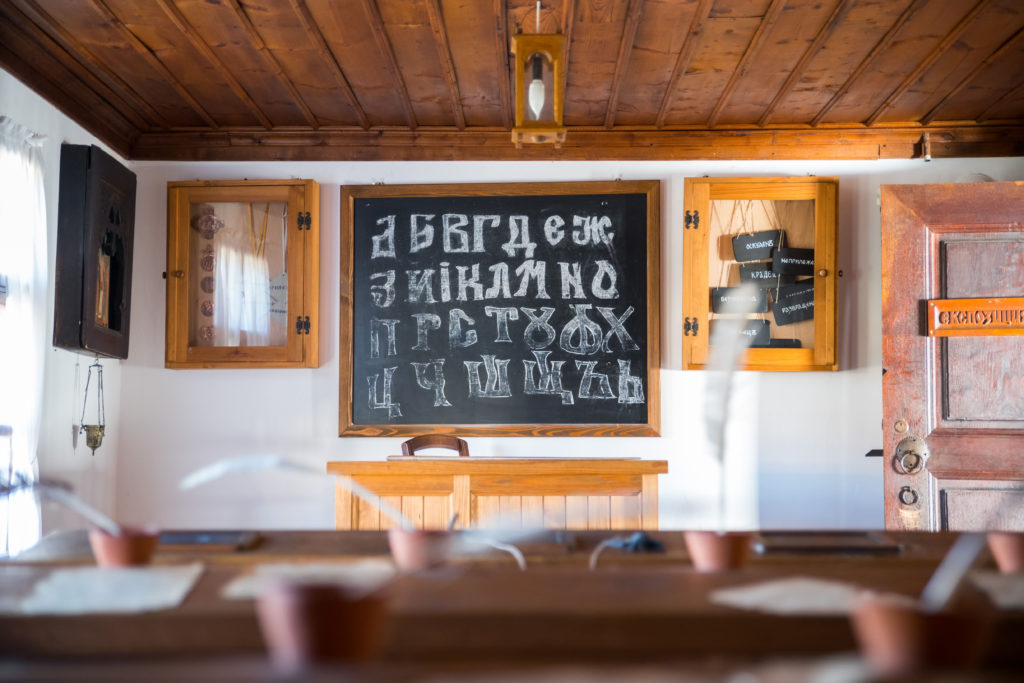
Poverty contributes to these early disadvantages. Roma families are among the poorest communities in Europe: 86% are at risk of poverty, compared with 22% of the general population in Bulgaria. Many families cannot afford clothing, food, or transportation for their children, which means that even when preschool places exist, they may still be unable to enroll their child (Dzhambazova, n.d.).
These early challenges continue once children enter the school system. More than 60% of Roma children in Bulgaria attend segregated schools, separated from most Bulgarian children. The share of Roma students in mixed schools has almost halved in recent years, so nearly half of Roma children now study in schools where Roma are the majority (Atanasova, n.d.).
School composition influences learning. In integrated classrooms, students benefit from peer effects: they learn from higher-achieving classmates, develop stronger motivation, and experience a more supportive learning environment. Research shows that disadvantaged and minority students make the largest academic gains in mixed schools.
In segregated schools, these benefits are limited. When most students share similar disadvantages, positive peer effects are weaker, expectations are lower, and access to quality teaching and opportunities declines. This contributes to lower achievement and higher dropout rates among Roma students (Farkas et al., n.d.).
What PISA reveals about Bulgarian education
Bulgaria’s learning outcomes have declined steadily over the past decade. In PISA 2022 (the Program for International Student Assessment, a major international study run by the OECD), Bulgarian students recorded some of their lowest results since 2006. More than half of all 15-year-olds did not reach basic proficiency in mathematics, reading, or science (Avvisati & Ilizaliturri, 2023).
Family background continues to shape children’s educational trajectories. Socioeconomically advantaged students outperformed their disadvantaged peers by 108 points in mathematics, a difference far larger than the OECD average (Avvisati & Ilizaliturri, 2023).
Socio-economic status explained 17% of the variation in mathematics performance, highlighting how strongly poverty influences learning outcomes. Only 7% of disadvantaged students achieved results placing them among the top performers in the country (Avvisati & Ilizaliturri, 2023).
Conditions in many schools make it difficult for children to learn. Students in high-poverty schools, in particular, report frequent disruptions during lessons. 41% said they could not work well in most classes, and nearly half were distracted by digital devices. Rates of poor classroom discipline are consistently higher than the OECD average and undermine children’s ability to concentrate and make progress (Avvisati & Ilizaliturri, 2023).
What Bulgaria can do to ensure equal education for all children
In recent years, Bulgaria has addressed segregation and worked on improving inclusion. The Council of Europe’s 2022 mapping study notes that closing former segregated schools and integrating Roma students into mainstream schools has reduced the number of fully segregated institutions. The government’s early acknowledgment of segregation as a national problem created the basis for policies aimed at improving access to quality education (Farkas et al., n.d.).
Under the National Strategy of the Republic of Bulgaria for Equality, Inclusion and Participation of the Roma (2021–2030), the government sets out specific measures to ensure equal education for all children. The strategy requires expanding access to early childhood and preschool education, continuing the national mechanism for identifying and returning children who have dropped out, and providing targeted Bulgarian-language support for those who do not speak the language well (Bulgarian Government, 2021).
However, as of 2025, evidence shows that these measures are not enough. Segregation remains widespread, poverty continues to limit children’s opportunities, and language barriers still prevent many Roma and Turkish-speaking students from developing basic skills. Recent data from 2023–2025 confirm that disadvantaged and minority children continue to experience some of the lowest learning outcomes in the EU.
To make lasting progress, Bulgaria needs to expand access to early childhood education, especially in places where services are missing or overcrowded, and continue investing in new centres and better facilities. The country also needs to provide consistent language and learning support for young children from diverse backgrounds, including those who speak a different language at home (OECD, 2025).
Improving the quality of early childhood education is another priority, which includes better training for staff, more mentoring, and stronger support for nurseries and kindergartens that work with vulnerable children. Bulgaria also needs to help ECEC staff work more closely with families by improving communication and building trust, especially in communities that feel excluded.
Finally, better cooperation between health, education and social services, along with smarter funding and stronger national coordination, will help ensure that all children can benefit from high-quality early childhood education (OECD, 2025).
Humanium stands with Bulgarian children whose right to education is threatened by poverty, segregation, and systemic barriers. By supporting Humanium through learning more about volunteering, sponsoring a child, or making a donation, you help strengthen our global work to protect children’s rights and promote equal access to education.
Written by Lidija Misic
Bibliography:
Atanasova M. (n.d.), The case of Roma women in Bulgaria. Retrieved from GFOD at https://globalforumcdwd.org/wp-content/uploads/2025/06/Bulgaria-GFoD-report-CDWD-Roma-2025.pdf, accessed on November 15, 2025.
Avvisati F. & Ilizaliturri R. (2023), The PISA 2022 Bulgaria Factsheet. Retrieved from OECD at https://www.oecd.org/content/dam/oecd/en/publications/reports/2023/11/pisa-2022-results-volume-i-and-ii-country-notes_2fca04b9/bulgaria_2070d435/29d65f4b-en.pdf, accessed on November 15, 2025.
Bulgarian Government (2021), National Strategy of the Republic of Bulgaria for Equality, Inclusion and Participation of the Roma (2021–2030). Retrieved from European Commission at https://commission.europa.eu/system/files/2021-12/national_strategy-_english_google.docx.pdf, accessed on November 16, 2025.
Dzhambazova B. (n.d.), Europe’s forgotten children. Retrieved from Politico at https://www.politico.eu/article/europe-forgotten-children-roma-community-bulgaria-school/, accessed on November 15, 2025.
European Commission (n.d.), Bulgaria: Organisation and governance. Retrieved from European Commission at https://eurydice.eacea.ec.europa.eu/eurypedia/bulgaria/organisation-education-system-and-its-structure, accessed on November 16, 2025.
Eurostat (2025), 24% of EU children at poverty risk or social exclusion. Retrieved from Eurostat at https://ec.europa.eu/eurostat/web/products-eurostat-news/w/ddn-20250528-1, accessed on November 15, 2025.
Farkas L. et al. (n.d.), School segregation of Roma communities: Trends and pathways towards educational inclusion. Retrieved from Council of Europe at https://rm.coe.int/mapping-study-trends-and-pathways-towards-educational-inclusion/1680b1d13b, accessed on November 15, 2025.
Mavrodieva M. (2023), Bulgaria. Retrieved from TIMSS & PIRLS International Study Center at https://timss2023.org/wp-content/uploads/2024/10/Bulgaria.pdf, accessed on November 16, 2025.
OECD (2025), Bulgaria. Retrieved from OECD at https://www.oecd.org/content/dam/oecd/en/publications/support-materials/2025/01/reducing-inequalities-by-investing-in-early-childhood-education-and-care_a0fd3f31/Bulgaria%20Country%20Note%20PDFO.pdf, accessed on November 16, 2025.
OECD (2025), Education and Skills in Bulgaria. Retrieved from OECD at https://www.oecd.org/en/publications/education-and-skills-in-bulgaria_ac0229da-en/full-report/education-and-skills-in-bulgaria-unlocking-inclusive-economic-and-social-development_d541a6ce.html, accessed on November 15, 2025.
Pavlov F. (2025), Main Reason for Student Dropouts is Lack of Bulgarian Language Skills, Education Minister Says. Retrieved from BTA at https://www.bta.bg/en/news/bulgaria/967303, accessed on November 15, 2025.
The Rroma Foundation (2024), Bulgaria, Schools, and Roma. Retrieved from The Rroma Foundation at https://rroma.org/bulgaria-schools-and-roma-2/, accessed on November 15, 2025.
UNICEF (2023), Poor educational outcomes, dropping out of school, increasing incidences of violence and lack of basic knowledge and skills are among the main challenges facing students in Bulgaria. Retrieved from UNICEF at https://www.unicef.org/bulgaria/en/press-releases/poor-educational-outcomes-dropping-out-school-increasing-incidences-violence-and, accessed on November 15, 2025.