Realizing children’s rights in Bosnia and Herzegovina
Bosnia and Herzegovina’s (BiH) sociopolitical development and its ability to safeguard children’s rights, are intrinsically linked to its recent history. The dissolution of the Socialist Federal Republic of Yugoslavia and BiH’s subsequent declaration of independence in the 1990s were marred by a violent war and genocide. Despite efforts to align domestic legislation with international standards, minority children in BiH continue to face challenges in realizing their human rights – particularly in education, welfare and broader social services.
Population: 3.185 million
Population aged 0-14: 13.22%
Life expectancy: 75.29 years
Under-5 mortality rate: 6‰
Bosnia and Herzegovina at a glance
Bosnia and Herzegovina (Bosna i Hercegovina or Босна и Херцеговина) (hereinafter BiH), is a country situated in the Balkan Peninsula in Southeast Europe. It shares borders with Serbia to the east, Montenegro to the southeast, and Croatia to the north and southwest. The region of Bosnia occupies the northern and central parts of the country, while Herzegovina lies in the south and southwest (Malcolm et al, 2025).
These regions are generally characterized by two separate entities, established in 1995 via the Dayton Accords: Republika Srpska (also known as the Serb Republic), occupying the north and northeast, and the Federation of Bosnia and Herzegovina. Each entity maintains autonomy with its own constitution, judicial system and legislature (Malcolm et al, 2025). The Brčko District, a self-governing administrative unit, lies in the northeastern part of its territory, and operates under shared sovereignty.
BiH emerged from the Socialist Federal Republic of Yugoslavia: a federation established in 1943 and comprising six republics – Serbia, Montenegro, Macedonia, Slovenia, Croatia and Bosnia & Herzegovina. Bosnia declared independence from the federation in 1992. However, Bosnian Serbs were opposed to this move and initiated a military campaign to “cleanse” the country (United States Holocaust Memorial Museum, 2013).
The resulting three-year conflict (1992- 1995), led to an estimated 100,000 deaths, up to 50,000 reported cases of rape and over 2 million displaced persons. The Dayton Accords that followed formalized a deeply divided state along ethnic and religious lines, including legal provisions for removing public officials in the interest of peace (Malcolm et al, 2025).
Status of children’s rights [1]
BiH has committed to several international instruments for the protection of children’s rights. In 1993, the government ratified the Convention on the Rights of the Child (CRC). BiH is also party to other international human rights instruments, all ratified in 1993, including the Convention on the Elimination of All Forms of Discrimination against Women (CEDAW), the International Convention on the Elimination of All Forms of Racial Discrimination, and the International Covenant on Civil and Political Rights.
The government ratified the Optional Protocol to the Convention on the Rights of the Child on the Involvement of Children in Armed Conflict in 2003 and on the Sale of Children, Child Prostitution and Child Pornography in 2002. The government also ratified the International Labour Organization (ILO) Worst Forms of Child Labour Convention, 1999 (No. 182) in 2000.
Addressing the needs of children
Right to education
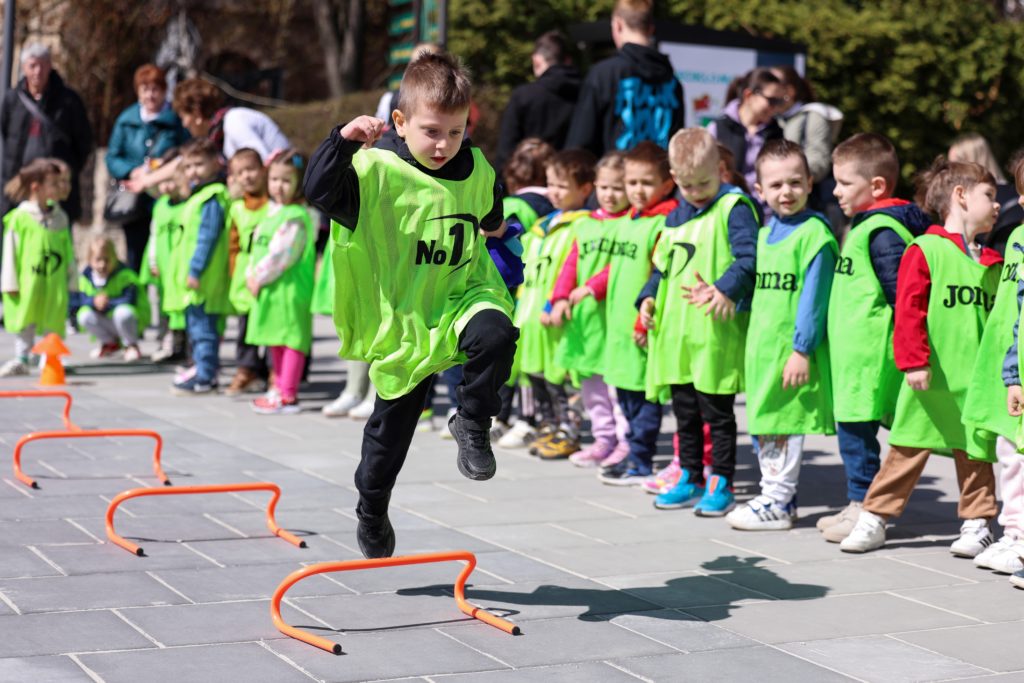
In BiH, the education sector mirrors the country’s complex constitutional arrangement. It is governed by 12 different administrative bodies: the Ministry of Education and Culture of Republika Srpska (Ministarstvo prosvjete i culture Republike Srpske), 10 cantonal ministries of education in the Federation of Bosnia and Herzegovina and the Department for Education of the Brčko District government (Odjeljenje za obrazovanje u Vladi Brčko Distrikta) (European Commission, 2024).
The stages of the education system in Bosnia and Herzegovina consist of (European Commission, 2024):
- Preschool education (Predškolsko obrazovanje i vaspitanje), intended for children aged 6 months old until the start of primary education. This consists of nursery (children aged from 6 months to 3 years old), kindergarten (children aged 3 to 6 years old) and preschool preparatory programme.
- Primary education (Osnovno obrazovanje) is compulsory education and is divided into 3 cycles/triad. Public primary education is free and begins from the age of 6 years old. The triad includes:
- Triad 1: 1st to 3rd grade
- Triad 2: 4th to 6th grade
- Triad 3: 7th to 9th grade
- Secondary education (Srednje obrazovanje) lasts for 4 years, beginning from the age of 15. There are different forms of secondary schools which include: grammar schools, vocational schools, and art schools.
Despite a structured system, access to education remains difficult for vulnerable families. Data collected from UNICEF Bosnia and Herzegovina for the school year of 2018/19 indicated that it had one of Europe’s lowest preschool enrollment rates at just 25%. Within this, only 0.5% of enrollees were from rural areas, and just 2% were children from families where both parents were unemployed. Roma children had the lowest school attendance rates overall, with poverty, stigma and discrimination cited as primary barriers (UNICEF, 2020).
Right to health
In the Federation of BiH, the healthcare system is decentralized, whilst in Republika Srpska and Brčko District the health care system is more centralized. Although BiH law guarantees universal basic healthcare regardless of income, accessibility and quality vary widely, particularly for vulnerable groups like the Roma community (UNICEF, 2020).
Data collected from the 2011–2012 United Nations Children’s Fund Multiple Indicator Cluster Survey (UNICEF MICS) indicated that the immunization rate in BiH was 68% for all children and only 4% for Roma children, covering vaccines for tuberculosis (BCG – Bacillus Calmette-Guérin), diphtheria, pertussis and tetanus (DPT), polio, and measles, mumps and rubella (MMR). The low immunization rate amongst Roma children has been associated with the lack of health insurance, inability to access healthcare services, and deep-rooted mistrust between the Roma community and healthcare professionals.
More recently, immunizations rates, particularly for the measles, mumps, and rubella (MMR) have declined further, resulting in recurring measles outbreaks across the country. Additionally, BiH remains vulnerable to potential outbreaks of polio due to persistently low immunization coverage (UNICEF, 2020).
Right to clean water and sanitation
In 2021, the European Investment Bank (EIB), signed a 2.1 million euro (EUR) European Union grant to improve wastewater and drinking water infrastructure in the municipalities of Jajce and Zvornik. This investment was aimed at protecting the public from water pollution and creating a reliable water and sanitation service to approximately 93,000 people living across the two municipalities (European Investment Bank, 2021).
Right to identity
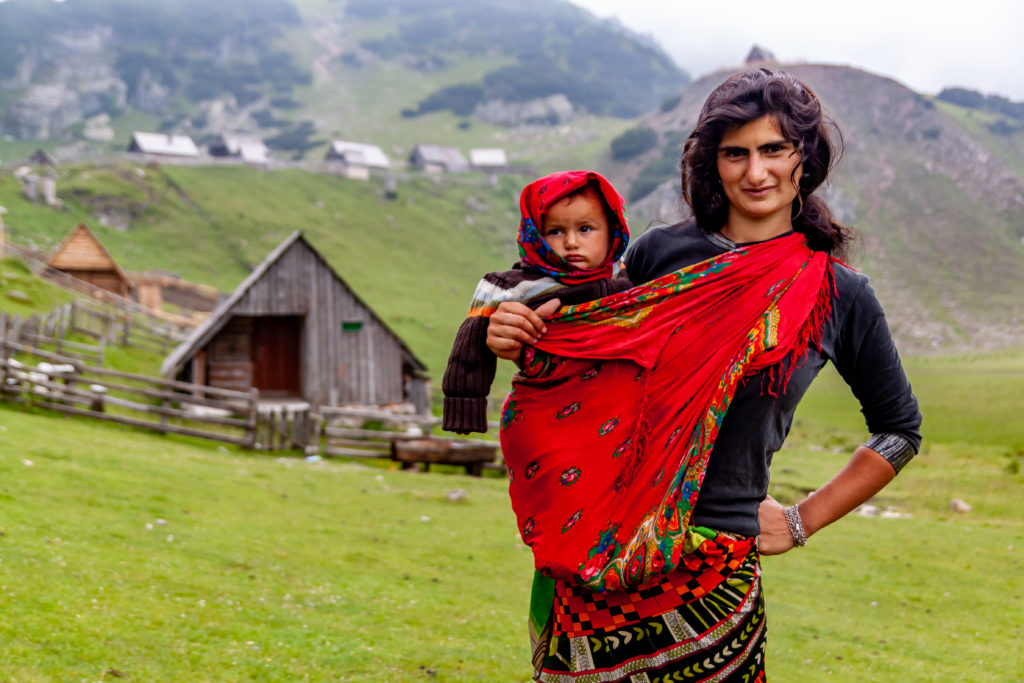
BiH’s stance on national identity is rooted in its historical context. In particular, the ethnic divisions linked to conflict in the mid-1900s are reflected in citizenship laws. The Constitution recognizes three “constituent peoples”: Bosniaks, Croats, and Serbs. All other ethnic groups fall under the “Others” category, which results in their exclusion from high-level public offices and certain legal protections (Sarajlic, 2010).
These provisions are incompatible with the European Convention for the Protection of Human Rights and Fundamental Freedoms and its Protocols and other international human rights standards. However, political favoritism toward dominant ethnic groups hampers efforts to address inequality. As such, and until meaningful change is realized, minority children in BiH face an uphill battle to obtain nationality and benefit from fair governance (Sarajlic, 2010).
Risk factors – Country-specific challenges
Exploitation
Children from the most vulnerable communities, including Roma children, face a serious risk of exploitation at the hands of traffickers due to their marginalization from citizenship mechanisms (UNICEF, 2013). Organized crime groups coerce vulnerable children into child labor and transnational trafficking.
At the other end of the spectrum, BiH struggles to hold traffickers to account for their criminal acts. In 2022, the International Labour Organization called on BiH to strengthen its capacities to enforce its transnational trafficking laws, following less than five trafficking convictions per year in the preceding years (International Labour Organization, 2022).
Poverty
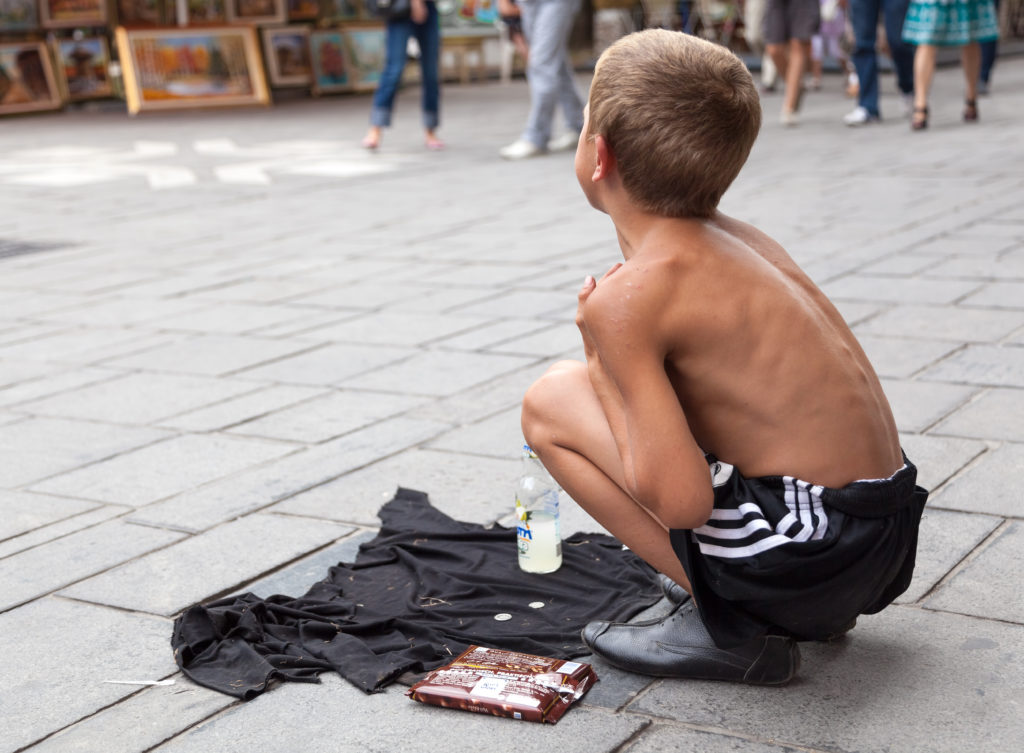
Estimates suggest 30% of all children in BiH live in poverty (UNICEF, 2015). This lack of resources extends to other categories of basic needs: 98% of all children under four lack access to one category of basic need – housing, social participation, leisure, educational resources, clothing or nutrition (UNICEF, 2015). Within the same age category, over 30% of children are deprived in at least three basic need categories. These statistics are slightly reduced for children aged 5-15; however the overarching landscape depicts a significant volume of children in need of both increased spending power and more accessible and quality social services (UNICEF, 2015).
The volume of children in poverty and lacking basic needs is amplified within the Roma community, who are historically the most neglected group in the country. The majority of Roma children exist in a state of multidimensional poverty, putting their nutritional health and development at risk (UNICEF, 2012).
Discrimination
Ethnic divisions rooted in BiH’s establishment have perpetuated inequities for children across several sectors. In education, a ‘two schools under one roof’ policy was established, and continues to exist, to unify the population and guard against educational systems being used to reinforce social divisions. Accordingly, schools are gradually moving away from discriminatory practices, including naming establishments to honor war heroes, displaying religious symbols, promoting ethnically biased teaching materials and excluding certain students from attendance (Organization for Security and Co-operation in Europe, 2018).
Despite this movement towards educational equity, large numbers of trauma victims continue to send their children to ad-hoc and private schools, housed by known neighborhood communities, and favoring particular ethnic principles.
These environments are perceived as safer and less hostile, but often lack robust mechanisms or facilities. One example of this is in Usora, where a ‘tent school’ was set up within an existing school complex specifically for Croat children, reflecting ongoing ethnic segregation and a preference among some communities for separate schooling environments perceived as safer (Organization for Security and Co-operation in Europe, 2018).
Justice for children
All three regions of BiH, Republika Srpska (adopted in 2011), Federation of BiH (came into force in 2014) and Brčko District (adopted in 2013) introduced the Law on the Protection and Treatment of Children and Juveniles in Criminal Proceedings. This law is a specialized juvenile justice statute that explicitly highlights the age of criminal responsibility, legal safeguards, diversion mechanisms and rehabilitation and reintegration programs, in line with international legal standards, including the UN CRC (Council of Europe, 2023).
Despite similar legal frameworks, differences remain. For instance, corporal punishment in the home is prohibited in Republika Srpska but not in the Brčko District. The implementation of the law in Republika Srpska and the Federation of BiH is also inconsistent.
Juvenile justice procedures are inconsistently applied across both territories and minors face unreliable access to legal support and representation. This is largely tied to the decentralized nature of administration which has created gaps in legal provisions (Council of Europe, 2023).
Written by Vanessa Cezarita Cordeiro
Internally proofread by Aditi Partha
Last updated on 20 April 2025
References:
Bibliographie :
Council of Europe. (2023, March). “Factsheet – Bosnia and Herzegovina”. Retrieved from Council of Europe, accessed on 30 June 2025.
European Commission. (2024, December 4). “Key features of the education system Bosnia and Herzegovina.” Retrieved from European Commission, accessed on 28 March 2025.
European Investment Bank. (2021, April 20). “Bosnia and Herzegovina: EU and the EIB provide €2.1 million grant for improving water and sanitation systems in Jajce and Zvornik.” Retrieved from European Investment Bank, accessed on 14 April 2025.
International Labour Organization. (2022). “Comments adopted by the CEACR: Bosnia and Herzegovina.” Retrieved from International Labour Organization, accessed 3 July 2025.
Malcolm, N.R., Lampe, J.R., Pickering, P. (2025, March 27). “Bosnia and Herzegovina.” Retrieved from Encyclopedia Britannica, accessed on 24 March 2025.
Organization for Security and Co-operation in Europe. (2018, November). “Two schools under one roof – the most visible example of discrimination in education in Bosnia and Herzegovina.” Retrieved from Organization for Security and Co-operation in Europe Mission to Bosnia and Herzegovina, accessed on 3 April 2025.
Remembering Srebrenica. (n,d). “Bosnian War – a brief overview.” Retrieved from Remembering Srebrenica, accessed on 27 March 2025.
Sarajlic, Eldar. (2010, June). “The Bosnian Triangle: Ethnicity, Politics and Citizenship”. Retrieved from Law Education, accessed on 18 April 2025.
UN Committee on the Rights of the Child. (2019, December 5). “Concluding observation on the combined fifth and sixth periodic reports of Bosnia and Herzegovina.” Retrieved from United Nations Committee on the Rights of the Child, accessed on 3 April 2025.
UN Women. (n,d). “Ending violence against women.” Retrieved from UN Women Europe and Central Asia, accessed on 3 April 2025.
UNICEF Bosnia and Herzegovina. (2013, February). “Monitoring the status of children and women: Multiple Indicator Cluster Survey.” Retrieved from UNICEF Bosnia and Herzegovina, accessed 29 June 2025.
UNICEF Bosnia and Herzegovina. (2025, March 7). “Gender-based violence in Bosnia and Herzegovina: the silence that endangers lives.” Retrieved from UNICEF Bosnia and Herzegovina, accessed on 3 April 2025.
UNICEF. (2015, April). “National Multiple Overlapping Deprivation Analysis.”. Retrieved from UNICEF, accessed 1 July 2025.
UNICEF. (2020, March). “Situation analysis of children in Bosnia and Herzegovina.” Retrieved from UNICEF, accessed on 28 March 2025.
UNICEF. (2020, March). “Situation analysis of children in Bosnia and Herzegovina.” Retrieved from UNICEF, accessed on 28 March 2025.
UNICEF. (2023). “The status of Roma children and families in Bosnia and Herzegovina.” Retrieved from UNICEF, accessed 2 July 2025.
United States Holocaust Memorial Museum. (2013, July). “Bosnia and Herzegovina, 1992-1995.” Retrieved from United States Holocaust Memorial Museum, accessed on 27 March 2025.
[1] This article by no means purports to give a full or representative account of children’s rights in Bosnia and Herzegovina; indeed one of many challenges is the scant updated information on children in Bosnia and Herzegovina, much of which is unreliable, not representative, outdated or simply non-existent.