Realizing Children’s Rights in Armenia
Since gaining independence from the Soviet Union in 1991, Armenia has made significant progress in protecting children’s rights through legislative reforms, the establishment of a child-centred justice system, and the allocation of government funding to maternal and child health initiatives. These successful reforms have led to a notable decrease in the number of children in permanent institutionalized care, along with improvements in other key metrics. However, challenges such as poverty and the ongoing refugee crisis have continued to impede the full realization of children’s rights across the country.
Population: 2.9 million
Population aged 0-14: 20%
Life expectancy: 73.3 years
Under-5 mortality rate: 8.2‰
Armenia at a glance
The Republic of Armenia (Hayastan), with Yerevan (Erevan) as its capital, is a landlocked country that makes up one of three Transcaucasian countries (Georgia, Armenia and Azerbaijan). It is located in the southern Caucasus Mountains, between the Black Sea and the Caspian Sea. Armenia shares a border with Georgia to the north and Azerbaijan to the east, Turkey to the west and Iran to the south (Howe, 2025).
Geographically, 85% of the country is mountainous, with an average elevation of 5,900 feet (1,800 meters) above sea level. The Armenian Highlands, to the northwest of the country, consist of Mount Aragats, which is the highest peak in historical Armenia (13,418 feet or 4,090 meters). The country’s enclosed mountainous terrain gives it a dry, continental climate. It consists of two terrestrial ecoregions, which include mixed forests and steppe (Howe, 2025).
Historically, Mount Ararat was a sacred mountain in Armenia. However, in the present day, Mount Ararat is in Turkey. However, it is regarded as a symbol of the Armenian land and is a national emblem for the country (Howe, 2025).
Armenia has experienced a tumultuous journey to independence, tied to its proximity to the former Soviet Union. The segment of Armenia situated within the former Russian Empire declared independence in 1918, before being invaded by Turkish and Soviet forces in 1920.
The country was subsequently subsumed into the Transcaucasian Soviet Federated Socialist Republic in 1922, a union which was dissolved in 1936, leaving Armenia a constituent republic of the Soviet Union. Armenia declared sovereignty in 1990 amidst the continental dissolution of the Soviet Union, and formally obtained independence on September 23, 1991 (Howe, 2025)
The Nagorno-Karabakh conflict remains an ethnic and territorial conflict between Azerbaijan and Armenia. Historically, Nagorno-Karabakh was inhabited by Armenians. However, following the declaration of independence in 1991 from Soviet Azerbaijan, the region was transferred to Soviet Armenia. Shortly after, in 1994, Russian ceasefire left the region heavily dependent on Armenia.
This war caused Azerbaijan to lose control of the territory. In 1993, the United Nations Security Council adopted 4 resolutions that supported the removal of the Armenian forces from the Nagorno-Karabakh region, and internationally recognized Nagorno-Karabakh as part of Azerbaijan (Vartanyan, 2024).
Ethnically, Armenians make up 98.1% of the population, followed by Yazidis (1.1%) and Russians (0.5%). Other ethnic minorities in Armenia include Ukrainians, Greeks, Kurds, Georgians, Assyrians and Belarusians. Due to the Nagorno-Karabakh conflict, Azerbaijanis, once the second-largest ethnic group in Armenia, largely migrated to Azerbaijan (Howe, 2025).
Status of children’s rights [1]
Armenia has committed to several international instruments for the protection of children’s rights. In 1993, the government ratified the Convention on the Rights of the Child (CRC). The Optional Protocol to the Convention on the Rights of the Child on the Involvement of Children in Armed Conflict and the Optional Protocol to the Convention on the Rights of the Child on the sale of children, child prostitution and child pornography were both ratified in 2005.
Armenia has also ratified other international human rights instruments, namely, the Convention on the Elimination of All Forms of Discrimination against Women, the International Convention on the Elimination of All Forms of Racial Discrimination and the International Covenant on Economic, Social and Cultural Rights were all ratified in 1993.
Addressing the needs of children in Armenia
Right to education
Prior to its independence, Armenia followed the Soviet model of education and Russian was the language of instruction. However, post-independence, Armenian became the language of instruction and in 1991; all schools that followed the Soviet model of education were closed.
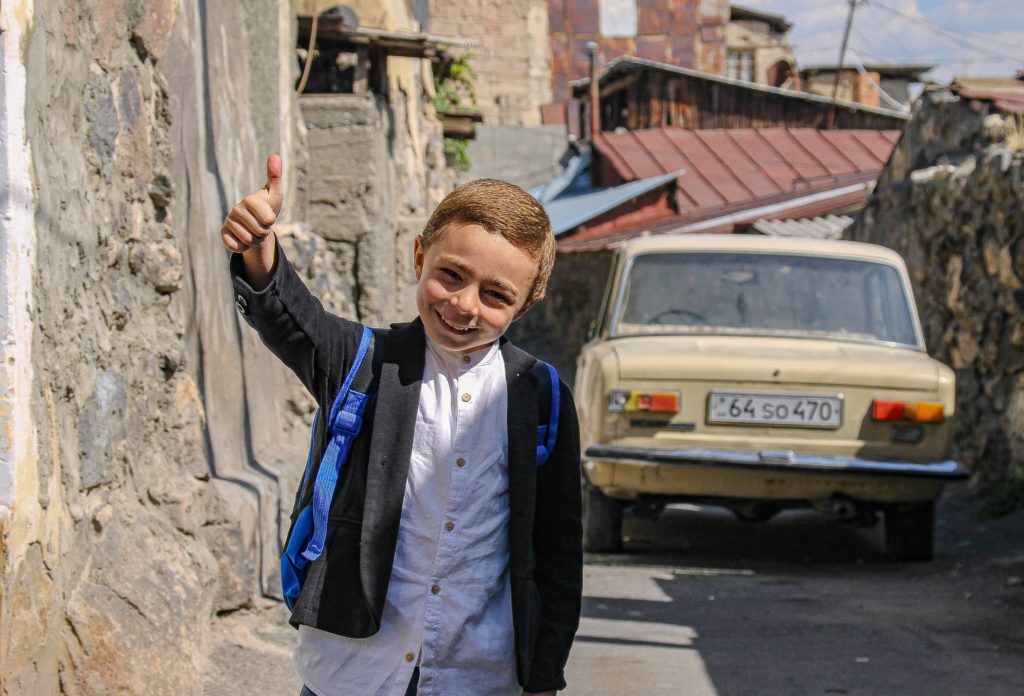
Armenia’s education system, overseen by the Ministry of Education, Science, Culture, and Sports, consists of (Freeman, 2024):
- Primary Education (ages 6-10, Grades 1-4)
- Basic Education (ages 10-15, Grades 5-9) – Completion grants a Certificate of Basic Education.
- Secondary Education (ages 15-18, Grades 10-12) – Completion grants a Certificate of Secondary Education.
Right to health
The Ministry of Health assigns one nurse to a school that has more than 350 students, while smaller schools share nursing resources. The nurse has access to local polyclinics and their primary responsibilities are routine screenings, first aid and epidemic response. The routine screenings include weight, height, blood pressure, eyesight and hearing testing, posture deviations and psycho-social support (Save the Children, 2015).
In 2003, with the support and funding of the Pan Armenian Association for Family and Health and the United Nations Population Fund (UNFPA), over 30 youth-friendly health services were established across schools to provide youth-friendly counselling. However, once the pilot project and funding ended, the services were discontinued as they did not receive adequate funding from the government (Save the Children, 2015).
In 2019, the Armenian government allocated $25 million USD of the state budget, making all healthcare for children below the age of eighteen free. Prior to this, free healthcare was only provided for children below the age of seven, people who had disabilities, orphans and boys between the ages of fourteen and fifteen (before the age of conscription) (JAM News, 2019).
Right to clean water and sanitation
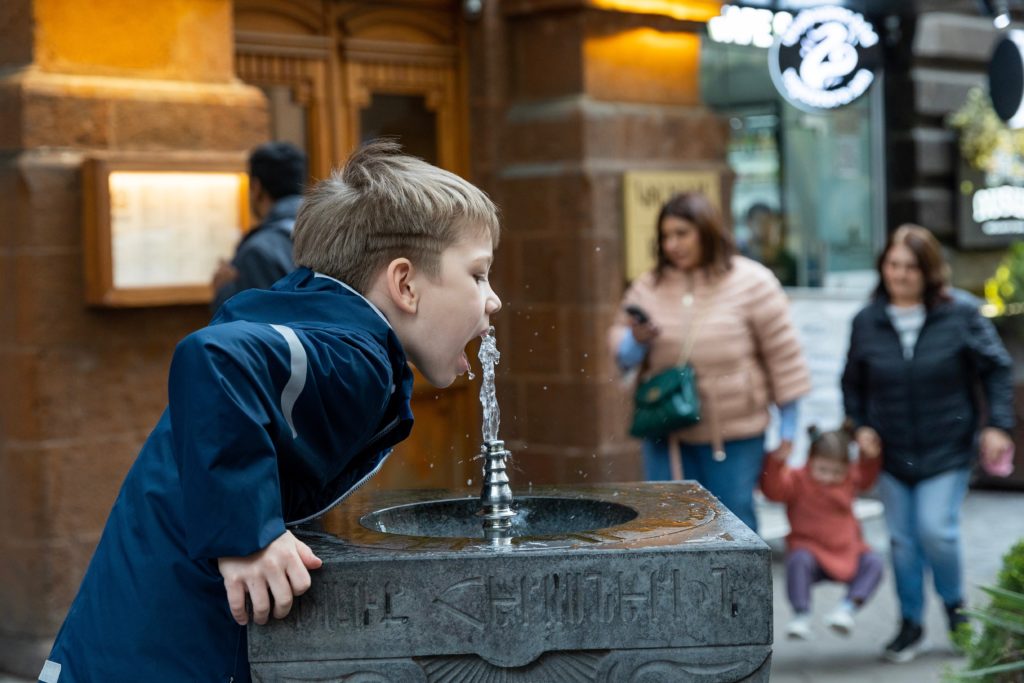
In 2021, 27% of the rural population in Armenia lacked adequate water services. Most of the water supplies across the country are in poor condition and do not meet adequate accepted standards (Hubendick, 2021). Despite the abundance of lakes and rivers in Armenia, the government is unable to provide safe and clean drinking water. In rural communities in Armenia, some homes have access to water for only two to three hours a day, and often the water pressure is very low (Asian Development Bank, 2014).
Prior to independence, Armenia’s water and sewerage company was state-run in line with common practice across the Soviet Union. Over 90% of the country’s city-based population sourced its water from the centralized service (Asian Development Bank, 2014). This led to challenges given the inefficiencies inherent in the service: up to 80% of the water flowing through the country’s plumbing system was lost due to leaks and other faults – roughly 400% higher than most cities within Western Europe at the time.
The period from 1991 onwards, therefore, necessitated significant reform. However, despite efforts, a mere ~15% of the population benefited from continuous water service in the years immediately following 1991 (Asian Development Bank, 2014).
Right to identity
In 2009, the Armenian Relief Society conducted a survey on non-registered children in the regions of Yerevan, Gegharkounik and Shirak. This survey revealed that out of the 97 families, there were 126 children with no state registration at birth, 19 unregistered children living in childcare institutions, and 35 out of the 126 children were born at home, instead of the hospital.
The survey revealed that 39.9% of non-registered births were due to parents not having personal identification documents, 13.8% was due to bureaucratic and lengthy birth registration processes, 12.5% was due to extenuating family circumstances, 9.8% was due to the absence of one parent, 9.8% was due to parental indifference on registering their child(ren), 3.5% was due to families inability to afford birth registration costs, 11.3% was due to lack of awareness on birth registration and 9.5% was due to other unstated reasons (Save the Children, 2015).
In 2011, a legislative amendment was made to prevent and detect unregistered births. Under the Republic of Armenia Law on Civil Registration Acts and the Republic of Armenia Law on Local Self-Government, it was decided that all community leaders were to identify when births were not registered within their region and ensure adequate steps were taken to register the non-registered births (Save the Children, 2015).
Risk factor –> Country-specific challenges
Poverty
According to UNICEF data from 2017, approximately 34.2% of children in Armenia are living in poverty and 2% of children are living in extreme poverty, with the highest rates of child poverty in Shirak at 50.9% (UNICEF Armenia, n,d). Benefits aimed at enhancing family living standards for poor and vulnerable households are the primary anti-poverty vehicle within Armenia’s social assistance framework.
The basis for state allowances in Armenia was established during Soviet times with the introduction of a law on “Allowances for Children from Less Secure Families”. Over the years, the system of allowances has undergone several modifications. In 1997, new procedures were introduced to provide monetary compensation to certain groups of the population defined by the legislation, rather than based on privileges.
Consequently, in 1999, a decree was passed to replace child allowances and other categorical social benefits with a family benefit targeted at poor families. This family benefit scheme remains the largest support program for poor families (both with and without children), covering approximately 12.7% of the population (UNICEF, 2019).
Discrimination
Research from the United Nations Population Fund infers Armenia has one of the highest rates of gender-based sex selection in the world, a biproduct of a broader culture of discrimination against women and girls. Large-scale surveys indicate a preference towards sons due to their social standing, ability to contribute financially and perceived importance to family lineage, among other factors.
Displaced children
In 2020, an offensive by Azerbaijani forces to recapture the region triggered military conflict and violence in the Nagorno-Karabakh region, forcing approximately 90,000 families and children to flee to neighbouring Armenia. Several hundred people were killed or wounded in the clashes. As of October 2024, UNICEF has recorded 115,366 refugees, including 36,000 children (UNICEF Armenia, 2024).
Armenia has received regional and international support to address the crisis. Earlier this year, the Council of Europe released a €2.8 million aid package to assist the country, including a new initiative targeted at protecting children through legal and policy support (Council of Europe, 2024).
Institutionalized care
Cross-sectoral collaboration in the last decade has seen Armenia make great progress towards reducing the number of children in full-time institutional care. Joint work by the Armenian government, civil society and international NGOs caused the number of children in permanent care to drop from 2,000 to 400 between 2014 and 2023. 2023 reforms targeted at ensuring nationwide independent living provided further support: persons leaving permanent institutional care now receive the equivalent of a monthly wage for 12 months, as well as payments to cover rent (United Nations Office of the High Commissioner, 2024).
The country has developed significant infrastructure to protect vulnerable children. Two 24-hour boarding care centres were reformed in 2016 and 2018, and in the following year, three outdated boarding care facilities were replaced with new programmes designed to support children in reintegrating with their families. These efforts are estimated to have prevented nearly 400 children from entering permanent institutions (United Nations Office of the High Commissioner, 2024).
In more recent years, efforts to support widespread family reunification have continued. Between 2020 and 2023, the government increased its funding towards foster care and protection services, including outsourcing more funds to local civil society working in remote parts of the country. Alongside this work, the government has reformed its administrative systems to expand access to community-based family services, leading to a general increase in the number of children reunified with their biological families (Sargsyan, 2024).
However, despite nationwide progress, challenges remain. Over 1,100 children remain in state-run orphanages and special schools. The majority of these children have disabilities: a problem which can be traced back to the absence of specialised community and family support services for these minority children (Sargsyan, 2024).
Written by Vanessa Cezarita Cordeiro
Internally proofread by Aditi Partha
Last updated on 9 February 2025
References:
Asian Development Bank. (2014, May 9). “Providing clean, safe water to Armenians.” Retrieved from Asian Development Bank, accessed on 4 February 2025.
Council of Europe. (2024, April 12). “Armenia: Council of Europe launches package of measures in response to refugee influx, including protecting children’s rights.” Retrieved from Council of Europe, accessed 6 February 2024.
Freeman, K.T. (2024, February 15). “Armenia.” Retrieved from Aacrao, accessed on 27 January 2025.
Howe, G.M., Dowsett, C.J.F. (2025, January 31). “Armenia.” Retrieved from Britannica, accessed on 25 January 2025.
Hubendick, L. (2021, May 10). “Armenia takes action to achieve the SDG 6.” Retrieved from Stockholm International Water Institute, accessed on 4 February 2025.
Human Rights Watch. (2017, February 22). “Abuse and discrimination against children in institutions and lack of access to quality inclusive education in Armenia.” Retrieved from Human Rights Watch, accessed on 8 February 2025.
JAM News. (2019, July 1). “Treatment in Armenia to be free for children up to 18.” Retrieved from JAM News, accessed on 29 January 2025.
Sargsyan, Z. (2024, January 19). “Nearly half a million children in Europe and Central Asia live in residential care facilities.” Retrieved from United Nations Armenia, accessed on 5 February 2025.
Save the Children. (2015). “Child rights situation analysis: Armenia.” Retrieved from Save the Children, accessed on 29 January 2025.
UNFPA. (2023). “Fact sheet: Armenia.” Retrieved from UNFPA, accessed 5 February 2024.
UNICEF Armenia. (2024). “Armenia humanitarian situation report no. 18.” Retrieved from UNICEF Armenia, accessed on 29 January 2025.
UNICEF Armenia. (n,d). “Social protection and child poverty.” Retrieved from UNICEF Armenia, accessed on 9 February 2025.
UNICEF. (2019, July). “Universal child benefit case studies: the experience of Armenia.” Retrieved from UNICEF, accessed on 9 February 2025.
United Nations Office of the High Commissioner. (2024, September 5). “Experts of the Committee on the Rights of the Child Commend Armenia on its Digital Literacy Education for Children, Raise Questions on Corporal Punishment and Children’s Participation in Climate Change Policies.” Retrieved from United Nations Office of the High Commissioner, accessed on 4 February 2025.
Vartanyan, O. (2024, March 4). “Armenia struggles to cope with exodus from Nagorno-Karabakh.” Retrieved from International Crisis Group, accessed on 29 January 2025.
[1] This article by no means purports to give a full or representative account of children’s rights in Armenia; indeed, one of many challenges is the scant updated information on the children of Armenia, much of which is unreliable, not representative, outdated or simply non-existent.