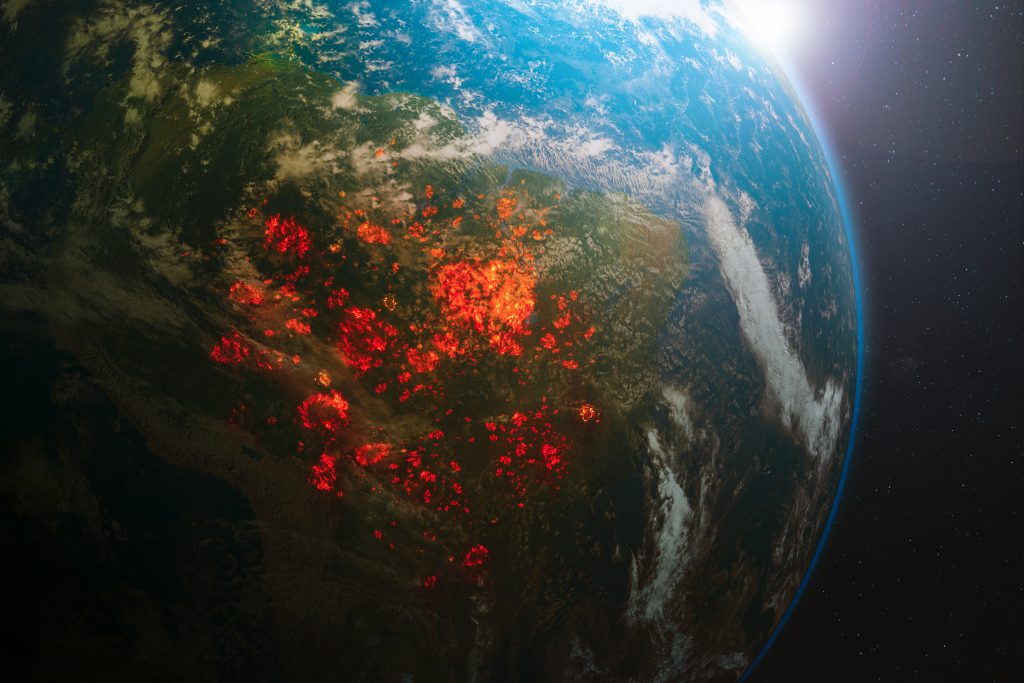

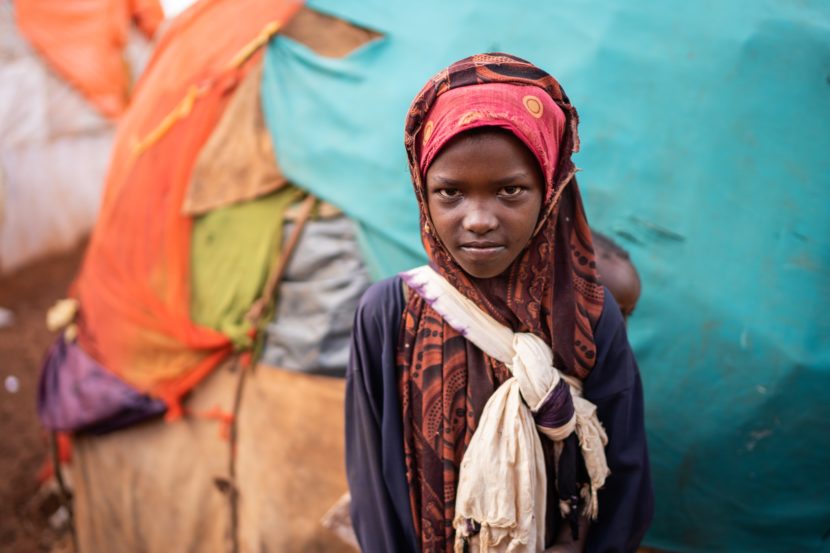
Female genital mutilation (FGM) remains widespread in Somalia, affecting nearly all women and girls. It is deeply rooted in cultural, social, and religious traditions, with strong pressure from families and communities, especially around marriage. Some regional laws and advocacy efforts are challenging the practice, but enforcement is uneven, and there is still no national law that fully criminalises all forms of FGM.
The scale of FGM in Somalia
Somalia has one of the highest rates of FGM in the world, with 99% of women and girls aged 15 to 49 having undergone the practice as of 2025 (UNFPA, n.d.-a; UNICEF, 2025). Most girls experience FGM in childhood, usually between the ages of 5 and 14, with many procedures carried out on those aged 10 to 14 (Ibrahim, 2025; ReliefWeb, 2023).
A 2023 study at Banadir Hospital in Mogadishu found that among 144 female healthcare providers, 78% had undergone FGM. Nearly all of them (96.5%) agreed that the practice is medically harmful and opposed both its legalisation and medicalisation (Mehriban et al., 2023).
The cultural entrenchment of FGM
In Somalia, FGM is driven by social pressure, cultural traditions, and religious misconceptions. It is often seen as a rite of passage marking a girl’s transition into adulthood, with families, particularly mothers and elder women, central to maintaining the practice. The procedure is usually part of traditional rituals, which may include ceremonies, periods of isolation, and local healing practices. Some communities also justify FGM on religious grounds.
Some families and elders see FGM as a way to preserve chastity, cleanliness, and virginity, as well as to ensure social acceptance. Girls who have not undergone FGM often face ostracism and social marginalisation. Parents, particularly those in rural areas, feel pressured to ensure their daughters undergo FGM to secure their futures. Ceremonies frequently involve community elders, reinforcing social norms.
The women’s perspective, revealed in a recent qualitative study, shows the issue of FGM is far from black and white. While the 20 Somali women interviewed were acutely aware of the pain and health damage caused by FGM, they do not universally call for total abandonment. They all strongly reject the most severe form, but many still support a “milder” version of the practice. For these mothers, this continuation is not about ignorance; it is about survival.
“Why wouldn’t I circumcise her? It is something in our hearts, all of us. It is a compulsory thing in our hearts. If we don’t circumcise our kids, we would be embarrassed by them. Even when we were young, we used to be proud of it.”
– Ali et al., 2025
They are driven by intense social pressure, fear of their daughters being ostracised, and the belief that the practice is necessary for their girls to be marriageable. This demonstrates that the core challenge is not just a lack of knowledge but the deep cultural obligation to conform and ensure their daughters have a future.
Moreover, healthcare providers and midwives can perpetuate FGM by performing it or by not speaking out against it. Over generations, FGM has been justified in the name of purity, beauty, marital suitability, and perceived religious duty. FGM is closely tied to patriarchy, motivated by attempts to control female sexuality and limit girls’ and women’s educational and economic opportunities. It continues partly because girls who do not undergo FGM are seen as promiscuous, unclean, or undesirable (UNFPA, n.d.-b).
The physical, psychological, and social consequences of FGM
FGM causes devastating and often irreversible harm, affecting survivors’ physical, social, and emotional wellbeing. Physically, survivors may suffer severe pain, excessive bleeding, chronic infections, menstrual difficulties, sexual dysfunction, and complications during childbirth. These include higher risks of maternal and neonatal death, often linked to unsanitary or unskilled procedures. The practice also violates a child’s bodily integrity, as it is irreversible and rarely performed with informed consent.
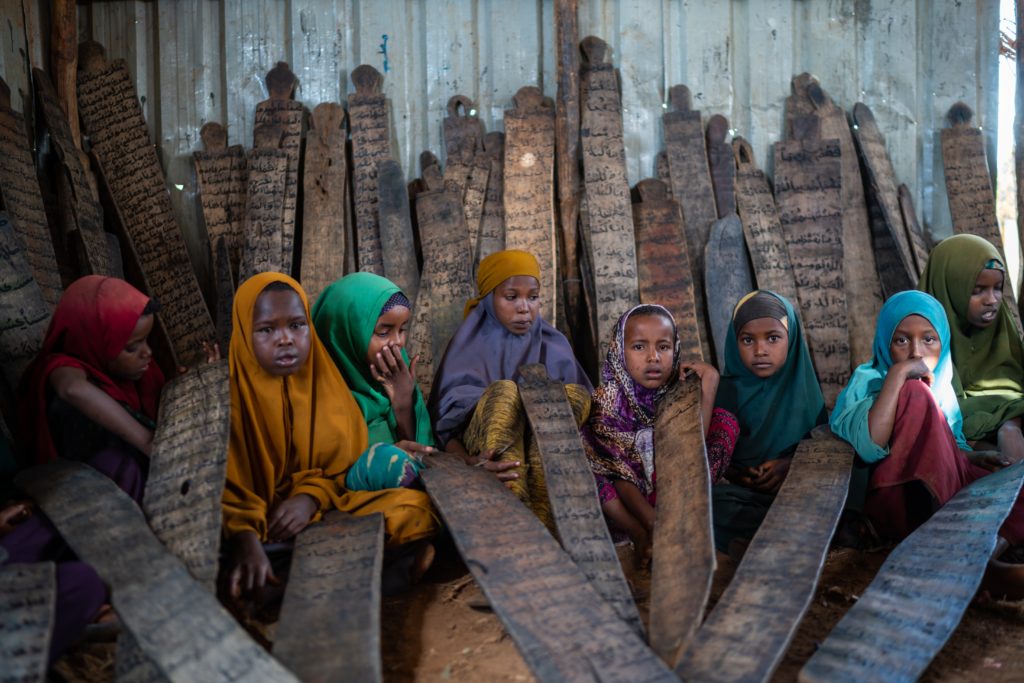
Socially, FGM disrupts girls’ education and limits their life opportunities. Parents often withdraw their daughters from school during the recovery period, and some girls never return due to trauma or social pressure. This can lead to early marriage and forced motherhood. Girls who are not mutilated may face stigma, ostracism, and limited marriage prospects.
Psychological consequences are also severe. FGM exposes children to violence and trauma, which can lead to post-traumatic stress disorder, depression, anxiety, insomnia, nightmares, and lowered self-worth. Women and girls who have undergone infibulation, the most common and severe form of FGM, often carry both physical and emotional scars that affect their health, relationships, and daily life.
One survivor shared how FGM continues to affect her life. This woman in Kismayo described her ordeal as “the most painful and terrifying” experience she has ever had. She continues to struggle with chronic pain and marital difficulties decades after undergoing FGM at age seven.
“I still feel the pain every day. Those moments, it’s all still in my head, where it happened and who held me down.”
– UNOCHA, 2025
Legal frameworks in Somalia protecting girls from FGM
Somalia’s 2012 Provisional Constitution (Article 15) condemns FGM as “a cruel and degrading customary practice” that “is tantamount to torture”. Consequently, it states, “The circumcision of girls is prohibited” (Orchid Project, 2025). However, no national law specifically criminalises all forms of FGM, and the Penal Code’s general provisions are insufficient.
In 2024, the state of Galmudug enacted specific legislation banning FGM/C (Equality Now et al., 2025). Efforts to pass relevant legislation have faced social and political resistance, including pressure from religious and clan leaders.
Somalia’s international commitments on ending FGM
Somalia has signed but not ratified the Maputo Protocol, the African Union (AU)’s treaty on women’s rights, which also obliges states to eliminate harmful practices such as FGM. By not ratifying, Somalia avoids legally binding commitments under the AU system, leaving both women and girls without the regional protections the treaty affords.
Somali’s international obligations – including those set out in the African Charter on the Rights and Welfare of the Child, the UN Convention on the Rights of the Child, and the Universal Periodic Review – require the country to prevent and punish FGM. However, enforcement remains inconsistent, and impunity is widespread. Political instability and lack of awareness have also slowed progress. Survivors and civil society continue to call for stronger laws, regular prosecutions, and effective monitoring (Storey, 2025).
Proposed constitutional amendments in 2024 threatened child rights by lowering the age of majority, allowing certain forms of FGM, and defining adulthood by physical development rather than emotional or intellectual maturity, contrary to international standards (Human Rights Watch, 2025).
Even though Somalia’s 2024 constitutional review reaffirmed the prohibition of FGM, the country still lacks a nationwide law to enforce the ban. Under the federal system, regional governance varies, leaving girls and women with uneven protections. In some regions, disagreements over definitions have slowed progress, and partial bans have left milder forms of FGM unaddressed, impeding progress towards full eradication (UNICEF, 2025).
Recent international reviews have sharply criticised Somalia’s slow progress, emphasising that FGM violates children’s rights to health, protection from harmful practices, and freedom from violence and exploitation. UN human rights treaty bodies have repeatedly urged the country to enact and enforce robust laws criminalising all forms of FGM (Human Rights Watch, 2024).
Efforts towards ending FGM and strengthening health system responses
In early 2025, the Federal Parliament of Somalia adopted constitutional amendments that reaffirm a complete ban on all forms of FGM and strengthen protections for women and girls. The amendments explicitly condemn FGM as a violation of women’s and girls’ rights and establish a clear government mandate for its elimination.
That same year, the state of Galmudug enacted a law criminalising all forms of FGM, becoming the first Federal Member State in Somalia to do so. The legislation not only bans the practice in its entirety but also outlines measures for its enforcement and provides support for survivors. The law has since served as a model for other Federal Member States (United Nations Assistance Mission in Somalia, 2024).
On 11 February 2025, Somalia marked the International Day for Zero Tolerance for Female Genital Mutilation with a gathering in Mogadishu. Survivors, government officials, and civil society leaders, including the Minister of Women, Family, and Human Rights Development, reaffirmed their commitment to banning FGM and called for society-wide solidarity to enforce protective laws (UNFPA, 2025).
Signs of social change are gradually emerging. Younger, urban, and educated populations increasingly question the practice, and advocacy and survivor activism – often supported by NGOs and UN agencies – have been gaining momentum (UNOCHA, 2025). Youth are taking an active role in raising awareness. For example, a 20-year-old man from Wadajir Village, Baidoa, described educating parents about the harms of FGM and challenging the notion of “incomplete girls” (ReliefWeb, 2022).
Alongside these efforts, community figures help raise awareness and encourage people to question harmful traditions, while younger generations, especially educated youth, are starting to challenge the practice. The Somali Demographic and Health Survey (2020) also shows a lower rate of FGM among daughters compared to their mothers, suggesting that change is slowly taking hold (Farih et al., 2024).
Additionally, civil society groups, youth-led organisations, and women’s collectives are expanding their outreach through education, training of religious leaders, and support for survivors. Initiatives like the “Dear Daughter” campaign, led by the United Nations Population Fund (UNFPA) and the Ifrah Foundation, raise awareness and mobilise communities.
Survivors share their experiences through workshops and radio broadcasts, which in 2022 inspired 100 mothers to pledge not to have their daughters undergo FGM (UNFPA, 2022). These activities help women learn about the harm caused by FGM, share their stories, and encourage others to take a stand, spreading the message across communities.
Health workers at hospitals and clinics are also trained to treat FGM injuries, provide counselling, and refer survivors to mental health and social services. Some even advocate discreetly against FGM, despite the risk of pushback from traditionalist groups (World Health Organization, 2021).
Recommendations for eliminating FGM in Somalia
To accelerate progress towards eliminating FGM in Somalia, key actors should implement coordinated actions across legal, social, health, and monitoring sectors:
- Legal and policy reforms: Governments and State Parliaments must enact national laws criminalising all forms of FGM, ratify international treaties such as the Maputo Protocol, and integrate prevention into protection frameworks.
- Community engagement and education: Civil society and local leaders should raise awareness about the health risks and rights violations of FGM, challenge myths linking it to purity and marriageability, and promote gender equality.
- Health sector strengthening: Health professionals should identify, treat, and report FGM cases. They should also provide psychological support and ensure access to reconstructive surgery and sexual and reproductive health care, with a special focus on rural areas.
- Youth and survivor empowerment: Survivors should engage in advocacy efforts, while schools, youth organisations, and NGOs should involve young people in education and leadership programmes.
- Monitoring and research: International organisations, donors, and national statistical offices should improve the collection of data on FGM prevalence and interventions, and fund studies adapted to local cultural contexts.
- International cooperation and funding: Donors, UN agencies, and technical partners should focus on scaling up interventions and ensuring they reach high-risk communities. They should also coordinate efforts among governments, civil society, and global actors.
At Humanium, we work tirelessly to protect children from harmful practices such as FGM and uphold their rights to health, education, and protection. By supporting our efforts through donations, volunteering, or advocacy, you can help us prevent FGM and provide much-needed support to survivors worldwide. Join us in our mission to create a future where every girl can grow up free from fear and harm.
Written by Or Salama
References:
Ali, Z. I. A., Alhaffar, M., & Howard, N. (2025, July 9). “I just wanted to be like everyone else…”: Qualitative exploration of women’s perspectives on female genital mutilation/cutting and its potential abandonment in Somalia. Retrieved from PLOS Global Public Health at https://journals.plos.org/globalpublichealth/article?id=10.1371%2Fjournal.pgph.0004571, accessed on September 11, 2025.
Equality Now, End FGM European Network, & U.S. End FGM/C Network. (2025, February). The time is now: End female genital mutilation/cutting (FGM/C). An urgent need for global response. Retrieved from End FGM European Network at https://www.endfgm.eu/editor/files/2025/02/The_Time_is_Now_End_Female_Genital_MutilationCutting_An_Urgent_Need_for_Global_Response_2025_ENGLISH.pdf, accessed on September 9, 2025.
Farih, O. A., Ali, A. O., Abokor, A. H., Ali, M. A., Muse, A. H., & Aw Egge, A. A. (2024, November). Prevalence and factors associated with female genital mutilation among daughters using Somalia Demographic Health Survey Data, SDHS 2020. Retrieved from PubMed Central at https://pmc.ncbi.nlm.nih.gov/articles/PMC11570726/, accessed on August 19, 2025.
Human Rights Watch. (2024, March 29). Somalia: Constitutional proposals put children at risk. Retrieved from Human Rights Watch at https://www.hrw.org/news/2024/03/29/somalia-constitutional-proposals-put-children-risk, accessed on September 6, 2025.
Human Rights Watch. (2025). World report 2025: Somalia. Retrieved from Human Rights Watch at https://www.hrw.org/world-report/2025/country-chapters/somalia, accessed on September 6, 2025.
Ibrahim, A. (2025, February 7). FGM in Somalia: A consequence of culture? Retrieved from Intersect Digest at https://www.intersectdigest.com/post/fgm-in-somalia-a-consequence-of-culture, accessed on August 19, 2025.
Mehriban, N., Ullah, A. N. Z., Haque, M. I., Harun, M. G. D., Isse, D. M., Muhammad, F., Chowdhury, A. A., Chowdhury, M., Hasan, M. Z., & Dessoffy, T. (2023, September 21). Knowledge, attitudes, and practices of female health care service providers on female genital mutilation in Somalia: A cross-sectional study. Retrieved from PubMed Central at https://pmc.ncbi.nlm.nih.gov/articles/PMC10515518/, accessed on August 10, 2025.
Orchid Project. (2025). FGM/C in the Horn of Africa: Signs of Change. Retrieved from FGM/C Research Initiative at https://www.fgmcri.org/media/uploads/Region%20Research%20and%20Resources/HoA/signs_of_change.pdf, accessed on August 19, 2025.
ReliefWeb. (2022, February 4). Sharing knowledge in communities to protect girls from Female Genital Mutilation. Retrieved from ReliefWeb at https://reliefweb.int/report/somalia/sharing-knowledge-communities-protect-girls-female-genital-mutilation, accessed on August 19, 2025.
ReliefWeb. (2023, February 6). Female Genital Mutilation: A daily grim reality for girls in Somalia. Retrieved from ReliefWeb at https://reliefweb.int/report/somalia/female-genital-mutilation-daily-grim-reality-girls-somalia, accessed on August 19, 2025.
Storey, A. (2025). The United Nations’ Universal Periodic Review and female genital mutilation in Somalia: The value of civil society recommendations. Retrieved from African Human Rights Law Journal at https://www.ahrlj.up.ac.za/images/ahrlj/2025/volume_1/STOREY.pdf, accessed on August 19, 2025.
United Nations Assistance Mission in Somalia. (2024, May 13). Somalia / Galmudug Anti-FGM Law [Video]. Retrieved from UNifeed at https://media.un.org/unifeed/en/asset/d320/d3206311, accessed on August 19, 2025.
United Nations Children’s Fund (UNICEF). (2025, June 3). Breaking the silence: Somalia’s legislative journey to end female genital mutilation. The rise of legal and social reform to end FGM in Somalia. Retrieved from UNICEF at https://www.unicef.org/somalia/blog/breaking-silence-somalias-legislative-journey-end-female-genital-mutilation, accessed on August 19, 2025.
United Nations Office for the Coordination of Humanitarian Affairs (UNOCHA). (2025, February 6). Turning the tide against female genital mutilation in Somalia. Retrieved from UNOCHA at https://www.unocha.org/news/turning-tide-against-female-genital-mutilation-somalia, accessed on August 19, 2025.
United Nations Population Fund (UNFPA). (n.d.-a). Female Genital Mutilation Dashboard (FGM) – Somalia. Retrieved from UNFPA at https://www.unfpa.org/data/fgm/SO, accessed on August 19, 2025.
UNFPA. (n.d.-b). Female genital mutilation. Retrieved from UNFPA at https://somalia.unfpa.org/en/topics/female-genital-mutilation-0, accessed on September 27, 2025.
UNFPA. (2022, January 31). In Somalia, 100 mothers pledge not to subject daughters to female genital mutilation. Retrieved from UNFPA at https://www.unfpa.org/news/somalia-100-mothers-pledge-not-subject-daughters-female-genital-mutilation, accessed on September 11, 2025.
UNFPA. (2025, February 11). Mogadishu marks International Day for Zero Tolerance for FGM 2025. Retrieved from UNFPA at https://somalia.unfpa.org/en/news/mogadishu-marks-international-day-zero-tolerance-fgm-2025, accessed on August 19, 2025.
World Health Organization. (2021, February 4). In Somalia, health workers, girls and women are experts in preventing female genital mutilation. Retrieved from WHO at https://www.who.int/news-room/feature-stories/detail/in-somalia-health-workers-girls-and-women-are-experts-in-preventing-female-genital-mutilation, accessed on September 11, 2025.