
Realizing Children’s Rights in Estonia


Estonia has made significant progress in combating child exploitation, expanding access to healthcare, and strengthening its education system. However, many children continue to grow up in poverty, struggle with mental health challenges, encounter barriers to education, and experience discrimination. They often lack adequate protection and meaningful opportunities to participate in decisions that affect their lives. Economic hardship has contributed to rising child prostitution and sexual exploitation, while mistreatment and trafficking remain pressing concerns.
Population: 1.3 million
Pop. ages 0-14: 16%
Life expectancy: 79.5 years
Under-5 mortality rate: 2.2‰
Estonia at a glance
Estonia, located on the eastern coast of the Baltic Sea in Northern Europe, is a parliamentary republic. It has been a member of the European Union and NATO since 2004 and joined the Eurozone in 2011. As of January 2025, Estonia’s population stands at approximately 1,369,285, with 70% residing in urban areas and 30% in rural regions (Statistics Estonia, 2025).
The median age is 42.8 years (Worldometers, 2025). Children aged 0–14 comprise about 16% of the population as of December 2024, a figure that has been steadily declining due to birth rates below replacement level (Trading Economics, 2025a). This demographic shift has resulted in an aging population and a gradual decline in the overall population.
Estonia is internationally recognised for its advanced digital society. Over 93% of the population has internet access, and the country places strong emphasis on e-governance and digital public services (DataReportal, 2025). This digital infrastructure has improved the efficiency and accessibility of services such as education and healthcare.
Status of children’s rights [1]
Estonia has demonstrated a strong commitment to protecting human rights, particularly those of children. The country ratified the Convention on the Rights of the Child (CRC) in 1991 and regularly reports to the UN Committee on the Rights of the Child. It has also ratified the first two Optional Protocols to the CRC and, in 2024, began the ratification process of the Third Optional Protocol, which would permit children to directly submit complaints to the Committee (OHCHR, 2024a).
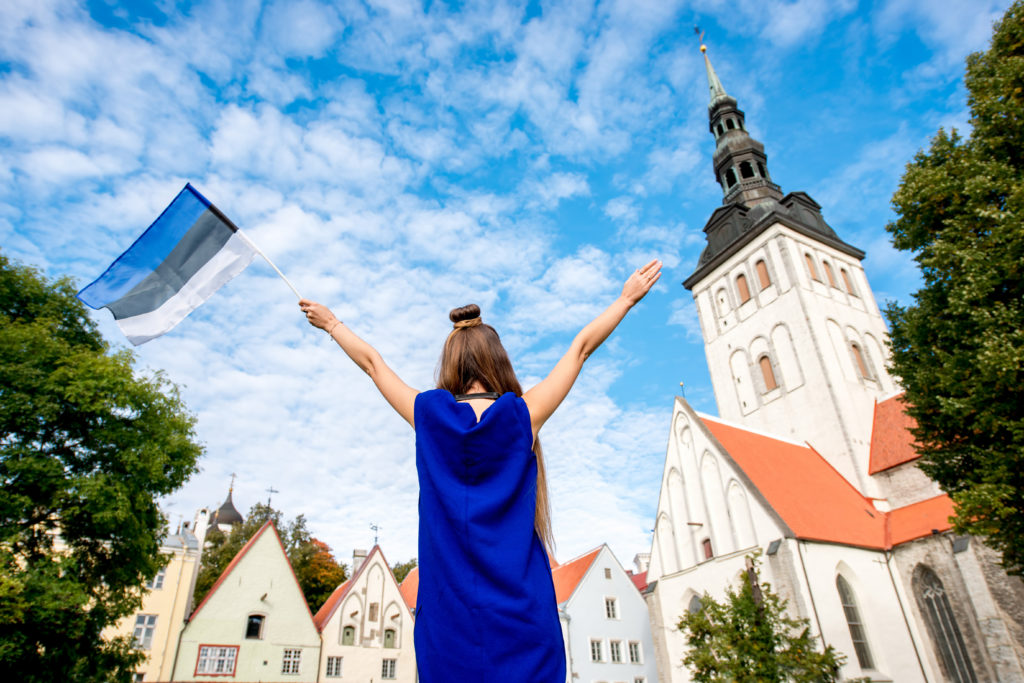
Estonia is also a party to all core UN human rights treaties, including the International Covenant on Civil and Political Rights, the International Covenant on Economic, Social and Cultural Rights, the Convention against Torture, the International Convention on the Elimination of All Forms of Racial Discrimination, and the Convention on the Elimination of All Forms of Discrimination against Women. At the regional level, Estonia is a member of the Council of Europe and has ratified key instruments, including the European Convention on Human Rights, the Revised European Social Charter, and the Istanbul Convention.
According to the Estonian Constitution, international treaties ratified by Parliament take precedence over conflicting national laws, ensuring their integration into the domestic legal framework.
Addressing the needs of children
Right to protection
Estonia has taken notable steps to protect children from exploitation and abuse. Authorities are active in combating trafficking and sexual exploitation. Legislative reforms introduced in 2025 aim to improve the identification of and support for vulnerable children, increase the number of foster families, and enhance coordination between health and social services for children with special needs. The new Child Protection Act reinforces the duty of professionals to report children in need and strengthens support for foster, guardianship, and adoptive families (OHCHR, 2024a; Riigikogu, 2025).
The Barnahus model, a child-centred approach that integrates protection, medical care, and legal processes, has been expanding in Estonia since 2017. As of 2025, four Barnahus centres operate nationwide to provide specialised services for sexually abused children and those exhibiting harmful sexual behaviour, with plans to broaden coverage to additional regions and other forms of violence, including physical abuse, emotional abuse, and neglect (OHCHR, 2024a).
While Estonia’s anti-discrimination legislation aligns with international standards, certain forms of discrimination remain under-addressed. Children of certain minority groups still receive little protection or support in maintaining and expressing their cultural, linguistic, and religious identity, particularly within education policies that tend to emphasise assimilation over multiculturalism (Russian School of Estonia, 2023).
Mistreatment and institutionalisation persist in Estonia’s child protection system. Despite a gradual shift towards foster care, a substantial number of children continue to be placed in state-run institutions that often lack adequate resources and specialised staff. Children in these institutions face higher risks of social exclusion, behavioural problems, and mental health issues. The UN Committee on the Rights of the Child has raised concerns about the quality of support, emphasising the need for more open, rehabilitative care options rather than closed facilities (Committee on the Rights of the Child, 2024; OHCHR, 2024b).
The Committee has further highlighted that many foster parents in Estonia lack adequate training in addressing the complex needs of traumatised children, which can undermine the quality of care as well as the children’s well-being. Moreover, financial incentives may sometimes drive foster care placements, calling into question the motivation and standards of care provided (Committee on the Rights of the Child, 2024; OHCHR, 2024a).
Recent reports emphasise the need for better oversight, continuous training for foster parents, and stronger psychosocial support systems to ensure safe and nurturing environments for children in both family-based and institutional care (Eurochild, 2025a). The transition from institutional to family- and community-based care is a stated policy goal; however, implementation challenges persist, and the risk of mistreatment or neglect persists for some of the most vulnerable children in Estonia (Eurochild, 2024).
Right to education
In Estonia, education is free and compulsory from ages 7 to 17, with recent reforms extending this age to 18 to lower dropout rates and improve access to upper secondary and vocational qualifications (Eurydice, 2024; The Baltic Times, 2024). Most children complete nine years of basic education, followed by optional further studies.
Participation in early education remains steady. In 2023, 37.8% of children under age three – slightly above the EU average – were enrolled in childcare. Participation among 3–7-year-olds reached 92%, just below the European Union’s 2030 target of 96% (European Commission, 2024a).
Although Estonia’s Preschool Child Care Institutions Act guarantees the right to preschool education from the age of 18 months, access remains uneven, especially in fast-growing urban areas where demand outpaces supply. In 2023, over 68,000 children attended 560 mostly public preschools; nevertheless, many municipalities continue to struggle to ensure the sufficiency of preschools. While European Union funding helped support the expansion of early childhood education, gaps remain (European Commission, 2024a).
Since 2024, Estonia has begun transitioning all general education to Estonian-only instruction, with full implementation planned by 2030. Intended to promote integration, the reform has sparked concerns over the rights of minority students, particularly Russian speakers, who often underperform academically (Education Estonia, 2024; Russian School of Estonia, 2023).
The government argues that the language reform aims to ensure equal educational opportunities and outcomes for all children in Estonia, regardless of their background. Authorities emphasise that schools teaching in Estonian consistently achieve better academic results, with students in Russian-language schools typically lagging by about an academic year, according to PISA results.
The government also highlights the importance of fostering social cohesion, reducing the segregation resulting from parallel education systems, and ensuring equal access to further education and the labour market for all students. The aim is to create a unified education system that strengthens Estonian national identity and social integration (Antelme, 2025; Education Estonia, 2024; Wright & Antelme, 2024).
Support measures, including significant funding for teacher training (both initial and in-service), resources for acquiring necessary Estonian language proficiency, additional language lessons for students, and adaptation programmes for newly arrived immigrants, are being implemented to help students and teachers adapt to the new system. Schools are encouraged to use flexible curriculum approaches, such as focusing on Estonian language development in the first half of the academic year, and to provide personalised support for students at varying language levels (Antelme, 2024; Eurydice, 2025).
However, socioeconomic and geographical inequalities continue to hinder access to quality education and digital infrastructure, particularly in rural areas (European Commission, 2024a). Around 600 basic school graduates fail to continue their studies annually, with similar dropout numbers in the first year of upper secondary education (Ministry of Education and Research, 2024).
Comprehensive anti-bullying programmes such as KiVa have been implemented in many schools, generating promising results in reducing overall bullying rates when consistently implemented. Tallinn’s municipal schools, in particular, have witnessed better outcomes than those not using such programmes. Yet cyberbullying and sexual harassment require more attention (Tallinn, 2025).
Right to health
Poverty contributes to malnutrition and, in some extreme cases, forces children into illegal work or exploitation. In response, the government offers free school lunches in many municipal schools and is working to improve their nutritional quality (Eurochild, 2024).
In 2025, new school meal regulations and national dietary guidelines were introduced, encouraging greater consumption of fruits, vegetables, berries, fish, and plant-based foods to combat poor nutrition and rising childhood obesity (ERR News, 2025a).
Still, only one in six children meets the daily physical activity recommendations, and fewer than half consume fruits and vegetables daily (European Commission, 2023). The Farm-to-School project, launched in 2024, promotes the use of locally sourced, organic ingredients in school meals, benefitting both children and local farmers (Education Estonia, 2023).
Mental health is a significant and growing problem among children and adolescents. The fact that children and teenagers in Estonia require support is increasingly being recognised, particularly due to a sharp rise in mental health issues such as anxiety, depression, suicidal ideation, and behavioural disorders. Over the past four years, the number of children officially identified as ‘in need’ rose by 28%, from 3,052 in 2020 to 3,903 in 2024 (Vahter, 2025).
The situation is especially critical among 15–17-year-olds, with the number of children in need experiencing a staggering 50% rise, reaching 510 adolescents in 2024. Boys comprise 55% of all reported cases (2,142), often linked to increased risk-taking behaviour and more frequent referrals. Geographically, Harju County bears the highest burden, with 1,522 children in need, including 1,058 in Tallinn, the capital of Estonia. Tartu County follows with 582 cases, while smaller counties, such as Jõgeva and Hiiu, each report fewer than 150 cases (Vahter, 2025).
Diagnoses of mental and behavioural disorders increased by 4% in 2024, with a 14% rise among children under 15. Boys in this age group are almost twice as likely to be diagnosed, although girls report higher rates of depression and anxiety (ERR News, 2025b). Nearly 30% of adolescents experience weekly depressive symptoms, frequently linked to academic and family pressures (Tatomir, 2025).
Access to mental health services remains uneven, especially outside major cities. Estonia has only 18 child psychiatrists nationwide, and many mental health professionals lack specialised training to support suicidal children. In response, the 2023–2026 Mental Health Action Plan has increased funding for mental health services in Estonia (Litvinova, 2024).
Right to water and sanitation
Living conditions highlight persistent inequalities. Over 51,000 children in Estonia live in homes without running water, and more than 70,000 lack household toilets – conditions that are especially acute in rural and marginalised areas (OHCHR, 2024a).
These disparities significantly affect children’s overall health and well-being, underscoring the urgent need for targeted interventions. Despite Estonia’s legal and international obligations, including under the CRC, many children still lack access to safe drinking water and adequate sanitation, undermining their right to an adequate standard of living. Gaps in infrastructure and service provision mean that many children, particularly those in remote and disadvantaged areas, are unable to fully enjoy this right.
Right to freedom and participation
Estonia has introduced several mechanisms to support children’s freedom of expression and participation, including youth councils and the right to vote in municipal elections at age 16 (Eurochild, 2025b). These initiatives intend to empower children to express their views and have a meaningful voice in public affairs and local governance.
Nevertheless, despite these legal provisions, children’s actual enjoyment of these freedoms – whether in the family, at school, or in broader society – remains constrained. Practical barriers, including entrenched social norms, institutional limitations, and cultural attitudes, continue to limit children’s ability to fully exercise their freedoms, especially for vulnerable groups such as children in care and those from minority backgrounds.
In response, Estonia is making efforts to strengthen child participation and freedom of expression, in line with its international obligations. Efforts include the development of advisory boards, expanded consultation opportunities, and the promotion of child-friendly information and communication channels. Furthermore, in 2025, new guidelines and digital platforms will be introduced to facilitate access to services and ensure that children’s voices are effectively heard in policymaking processes (OHCHR, 2024a; Sotsiaalkindlustusamet, 2025).
Risk factors → Country-specific challenges
Violence against children
Estonia has one of the highest rates of children experiencing bullying among the European Union countries. This bullying takes place in schools and online (OHCHR, 2024a). Physical, emotional, verbal, and social bullying (exclusion and rumour-spreading) are the main forms, with verbal bullying being especially prevalent among older students (Kõiv & Štenclová, 2024). One in four are affected, with students in Russian-language schools and boys more likely to be targeted (European Commission, 2024a).
The country also leads the European Union in youth exposure to online abuse. According to Eurostat, 69% of Estonian youth (aged 16–29) have encountered hostile online content – the highest rate in Europe (Moldovan, 2024).
Moreover, Estonia remains both a source and transit country for trafficked children, who are often moved to other European Union states. This issue primarily affects vulnerable children, particularly those who are economically disadvantaged, in institutional care, or from marginalised groups (U.S. Department of State, 2024). Economic disparities compared to the European Union average and Estonia’s proximity to wealthier countries increase its vulnerability to trafficking networks.
Online platforms have made trafficking networks more sophisticated. In response, Estonia has introduced stronger legal penalties, improved victim identification processes, and expanded support services, including child-friendly investigative procedures such as those offered by the Barnahus model (OHCHR, 2024a).
However, many cases remain unreported due to social stigma and the hidden nature of the crime; thus, the true scale is possibly underestimated (U.S. Department of State, 2023). International bodies continue to urge Estonia to strengthen its prevention, protection, and prosecution strategies (OHCHR, 2024a). Recent legislative reforms aim to improve the early identification of children in need, increase support for foster and adoptive families, and better integrate health and social services for children with special needs (OHCHR, 2024a; Riigikogu, 2025).
Child poverty
One in five children in Estonia lives in poverty. In 2024, the at-risk-of-poverty rate reached 20.2%, with 18.3% of children at risk of poverty or social exclusion in 2023 (Europe Data, 2024; Trading Economics, 2025b). Lone-parent households and families with three or more children are particularly vulnerable, with deprivation rising significantly in 2024. 25.3% of lone-parent households experienced material deprivation, marking a 34% increase from the previous year (Postimees, 2024; Statistics Estonia, 2024).
Regional disparities are pronounced. In Ida-Viru County, the poverty rate reached 35%, more than double that of Harju County (15.5%) (Europe Data, 2024). Children living in rural or remote areas have less access to basic services and are more likely to grow up in poverty than their urban peers.
To address these challenges, Estonia’s Child Guarantee Action Plan aims to reduce child poverty. The plan includes integrated social and health services, increased family benefits, and targeted support for vulnerable groups (European Commission, 2024b).
Discrimination and minority children
Discrimination continues to hinder the full realisation of children’s rights in Estonia, particularly among Russian-speaking and other minority communities. In particular, language requirements in education and employment limit opportunities and reinforce cycles of poverty and social exclusion.
The predominance of Estonian in schools and workplaces restricts access to quality education and employment for Russian-speaking and other minority children, leading to social and economic marginalisation. Minority children may also experience stereotyping, bullying, or exclusion in educational settings and public spaces, undermining their sense of belonging and personal identity.
In 2023, Estonia adopted legislation requiring all preschool and school education to be conducted in Estonian, effectively limiting opportunities for instruction in minority languages, such as Russian (OHCHR, 2023). While basic rights to education and protection are upheld for all children, concerns have been raised about the preservation of cultural identity and the right to mother-tongue education for minority children. Despite Estonia’s efforts to strengthen its anti-discrimination legislation, existing legal protections still do not guarantee equal treatment for all minority groups across different areas of life (Grossthal, n.d.).
Since 2024, Estonia has begun transitioning all general education to Estonian-only instruction, with full implementation planned by 2030 (Antelme, 2024). While the reform is intended to promote integration, critics argue that it may lead to forced assimilation. The closure of Russian-language schools and the limited availability of bilingual education options have increased segregation and prompted internal migration within minority communities (Russian School of Estonia, 2023). Additionally, Russian speakers often underperform academically (Education Estonia, 2024).
International bodies, including United Nations experts, have highlighted that the shift to Estonian-only instruction in early childhood and general education may infringe on the human rights standards protecting the linguistic and cultural rights of minority children.
The law’s implementation has led to the closure of several minority-language schools and sparked public debate, with critics arguing that children from linguistic minorities may face disadvantages, both academically and socially, when forced to adapt to a new language of instruction. The Estonian government maintains that the policy aims to foster unity and social integration, although it continues to engage in dialogue with international partners to strike a balance between integration and the protection of minority rights (Hankewitz, 2023; OHCHR, 2023).
Child suicide
The prevalence of suicidal thoughts among youth in Estonia is especially alarming. By 2022, 16.1% of 15-year-old boys and 33.6% of girls reported experiencing such thoughts in the past year. According to research from the University of Tartu, this means that about one in three 15-year-old girls had experienced suicidal ideation – a significant increase over the past decade. Girls were also more likely to report depressive episodes, with 60.2% experiencing at least a two-week depressive period, compared to 29.2% of boys (Saar, 2025).
Suicidal thoughts and depression have risen among adolescents of both sexes, and the number of youth suicides has increased in recent years. In parallel, the sharpest rise in mental health and behavioural disorders has been observed among children under 15, with a notable surge in diagnoses over the past year. While girls more frequently report suicidal ideation, boys under 15 have higher rates of diagnosed mental disorders (ERR News, 2025b).
In response, Estonia amended the Mental Health Act in 2021 to allow children to access psychiatric care without parental approval, aiming to lower barriers for those seeking urgent help (OHCHR, 2024a). It is also investing in improved mental health professional training programmes and system-wide reviews to strengthen support for at-risk youth and those suffering from mental health crises. However, experts continue to highlight gaps, including inadequate specialist training to support suicidal youth and address their underlying needs (Litvinova, 2024).
Written by Or Salama
Internally proofread by Aditi Partha
Last updated on 2 August 2025
References:
Antelme, S. (2024, September 2). Overview: The transition to Estonian-language education. Retrieved from ERR News at https://news.err.ee/1609440881/overview-the-transition-to-estonian-language-education, accessed on July 23, 2025.
Committee on the Rights of the Child. (2024, June 18). Concluding observations on the combined fifth to seventh periodic reports of Estonia. Retrieved from the United Nations at https://documents.un.org/doc/undoc/gen/g24/088/81/pdf/g2408881.pdf, accessed on July 10, 2025.
DataReportal. (2025, March 3). Digital 2025: Estonia. Retrieved from DataReportal at https://datareportal.com/reports/digital-2025-estonia, accessed on July 5, 2025.
Education Estonia. (2023, January 12). Estonia hopes to turn school canteens into restaurants. Retrieved from Education Estonia at https://www.educationestonia.org/estonia-hopes-to-turn-school-canteens-into-restaurants/, accessed on July 5, 2025.
Education Estonia. (2024, March 27). A new chapter in Estonian education: Uniting through instruction language. Retrieved from Education Estonia at https://www.educationestonia.org/estonian-education-language-reform/, accessed on July 5, 2025.
ERR News. (2025a, May 9). Emphasis on fruit and vegetables in new school meals regulation. Retrieved from ERR News at https://news.err.ee/1609689185/emphasis-on-fruit-and-vegetables-in-new-school-meals-regulation, accessed on July 5, 2025.
ERR News. (2025b, June 17). Mental health and behavioral disorder diagnoses on the rise in Estonia. Retrieved from ERR News at https://news.err.ee/1609723791/mental-health-and-behavioral-disorder-diagnoses-on-the-rise-in-estonia, accessed on July 5, 2025.
Eurochild. (2024, May 27). Estonia’s 2024 Biennial report on the implementation of the Child Guarantee – an overview. Retrieved from Eurochild at https://eurochild.org/resource/estonias-2024-biennial-report-on-the-implementation-of-the-child-guarantee-an-overview/, accessed on July 5, 2025.
Eurochild. (2025a, February). Child protection systems in Europe. Retrieved from Eurochild at https://eurochild.org/uploads/2025/02/Eurochild-2024-Flagship-Sub-report-on-Child-Protection.pdf, accessed on July 10, 2025.
Eurochild. (2025b, February). Child participation in Europe. Retrieved from Eurochild at https://eurochild.org/uploads/2025/02/Eurochild-2024-Flagship-Sub-report-on-child-participation.pdf, accessed on July 7, 2025.
Europe Data. (2024). One fifth of Estonia’s population lives at risk of poverty. Retrieved from Europe Data at https://europe-data.com/one-fifth-of-estonias-population-lives-at-risk-of-poverty/, accessed on July 5, 2025.
European Commission. (2023, November 28). Estonia. General context. Retrieved from European Commission at https://national-policies.eacea.ec.europa.eu/youthwiki/chapters/estonia/71-general-context, accessed on July 5, 2025.
European Commission. (2024a). Education and Training Monitor 2024. Estonia. Retrieved from European Commission at https://op.europa.eu/webpub/eac/education-and-training-monitor/en/country-reports/estonia.html, accessed on July 5, 2025.
European Commission. (2024b). Estonian Child Guarantee Report 2024. Retrieved from European Commission at https://ec.europa.eu/social/ajax/BlobServlet?docId=27546&langId=en, accessed on July 26, 2025.
Eurydice. (2024, June 20). Estonia: Extension of the compulsory education. Retrieved from Eurydice at https://eurydice.eacea.ec.europa.eu/news/estonia-extension-compulsory-education, accessed on July 5, 2025.
Eurydice. (2025, April 8). Estonia. National reforms in general school education. Retrieved from Eurydice at https://eurydice.eacea.ec.europa.eu/eurypedia/estonia/national-reforms-general-school-education, accessed on July 23, 2025.
Grossthal, K. (n.d.). Prohibition of discrimination. Retrieved from Estonian Human Rights Centre at https://humanrights.ee/en/materials/inimoigused-eestis-2024/diskrimineerimise-keeld/, accessed on July 5, 2025.
Hankewitz, S. (2023, August 18). UN experts: Estonia eliminating minorities’ mother-tongue education may violate human rights. Retrieved from Estonian World at https://estonianworld.com/knowledge/un-experts-estonia-eliminating-minorities-mother-tongue-education-may-violate-human-rights/, accessed on July 25, 2025.
Kõiv, K., & Štenclová, V. (2024). Traditional and cyber bullying behaviors among Czech and Estonian vocational learners. Retrieved from Emanate at https://www.emanate.education/article/10.70020/eesh.2024.12.1, accessed on July 25, 2025.
Litvinova, Y. (2024, March 25). Estonia sets to improve mental health outcomes with the Mental Health Action Plan 2023–2026. Retrieved from European Observatory on Health Systems and Policies at https://eurohealthobservatory.who.int/monitors/health-systems-monitor/analyses/hspm/hspm-estonia-2023/estonia-sets-to-improve-mental-health-outcomes-with-the-mental-health-action-plan-2023-2026, accessed on August 2, 2025.
Ministry of Education and Research. (2024). Key activities in the academic year 2024/2025. Retrieved from Ministry of Education and Research at https://hm.ee/sites/default/files/documents/2024-09/Key%20activities%20in%20the%20academic%20year%202024_25.pdf, accessed on July 5, 2025.
Moldovan, L. (2024, December 11). Cyberbullying. About half of the young people in the European Union are exposed to online abuse. Retrieved from Radio Romania International at https://www.rri.ro/en/features-and-reports/society-today/cyberbullying-id840163.html, accessed on July 25, 2025.
OHCHR. (2023, August 17). Estonia: New law banning mother-tongue education for minorities may violate human rights, warn UN experts. Retrieved from OHCHR at https://www.ohchr.org/en/press-releases/2023/08/estonia-new-law-banning-mother-tongue-education-minorities-may-violate-human, accessed on July 25, 2025.
OHCHR. (2024a, May 16). Experts of the Committee on the Rights of the Child Welcome Estonia’s Plans to Ratify the Committee’s Third Optional Protocol, Ask about Rising Youth Suicides and Solitary Confinement of Minors. Retrieved from OHCHR at https://www.ohchr.org/en/meeting-summaries/2024/05/experts-committee-rights-child-welcome-estonias-plans-ratify-committees, accessed on July 5, 2025.
OHCHR. (2024b, May 30). UN Child Rights Committee publishes findings on Bhutan, Egypt, Estonia, Georgia, Guatemala, Mali, Namibia, Paraguay and Panama. Retrieved from OHCHR at https://www.ohchr.org/en/press-releases/2024/05/un-child-rights-committee-publishes-findings-bhutan-egypt-estonia-georgia, accessed on July 10, 2025.
Postimees. (2024, November 6). Number of people living in poverty down in Estonia year‑on‑year, perceived deprivation up. Retrieved from Postimees at https://news.postimees.ee/8129674/number-of-people-living-in-poverty-down-in-estonia-on-year-perceived-deprivation-up, accessed on July 5, 2025.
Riigikogu. (2025, January 1). Child Protection Act. Retrieved from Riigikogu at https://www.riigiteataja.ee/en/eli/503022025002/consolide, accessed on July 5, 2025.
Russian School of Estonia. (2023, January 20). Estonia: The forced assimilation of the Russian minority is now certain. Retrieved from Minority Monitor at https://minoritymonitor.eu/case/ESTONIA-THE-FORCED-ASSIMILATION-OF-THE-RUSSIAN-MINORITY-IS-NOW-CERTAIN, accessed on January 20, 2025.
Saar, S. (2025, June 30). Master’s thesis: Every third teenage girl in Estonia has thought about suicide. Retrieved from ERR News at https://news.err.ee/1609733910/master-s-thesis-every-third-teenage-girl-in-estonia-has-thought-about-suicide, accessed on July 23, 2025.
Sotsiaalkindlustusamet. (2025). Implementation of the child’s right to participate – a guide for meaningful involvement of children. Retrieved from Sotsiaalkindlustusamet at https://www.sotsiaalkindlustusamet.ee/sites/default/files/documents/2025-05/Lapse-osalusoigus_en_29.05.2025.pdf, accessed on July 5, 2025.
Statistics Estonia. (2024, November 6). Number of people living in poverty down year on year, perceived deprivation up. Retrieved from Statistics Estonia at https://www.stat.ee/en/news/number-people-living-poverty-down-year-year-perceived-deprivation, accessed on July 5, 2025.
Statistics Estonia. (2025). Population. Retrieved from Statistics Estonia at https://stat.ee/en/find-statistics/statistics-theme/population, accessed on July 5, 2025.
Tallinn. (2025, January 8). Report: Less bullying in Tallinn’s municipal schools, but cyberbullying requires more attention. Retrieved from Tallinn athttps://www.tallinn.ee/en/news/report-less-bullying-tallinns-municipal-schools-cyberbullying-requires-more-attention, accessed on July 25, 2025.
Tatomir, S. (2025, May 19). Boosting efforts to improve mental health in Estonia. Retrieved from ECOSCOPE at https://oecdecoscope.blog/2025/05/19/boosting-efforts-to-improve-mental-health-in-estonia/, accessed on July 5, 2025.
The Baltic Times. (2024, May 21). Estonian Education Ministry develops plan to extend compulsory education age. Retrieved from The Baltic Times at https://www.baltictimes.com/estonian_education_ministry_develops_plan_to_extend_compulsory_education_age/, accessed on July 5, 2025.
Trading Economics. (2025a). Estonia – Proportion of population aged 0-14 years. Retrieved from Trading Economics at https://tradingeconomics.com/estonia/proportion-of-population-aged-0-14-years-eurostat-data.html, accessed on July 26, 2025.
Trading Economics. (2025b). Estonia – At risk of poverty rate. Retrieved from Trading Economics at https://tradingeconomics.com/estonia/at-risk-of-poverty-rate-eurostat-data.html, accessed on July 5, 2025.
U.S. Department of State. (2023). 2023 Trafficking in Persons Report: Estonia. Retrieved from U.S. Department of State at https://www.state.gov/reports/2023-trafficking-in-persons-report/estonia, accessed on July 7, 2025.
U.S. Department of State. (2024). 2024 Trafficking in persons report: Estonia. Retrieved from U.S. Department of State at https://www.state.gov/reports/2024-trafficking-in-persons-report/estonia/, accessed on July 7, 2025.
Vahter, K. (2025, July 9). More children seeking help but services are overloaded. Retrieved from ERR News at https://news.err.ee/1609741332/more-children-seeking-help-but-services-are-overloaded, accessed on July 25, 2025.
Worldometers. (2025). Estonia Population. Retrieved from Worldometers at https://www.worldometers.info/world-population/estonia-population/, accessed on July 5, 2025.
Wright, H., & Antelme, S. (2024, September 2). Minister: Estonian education reform 10 years late, but better now than never. Retrieved from ERR News at https://news.err.ee/1609437959/minister-estonian-education-reform-10-years-late-but-better-now-than-never, accessed on July 23, 2025.
[1] This article by no means purports to give a full or representative account of children’s rights in Estonia; indeed one of many challenges is the scant updated information on Estonian children, much of which is unreliable, not representative, outdated or simply non-existent.