
Realizing Children’s Rights in France

France ratified the Convention on the Rights of the Child (CRC) in 1990, thereby committing itself to guaranteeing all children within its territory respect for and protection of their fundamental rights. As the historical birthplace of human rights and a founding member of the United Nations, the country presents itself as a key player in promoting equality and dignity. However, more than thirty years after ratification, children from minority groups, refugees and migrants, children with disabilities, LGBTQ+ youth, and those living in overseas territories continue to face structural barriers that limit their access to education, health, and adequate protection.
Population: 68.6 million
Pop. ages 0-14: 16.7%
Life expectancy: 83.39 years
Under-5 mortality rate: 4.1‰
France at a glance
France is a country located in north-western Europe. Its mainland is bordered to the north-east by Belgium and Luxembourg, to the east by Germany, Switzerland and Italy, to the south by the Mediterranean Sea, Spain and Andorra, to the west by the Bay of Biscay, and to the north-west by the English Channel.
Over time, generations of migrants from the Middle East and Africa crossing the Mediterranean, as well as from Central Asia and the Nordic countries travelling through Europe, have settled permanently in France, forming a diverse group. In addition to these numerous migrations, France has been the scene of numerous battles and prolonged occupations over the centuries before becoming, in the 20th century, the main destination for foreign immigration in Europe, thus adding further diversity to the ethnic mix.
French is the national language, spoken and taught everywhere. However, accents and dialects are widespread in rural areas, and many people tend to retain their regional linguistic customs, either through tradition or through a voluntary and deliberate return to a specific regional dialect.
The majority of French people belong to the Roman Catholic Church. Reflecting the presence of immigrants from North Africa, Algeria, and Morocco, France has one of the largest Muslim populations in Europe, with approximately 5,000,000 Muslims (Britannica, 2025).
In addition to its metropolitan territory, France also consists of several overseas territories scattered across the Atlantic, Indian, and Pacific Oceans. These territories cover Guadeloupe, Martinique, French Guiana, Réunion, Mayotte, Saint-Pierre and Miquelon, Saint Barthélemy, Saint Martin, French Polynesia, Wallis and Futuna, New Caledonia, and the French Southern and Antarctic Lands. Children living in these territories face realities that are very different from those in metropolitan France, particularly in terms of access to healthcare, education, and housing.
Status of children’s rights [1]

France is one of the 51 founding members of the United Nations, having joined the organisation in 1945. France subsequently ratified the Convention on the Rights of the Child on 7 August 1990, the Optional Protocol to the Convention relating to the Rights of the Child, on the involvement of children in armed conflicts on 5 February 2003, and the Optional Protocol to the Child’s Rights Convention, concerning the sale of children, child prostitution and child pornography on 5 February 2003 (United Nations Human Rights Bodies and Treaties, n.d.).
It has also ratified several key instruments, including:
- The International Covenant on Civil and Political Rights (4 November 1980)
- The Second Optional Protocol to the International Covenant on Civil and Political Rights, aiming at the abolition of the death penalty (2 October 2007)
- The Covenant on Economic, Social and Cultural Rights (4 November 1980)
- The Convention on the Elimination of All Forms of Discrimination against Women (14 December 1983)
- The International Convention on the Elimination of All Forms of Racial Discrimination (28 July 1971)
Addressing the needs of children
Right to education
In France, the right to education is a fundamental pillar that enables every child to flourish and integrate into society. Education is compulsory and free for all children aged 3 to 16 residing in France, whether French or foreign. Such education can take place in public or private schools, or at home, subject to prior authorisation.
This right also implies assistance to ensure equal opportunities and combat inequality. Aid and resource allocation are planned to take into account economic and social differences and combat inequality (Légifrance, 2021).
Enrolment in nursery and primary school is done by applying for a certificate of enrolment from the local council, which then allows the child to be enrolled by the headteacher of the chosen school. For secondary school enrolment, the competent authority assigns the pupil to a secondary school based on their place of residence. Enrolment in upper secondary school is done by applying for assignment to the chosen institution (ADATE, 2021). To gain access to university, students must obtain their baccalaureate and pay registration fees ranging from €178 for a bachelor’s degree to €254 for a master’s degree for students of European nationality (Service Public France, 2025).
Despite these principles, some children are still denied access to quality education. This particularly affects the most vulnerable children, such as those living in slums or unaccompanied minors. In many cases, children are denied access to school, often due to discrimination based on their disability, lifestyle, administrative status, or origin.
In France, the situation is as follows: it is estimated that 80% of children living in slums or squats do not attend school. The problem of unaccompanied foreign minors and children residing in Mayotte and French Guiana is particularly critical, requiring urgent care and concrete measures to improve their situation (Commission Nationale Consultative des Droits de l’Homme, 2025).
Right to health
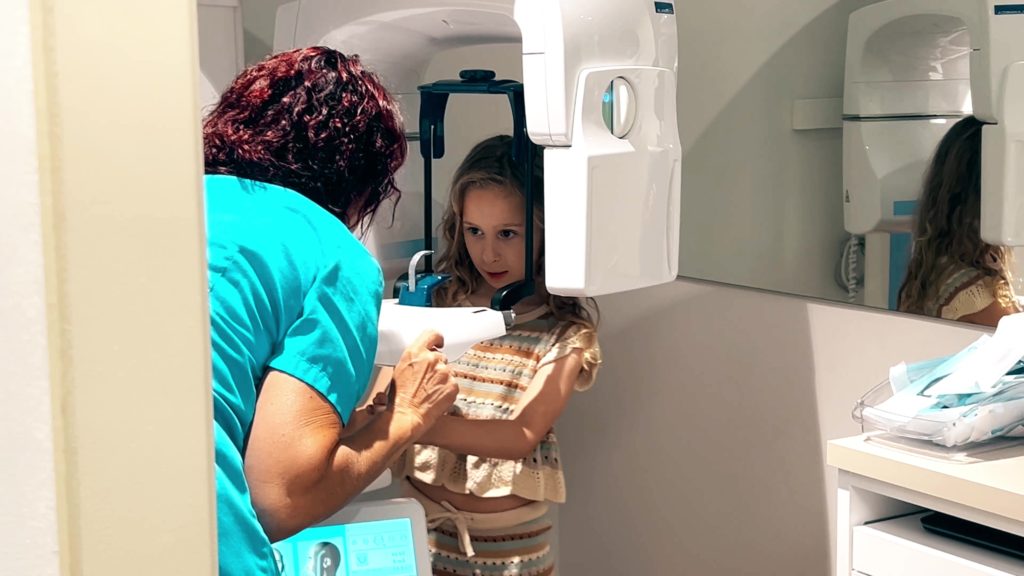
The right to health guarantees everyone access to prevention, diagnosis, and treatment. Patients have the right to receive clear information about their state of health, potential costs, and conditions of care (Centre of European and International Liaisons for Social Security, n.d.). In France, anyone residing or working on a stable and regular basis in the country is entitled to healthcare. This right, known as the right to health, is guaranteed by the Universal Health Coverage (PUMa) scheme.
This scheme also covers patients’ rights, such as the right to information about their state of health and the costs incurred, the right to informed consent, the right to non-discrimination in access to healthcare, the right to privacy, and the right to confidentiality. The AME (State Medical Aid) is a measure that can be used by people in precarious situations to access suitable healthcare (L’Assurance Maladie France, 2025).
However, this right to health is still hampered by several obstacles. On the one hand, health literacy is insufficient, making it difficult to understand information and navigate the healthcare system. On the other hand, access to healthcare professionals is complex, and appointments are difficult to obtain. Finally, drug shortages further complicate the situation (Santé Publique France, 2024).
Right to protection
In France, the right to protection encompasses several aspects: universal health coverage (PUMa), legal protection for minors (including guardianship), and the protection of minors at risk. Foreign children, among them refugees and persons in subsidiary protection, can also benefit from these protection measures. Protection of the person in a broader sense also extends to image and privacy (L’Assurance Maladie France, 2025; Service Public France, n.d.; Service Public France, 2024).
Children have the right to protection in that ‘every child has the right to grow up in a protective environment, free from violence, abuse or exploitation’ (Ministry of Justice, n.d.). The Child Welfare Service (ASE) may, as a first step, put administrative measures in place. If these prove insufficient to put an end to a dangerous situation, the justice system assumes responsibility for legal protection.
For refugees, temporary or subsidiary assistance may be granted while their situation is being regularised (Service Public France, 2024). However, in reality, this right to protection is undermined by repression and excessive use of force by the police, by the discrimination and racism prevalent in France, and by the impact of asylum and immigration law (Amnesty International, 2024).
Risk factors → Country-specific challenges
Child abuse
In France, children suffer all kinds of abuse, such as forced labour, forced begging, and sexual exploitation. Unaccompanied children and those from disadvantaged backgrounds are particularly vulnerable.
France has identified cases of child trafficking for various forms of exploitation, including forced labour in agriculture, particularly in the Champagne region. In the French department of Mayotte, unaccompanied Comorian children are also highly vulnerable to trafficking (US Department of State, 2024).
Incest, sexual assault, and physical violence are common problems for children in France, with the majority of abuse perpetrated by close family members. In 2022, the number of children who died a violent death within their families rose to 60. At least one child dies every five days as a result of abuse by their parents or a close relative. In 2023, approximately one in ten French people are estimated to have been victims of incest during their lifetime (Statista, 2025; UNICEF, 2022).
In France, the persistent and growing problems of discriminatory checks and searches, as well as the excessive and sometimes lethal use of force against children, are extremely worrying. This violence is often exacerbated by systemic racism and disproportionately affects young people of African and Arab origin (Le Monde 2024).
Poverty
In France, thousands of minors are poor and deprived of access to fundamental rights such as education and healthcare. Some live in slums or are homeless. In 2022, more than 20,000 individuals were living in slums in metropolitan France, including 8,000 to 10,000 children. Among those affected, the school enrolment rate was 47% among 12- to 18-year-olds (Médecins du Monde, 2022).
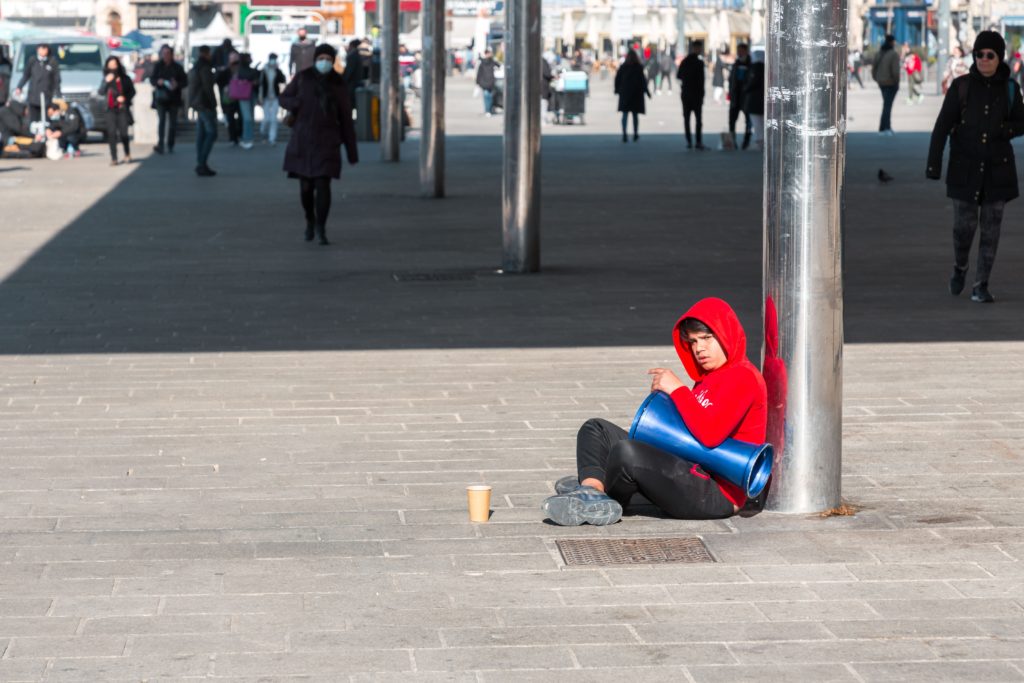
In addition to the multiple forms of discrimination they face, they have to cope with unsanitary living conditions, overcrowding, and health insecurity, which is exacerbated by the fragility of the structures built and by problems related to water and sanitation management. Furthermore, the lack of statistics on the subject and the failure of government services to meet their obligations hinder the implementation of measures to improve their situation (Médecins du Monde, 2019; UNICEF, 2017).
Discrimination
Beyond the social and economic discrimination suffered by poor children in mainland France, those living in overseas territories face structural disparities linked to their place of residence. Access to healthcare, education, and housing is much more limited there. This endemic poverty has serious consequences: in Réunion, nearly one in two children is affected, while in French Guiana, the figure is six out of ten. Poor housing affects nearly 600,000 people in these territories.
Children’s health is also directly impacted, which has consequences for their development and well-being. Infant mortality rates are significantly higher than the average recorded in mainland France. This problem is directly linked to a lack of infrastructure and financial resources. In 2019, 45% of inhabitants in Mayotte reported having given up on seeking medical treatment. These numerous issues overlap and compromise the lives of 1.2 million children and young people (UNICEF, 2023).
Migrant and refugee children
Systemic failures, administrative dysfunctions, and significant disparities characterise the reception and temporary emergency care of unaccompanied foreign minors in France. The increasingly restrictive immigration policies of the French authorities make discrimination and difficulties in regularising foreign minors’ situation a daily reality. Unaccompanied minors also find it difficult to access information and justice. They do not always speak the language and are unfamiliar with lengthy administrative procedures (Info Migrants, 2025).
Refugee and migrant children in France face major difficulties, including violence and abuse, mental and physical health problems (such as post-traumatic stress disorder and nutritional deficiencies), barriers to education and housing, and the danger of discrimination and racism (Human Rights Watch, 2024).
Children with disabilities
In France, discrimination, access to education and social services, and financial difficulties are problems faced by children with disabilities. Most children with disabilities enrolled in mainstream schools come from disadvantaged families (51%), which contrasts sharply with the overall average for pupils of the same age (38%).
Children with disabilities face less favourable living conditions. In 2016–2017, the percentage of households receiving the disabled child education allowance (AEEH) living below the poverty line was 25%, while the percentage was 17% for households not receiving the allowance (High Commission for Strategy and Planning, 2025).
Girls’ rights
In France, girls enjoy fundamental rights enshrined in the Constitution, but these rights are violated by discriminatory bans. In particular, discrimination based on religious dress, especially the ban on the hijab in sports and public schools, disproportionately affects Muslim girls and women (Amnesty International, 2025).
Violence against girls and women, including widespread sexual violence and femicide, is another serious problem, often met with disbelief by the judicial system due to deeply entrenched sexism. Between 2012 and 2021, 94% of rape complaints and 86% of sexual assault complaints were dismissed by the French justice system. Furthermore, although the official final rate of femicide in France for 2025 is not yet available, existing data indicate that the problem of lethal domestic violence persists (Human Rights Watch, 2025).
LGBTQ+ youth
In France, LGBTQ+ children face challenges related to discrimination and violence, often perpetrated within their families and school environments. These situations can lead to psychological distress and feelings of isolation. Homophobia and transphobia often expose them to rejection by their families and the education system.
Of the 1,620 cases of discrimination and violence against people who are homosexual or transgender recorded in France in 2024, 200 were committed within their family unit or close circle of friends. Rejection by loved ones is reported by 71% of victims. Harassment, threats, and insults affect 34%, 19%, and 34% of those concerned, respectively (Observatoire des inégalités, 2025).
Suicide among children and teenagers
Suicide among children is a growing concern in France, with child psychiatric services overwhelmed by an increase in the number of cases and hospitalisations for suicide attempts. Girls appear to be more affected, often expressing their distress through self-harm or eating disorders. Boys, although less likely to attempt suicide, are more likely to succeed, often using more violent methods. In France, suicide is the second leading cause of death among children aged 15 to 24 (Le Monde, 2022, 2024).
Written by Moïra Phuöng Van de Poël
Internally reviewed by Aditi Partha
Translated by Adrian Ordinana Salvador
Proofread by Or Salama
Last updated on 26 September 2025
References:
ADATE (2021, 24 juin). La discrimination dans l’accès à l’éducation. Extrait d’ADATE à https://www.info-droits-etrangers.org/vivre-en-france/les-discriminations, consulté en septembre 2025.
Amnesty International (2024, 23 avril). En France, un recul des droits et libertés en 2023. Extrait d’Amnesty International à https://www.amnesty.fr/actualites/france-le-recul-des-droits-et-libertes, consulté en septembre 2025.
Amnesty International (2025, 18 février). France: Hijab ban in all sports would violate human rights and target Muslim women and girls. Extrait d’Amnesty International à https://www.amnesty.org/en/latest/news/2025/02/france-hijab-ban-in-all-sports-would-violate-human-rights-and-target-muslim-women-and-girls, consulté en septembre 2025.
Britannica (2025, 27 août). France. Extrait de Britannica à https://www.britannica.com/place/France, consulté en septembre 2025.
Centre des Liaisons Européennes et Internationales de Sécurité Sociale (n.d.). Droits des patients en France. Extrait du Centre des Liaisons Européennes et Internationales de Sécurité Sociale à https://www.cleiss.fr/particuliers/venir/soins/ue/droits-patients-en-france.html, consulté en septembre 2025.
Commission Nationale Consultative des Droits de l’Homme (2025, 28 avril). Éducation et scolarité. Extrait de la Commission Nationale Consultative des Droits de l’Homme à https://www.cncdh.fr/presentation/themes-daction/questions-societales/education-et-scolarite, consulté en septembre 2025.
Haut-Commissariat à la Stratégie et au Plan (2025, 3 juin). Jeunes en situation de handicap : une mobilité sociale entravée. Extrait du Haut-Commissariat à la Stratégie et au Plan à https://www.strategie-plan.gouv.fr/publications/jeunes-en-situation-de-handicap-une-mobilite-sociale-entravee, consulté en septembre 2025.
Human Rights Watch (2024, 30 janvier). « Ce n’est pas la France que j’avais imaginée » – Hébergement, santé, et éducation pour les enfants migrants non accompagnés à Marseille. Extrait de Human Rights Watch à https://www.hrw.org/fr/report/2024/01/30/ce-nest-pas-la-france-que-javais-imaginee/hebergement-sante-et-education, consulté en septembre 2025.
Human Rights Watch (2025). France – Events of 2024. Extrait de Human Rights Watch à https://www.hrw.org/world-report/2025/country-chapters/france, consulté en septembre 2025.
Info Migrants (2025, 16 juillet). France: Report slams territorial inequalities in unaccompanied foreign minors care. Extrait d’Info Migrants à https://www.infomigrants.net/en/post/65797/france-report-slams-territorial-inequalities-in-unaccompanied-foreign-minors-care, consulté en septembre 2025.
L’Assurance Maladie France (2025, 25 mars). La protection universelle maladie. Extrait de L’Assurance Maladie France à https://www.ameli.fr/assure/droits-demarches/principes/protection-universelle-maladie, consulté en septembre 2025.
Légifrance (2021, 24 août). Code de l’éducation. Extrait de Légifrance à https://www.legifrance.gouv.fr/codes/section_lc, consulté en septembre 2025.
Le Monde (2022, 22 août). ‘Every morning, at least 3 young people have attempted suicide’: France’s child psychiatry services buckle amid rise in cases. Extrait du Monde à https://www.lemonde.fr/en/france/article/2022/08/22/every-morning-at-least-3-young-people-have-attempted-suicide-france-s-child-psychiatry-services-buckle-amid-rise-in-cases, consulté en septembre 2025.
Le Monde (2024, 25 février 2024). Les jeunes sont désormais plus touchés par les idées suicidaires que la population générale, un mal aux causes profondes. Extrait du Monde à https://www.lemonde.fr/societe/article/2024/02/25/idees-suicidaires-les-jeunes-desormais-plus-touches-que-la-population-generale-un-mal-aux-causes-profondes, consulté en septembre 2025.
Le Monde (2024, 11 avril). Human Rights groups file UN complaint over French police racial profiling. Extrait du Monde à https://www.lemonde.fr/en/france/article/2024/04/11/human-rights-groups-file-un-complaint-over-french-police-racial-profiling, consulté en septembre 2025.
Médecins du Monde (2019). Bidonvilles en France. Extrait de Médecins du Monde à https://www.medecinsdumonde.org/sur-le-terrain/bidonvilles-en-france, consulté en septembre 2025.
Médecins du Monde (2022). Le programme bidonvilles : lutte contre l’extrême précarité. Extrait de Médecins du Monde à https://www.medecinsdumonde.org/actualite/le-programme-bidonvilles-lutte-contre-lextreme-precarite/, consulté en septembre 2025.
Ministère de la justice (n.d.). La protection des mineurs en danger. Extrait du ministère de la Justice à https://www.justice.gouv.fr/justice-france/justice-mineurs/protection-mineurs-danger, consulté en septembre 2025.
Nations Unies Droits de l’Homme Organes et Traités (n.d.). Le statut de ratification par pays ou par traité. Extrait des Nations Unies Droits de l’Homme Organes et Traités à https://tbinternet.ohchr.org/_layouts/15/TreatyBodyExternal, consulté en septembre 2025.
Observatoire des inégalités (2025, 1er avril). Les homosexuels et trans, victimes de discriminations dans leur famille. Extrait de l’Observatoire des inégalités à https://www.inegalites.fr/LGBT-discriminations-parents-et-famille, consulté en septembre 2025.
Santé Publique France (2024, 22 mai). Information en santé : quelles sont les difficultés des Français ? Extrait de Santé Publique France à https://www.santepubliquefrance.fr/presse/2024/information-en-sante-quelles-sont-les-difficultes-des-francais, consulté en septembre 2025.
Service Public France (n.d.). Protection juridique (tutelle, curatelle). Extrait de Service Public France à https://www.service-public.fr/particuliers/vosdroits/N155, consulté en septembre 2025.
Service Public France (2024, 5 juillet). Statut de réfugié, protection subsidiaire ou temporaire : quelles différences ? Extrait de Service Public France à https://www.service-public.fr/particuliers/vosdroits, consulté en septembre 2025.
Service Public France (2025, 19 août). Université : quels sont les montants des frais d’inscription en 2025 ? Extrait de Service Public France à https://www.service-public.fr/particuliers/actualites, consulté en septembre 2025.
Statista (2025, 11 septembre). Child sex abuse in France – statistics & facts. Extrait de Statista à https://www.statista.com/topics/8154/pedocriminality-in-france, consulté en septembre 2025.
UNICEF (2017). Enfants en bidonvilles. Extrait d’UNICEF à https://www.unicef.fr/actions-humanitaires/europe-asie-centrale/france/enfants-en-bidonvilles/, consulté en septembre 2025.
UNICEF (2022). Analyses et chiffres clés de l’Observatoire – Protection et migration. Extrait d’UNICEF à https://www.unicef.fr/actions-humanitaires/observatoire-des-droits-de-lenfant/analyses-et-chiffres-cles-protection-migration/, consulté en septembre 2025.
UNICEF (2023). Grandir dans les Outre-mer : l’envers de la carte postale. Extrait d’UNICEF à https://www.unicef.fr/article/grandir-dans-les-outre-mer-lenvers-de-la-carte-postale/, consulté en septembre 2025.
US Department of State (2024). 2024 Trafficking in Persons Report: France. Extrait de l’US Department of State à https://www.state.gov/reports/2024-trafficking-in-persons-report/france, consulté en septembre 2025.
[1] This article by no means purports to give a full or representative account of children’s rights in France; indeed, one of many challenges is the scant updated information on Andorran children, much of which is unreliable, not representative, outdated, or simply non-existent.