
Realizing Children’s Rights in Belgium
The ratification of key international instruments – especially the United Nations Convention on the Rights of the Child in 1991 – demonstrates Belgium’s involvement and ongoing progress regarding children’s rights. However, undeniable shortcomings continue to impact children, particularly in terms of unequal access to education, health care, protection from violence, abuse, migrant children’s exclusion, and the failings of the juvenile justice system.
Population: 11.758 million
Pop. ages 0-14: 16.30%
Life expectancy: 82.3 years old
Under-5 mortality rate: 2.9‰
Belgium at a glance
Located in Northwestern Europe, Belgium has been a representative democracy since it became independent in 1830; it is run by a hereditary constitutional monarchy. It shares 1,385-km-long borders with the Netherlands to the north, Germany to the east, Luxembourg to the southeast, and France to the south (Britannica, 2025).
Culturally, Belgium is a heterogeneous country on the borderline of Roman and Eastern European Germanic languages. In addition to a German-speaking population in the east, there is a French-speaking population – collectively referred to as the Walloons (about one-third of the total population) – and the Flemish, which is a Flemish-/Dutch-speaking population (Britannica, 2025).
Thus, the Belgian population is divided into three linguistic communities: the Flemish in the north (the Flemish community), French-speaking Belgians in the south (the French-speaking community), and German-speaking Belgians (the German-speaking community). The Brussels-Capital Region brings officially bilingual towns together (Britannica, 2025).
Residents who were born abroad comprise less than one-tenth of the population. Although most of them come from other European Union countries, a significant proportion of migrants comes from North Africa and Central Africa, the Middle East, and Southeast Asia (Britannica, 2025).
Status of children’s rights [1]
Belgium is one of the 51 founding members of the United Nations, having joined the organisation on 26 June 1945. Then, Belgium ratified the Convention on the Rights of the Child on 16 December 1991; the Optional Protocol to the Convention on the Rights of the Child on the involvement of children in armed conflict on 6 May 2002; and the Optional Protocol to the Convention on the Rights of the Child on the sale of children, child prostitution and child pornography on 17 March 2006 (United Nations Human Rights Treaty Bodies, n.d.).
Belgium has also ratified several key international instruments:
- The International Covenant on Civil and Political Rights (21 April 1983)
- The Second Optional Protocol to the International Covenant on Civil and Political Rights, aiming at the abolition of the death penalty (8 December 1998)
- The International Covenant on Economic, Social and Cultural Rights (21 April 1983)
- The Convention on the Rights of Persons with Disabilities (2 July 2009)
- The Convention on the Elimination of All Forms of Discrimination against Women (10 July 1985)
Addressing the needs of children
Right to education
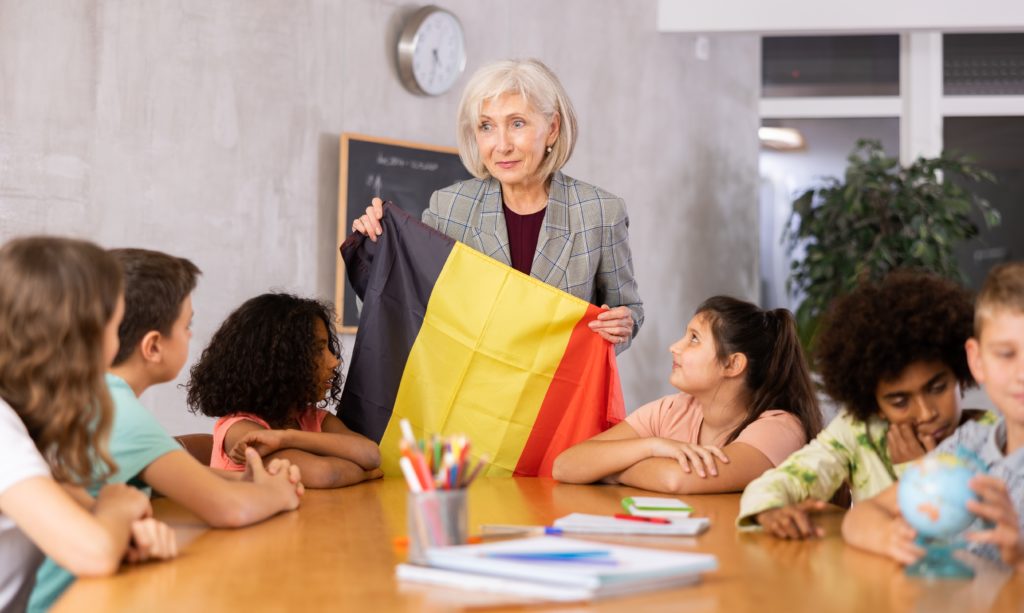
Education is a fundamental right in Belgium and is guaranteed by Article 24 of the Constitution as well as the International Convention on the Rights of the Child that has been ratified by the state. This right entails free and quality primary and secondary education (Défense des Enfants, 2013). Moreover, school is compulsory for 12 years, starting from the age of six (or five years old as of September 2020) until the age of majority, which is 18.
Compulsory school attendance starts when a child turns six (or five as of September 2020). Nonetheless, school is compulsory only until the age of 15. From 15 to 18, teenagers can take part-time courses (Belgian Information and Official Services, 2025).
According to the Belgian Constitution, primary and secondary education are free, and access to education should be guaranteed to all citizens without discrimination of any kind. Indeed, education should be available to minorities and vulnerable groups, including ‘girls, orphans, children living in rural or remote areas, children from ethnic and cultural minorities, nomads, indigenous peoples, children with disabilities, migrants, asylum seekers, refugees and displaced children, children deprived of liberty and finally, children in emergency situations’ (Défense des Enfants, 2013).
However, in practice, some practices continue to discriminate against ethnic, religious, and linguistic origins as well as underprivileged social classes, sex, and migrant children. Poverty, which affects many people in Belgium, is also a major obstacle to the realisation of children’s right to education. Indeed, additional costs such as school meals, uniforms, books, school materials, and trips can put poor or underprivileged families at a disadvantage (Défense des Enfants, 2013).
Thus, the right to education is being hindered by several obstacles, particularly poverty and social and racial discrimination (Amnesty International, 2023).
Right to health
The Belgian Constitution has recognised the right to health since 1994. This recognition includes the right to the protection of health – encompassing access to quality, affordable, and timely care – as well as specific rights for patients (Sécurité sociale Citoyen, 2025). Moreover, insured citizens benefit from a mandatory health insurance system that covers numerous medical expenses (INAMI, 2025).
However, Belgium still faces several challenges regarding health, particularly because of significant socio-economic disparities and a rise in mental health issues such as anxiety, depression, and eating disorders. Belgium is also grappling with challenges related to health care access, particularly for vulnerable groups (INAMI, 2020; Indicators Belgium, 2024; OECD, 2022).
In particular, people in precarious situations are those whose health care needs are the least met. For instance, among the 20% of the population that has the lowest incomes, it is estimated that, unfortunately, 6.7% cannot fulfil their medical needs because of costs that are high compared to their incomes (INAMI 2020).
Right to protection
The right to protection in Belgium encompasses the protection of personal data, protection from violence and exploitation, and protection of victims’ rights. Belgium also grants protection to those who are persecuted worldwide (Belgian Information and Official Services, 2025).
Children, in particular, have the right to be protected against ‘any form of violence; the use of narcotics; abduction abroad; any form of sexual exploitation; child labour that is dangerous to their health or jeopardizes their education’ (Belgian Official Information and services, 2025; UNICEF, 2011).
In theory, it is incumbent upon parents or legal representatives to protect their children or the children they have in their care. If issues arise or if harm is caused to a child, the state has a responsibility to protect children by providing both help and youth protection services (General Delegate for Children’s Rights, n.d.).
However, persisting issues in child protection include abuse (family or sexual), corporal punishment, challenges in coordinating protection services, and a lack of resources alongside administrative complexity (SOS Children’s Villages, 2025).
Risk factors 🡪 Country-specific challenges
Poverty
In Belgium, one child out of 5 – that is, 20.6% – grows up in poverty (UNICEF Belgium, 2020). Such poverty impacts all aspects of a child’s life and can significantly jeopardise their health, future prospects, safety, and ability to attend university. Underprivileged children are still faced with unequal opportunities in Belgium. Studies show that students coming from an underprivileged background are less integrated than their fellow classmates who come from wealthier families (Amnesty International, 2023).
Despite primary education being free, side costs are often an obstacle for low-income families; students must often buy uniforms, books, and school materials, and parents must also pay for expenses related to short and longer school trips (Défense des Enfants, 2013).
Moreover, precariousness has a long-term impact on children’s health, notably ‘due to inadequate nutrition, insufficient use of prevention services, poor quality housing, and a substandard environment’ (Roi Baudouin Foundation, 2023). Children’s mental health and development are also highly endangered in this context. Children should have free and fair access to health care, regardless of their parents’ coverage status, as is already the case in several European countries (INAMI, 2020).
Disabled children
In Belgium, disabled children face issues that impede their inclusion in the school system and their access to basic services. In particular, these difficulties can be accounted for by the lack of adequate structures and tailored solutions, as well as persisting prejudices. Indeed, 90% of school buildings are not accessible and suitable for disabled children.
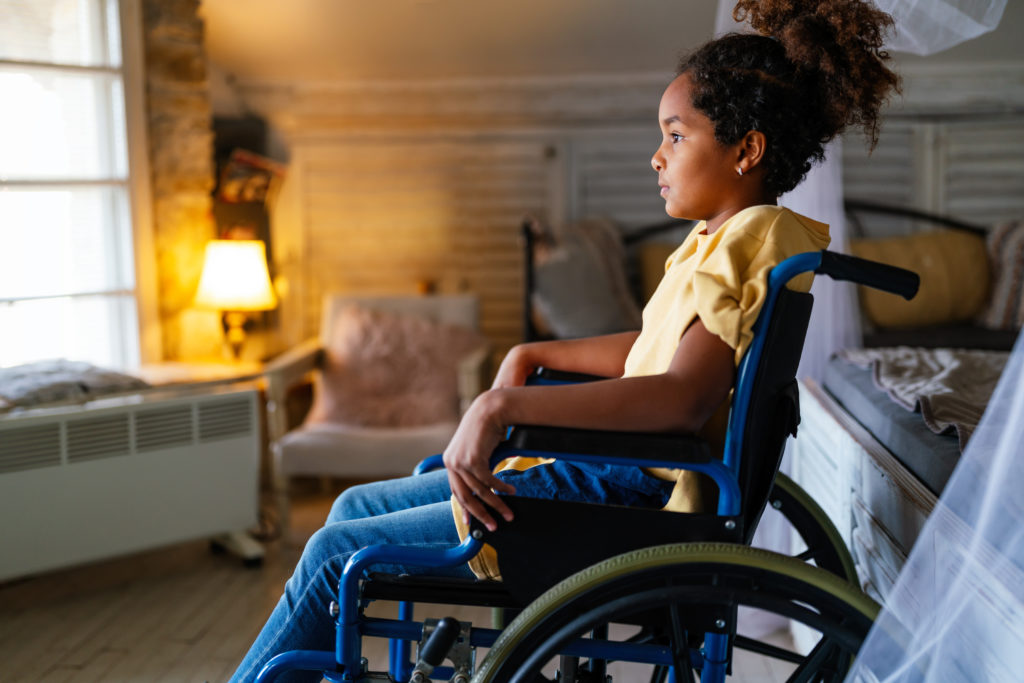
Moreover, although the risk of abuse and violence is particularly high among disabled children, there are no official statistics that make it possible to measure their extent. Implementing measures to care for each child and support them at school in a way that is specially adapted to them is crucial. Raising awareness along with training school and social staff on the specific needs of these children is also essential (European Parliament, 2013).
Migrant and refugee children
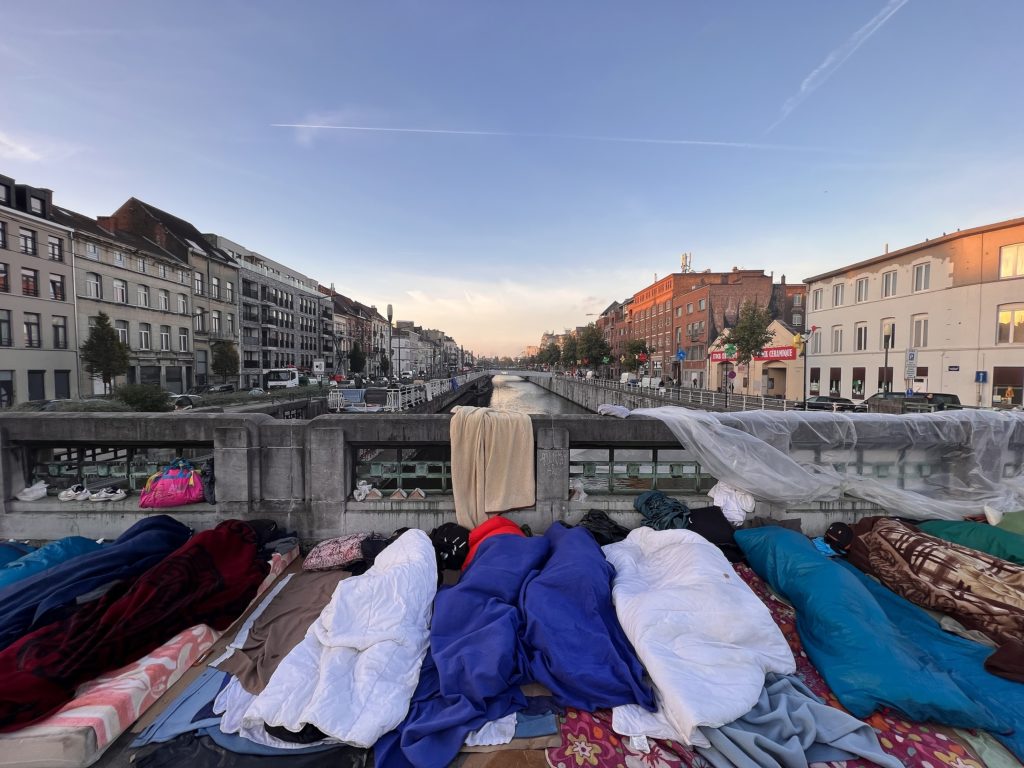
In theory, migrant and refugee children who are in asylum or regularisation procedures have the right to reception (General Delegate for Children’s Rights, n.d.). In practice, the waiting list for accommodation in a reception facility is long, and the protection of marginalised groups is not guaranteed. Thus, there are children and their families who have no shelter and must survive in precarious conditions – whether on the street or in squats (Amnesty International, 2025).
Moreover, it was only in May 2024 that Belgian law made it illegal to detain a child in a closed centre because of their migration status. However, the Belgian State must still take measures to forbid other forms of alternative detention that violate children’s rights. These forms include the detention of children in ‘closed centres’ and ‘administrative detention centres for migrant families.’
Forbidding such detention entails reinforcing the procedural rights of minors in this context by guaranteeing access to legal aid in case of a risk of detention. It is also crucial to implement a legal framework that will ensure the protection of minors to prevent them from being separated from their parents who are detained (Défense des Enfants International Belgique, 2024).
Abused children
In Belgium, the number of abused children is concerning. In 2017, in the Wallonia-Brussels Federation, the authorities registered 6,188 child abuse cases reported by healthcare professionals or social services. In 2018 in Flanders, 8,699 children were reported, and 14.2% of them were less than three years old. Moreover, it is estimated that 15.6% of girls are subjected to physical abuse committed by adults before the age of 15 (SOS Children’s Villages, 2025; UNICEF Belgium, 2017).
Belgium must solve these issues by all means. To do so, the state must gather the existing data on all forms of violence towards children. The state must also strengthen the protocols used to identify victims as well as existing measures to care for these children, particularly those faced with slave trade or exploitation (UNICEF Belgium, 2017).
Juvenile justice system
In Belgium, young people who have broken the law can be subject to specific measures such as supervision, protection, and educational actions. The aim is to consider the minor as a person along with their living situation (Federal Public Justice Service, 2007). In practice, numerous measures that are enforced do not consider the age of young people and are not appropriate for their situation.
Furthermore, it is estimated that one young person out of five feels that they do not have enough information on the judicial system, its role, and the way it works. In a study conducted between 2011 and 2022 in Belgium, 55.6% of the young people interviewed reported that they had not been properly informed or prepared about their rights before their hearing. Moreover, a 2018 report presented to the Belgian state revealed that approximately 1,700 young people were incarcerated between 2013 and 2016 for criminal offences (Défense des Enfants International Belgique, 2022).
Juvenile delinquency is a multi-factor phenomenon. Belgium should take urgent action at both national and international levels to ensure an effective decrease in the number of minors deprived of their freedom. Prevention and management require a comprehensive approach that encompasses education, family assistance, rehabilitation, and a reform of the judicial system (Afebia, 2024; Défense des Enfants International Belgique, 2022).
Written by Moïra Phuöng Van de Poël
Internally proofread by Aditi Partha
Translated by Catheline Hannier
Proofread by Or Salama
Last updated on 5 May 2025
Bibliography:
Afebia (2024, 7 juin). Solutions Innovantes pour Prévenir et Réduire la Délinquance Juvénile. Extrait d’Afebia à https://afebia.tg/article/solutions-innovantes-pour-prevenir-et-reduire-la-delinquance-juvenile-298., consulté en avril 2025.
Amnesty International (2023, 14 novembre). Les obstacles au droit à l’éducation en Belgique. Extrait d’Amnesty International à https://jeunes.amnesty.be/jeunes/nos-campagnes-jeunes/droit-education/temoignages/article/obstacles-droit-education-belgique, consulté en avril 2025.
Amnesty International (2025, 6 février). L’accord de gouvernement suscite de fortes inquiétudes en Belgique. Extrait d’Amnesty International à https://www.amnesty.be/infos/actualites/arizona., consulté en avril 2025.
Amnesty International (2025, 3 avril). Belgique, un refus persistant de respecter le droit à l’accueil des personnes demandeurs d’asile. Extrait d’Amnesty International à https://www.amnesty.be/infos/actualites/article/belgique-refus-persistant-respecter-droit-accueil-demandeuses, consulté en avril 2025.
Britannica (2025, 31 mars). Belgium. Extrait de Britannica à https://www.britannica.com/place/Belgium, consulté en avril 2025.
Défense des Enfants (2013, avril). Le droit de l’enfant à l’éducation. Extrait de Défense des Enfants à https://www.right-to-education.org/sites/right-to-education.org/files/resource-attachments/DEI-Belgique_Droit_de_l_enfant_a_l_education_2013.pdf, consulté en avril 2025.
Défense des Enfants International Belgique (2022). Promouvoir une justice adaptée aux enfants pour tous & toutes. Extrait de Défense des Enfants International Belgique à https://www.dei-belgique.be/index.php/modes-d-action/plaidoyer-et-lobbying/une-justice-adaptee-aux-enfants.html., consulté en avril 2025.
Défense des Enfants International Belgique (2024). La détention d’enfants pour des raisons de migration doit être interdite. Extrait de Défense des Enfants International Belgique à https://dei-belgique.be/index.php/modes-d-action/plaidoyer-et-lobbying/la-detention-d-enfants-pour-des-raisons-de-migration.html., consulté en avril 2025.
Délégué général aux droits de l’enfant (n.d.). Protection contre les violences et les abus. Extrait du Délégué général aux droits de l’enfant à Protection contre les https://www.defenseurdesenfants.be/thematiques/protection-contre-les-violences-et-abusviolences et abus | DGDE, consulté en avril 2025.
Fondation Roi Baudouin (2023, octobre). La déprivation des enfants en Belgique et dans ses régions: que disent les nouvelles données ?. Extrait de la Fondation Roi Baudoin à https://media.kbs-frb.be/fr/media/11074/FR_D%C3%A9privation%20des%20enfants%20en%20Belgique_Brochure, consulté en avril 2025.
INAMI (2020). Les inégalités d’accès aux soins de santé en Belgique. Extrait d’INAMI à https://www.inami.fgov.be/fr/publications/les-inegalites-d-acces-aux-soins-de-sante-en-belgique, consulté en avril 2025.
INAMI (2025). Soins de santé : coût et remboursement. Extrait d’INAMI à https://www.inami.fgov.be/fr/themes/soins-de-sante-cout-et-remboursement, consulté en avril 2025.
Indicators Belgium (2024, 29 novembre). Maladie ou problème de santé de longue durée. Extrait d’Indicators Belgium à https://indicators.be/fr/i/G03_LSI/Maladie_ou_probl%C3%A8me_de_sant%C3%A9_de_longue_dur%C3%A9e, consulté en avril 2025.
Informations et services officiels belges (2025). Droits de l’enfant. Extrait d’Informations et services officiels belges à https://www.belgium.be/fr/famille/enfants/droits_de_l_enfant, consulté en avril 2025.
Informations et services officiels belges (2025). Droits fondamentaux. Extrait Informations et services officiels belges à https://www.belgium.be/fr/justice/victime/plaintes_et_declarations/droits_de_base/droits_fondamentaux, consulté en avril 2025.
Informations et services officiels belges (2025). Obligation scolaire. Extrait d’Informations et services officiels belges à https://www.belgium.be/fr/formation/enseignement/droits_et_devoirs/obligation_scolaire, consulté en avril 2025.
KPMG (2023, 31 août). Modification de la législation fédérale anti-discrimination. Extrait de KPMG à https://kpmg.com/be/fr/home/insights/2023/08/sme-modification-de-la-legislation-federale-anti-discrimination.html., consulté en avril 2025.
Le Délégué général aux droits de l’enfant (n.d.). Enfants réfugiés, migration. Extrait du Délégué général aux droits de l’enfant à https://www.defenseurdesenfants.be/thematiques/enfants-refugies-migration, consulté en avril 2025.
Nations Unies Droits de l’Homme Organes et Traités (n.d.). Le statut de ratification par pays ou par traité. Extrait des Nations Unies Droits de l’Homme Organes et Traités à https://tbinternet.ohchr.org/_layouts/15/TreatyBodyExternal/Treaty.aspx?Lang=fr, consulté en avril 2025.
OECD (2022). Belgique – Profils de santé par pays 2021. Extrait d’OECD à https://health.ec.europa.eu/system/files/2022-01/2021_chp_be_french.pdf, consulté en avril 2025.
Sécurité sociale Citoyen (2025). Santé. Extrait de Sécurité sociale citoyen à https://www.socialsecurity.be/citizen/fr/sante consulté en avril 2025.
Service Public Fédéral Justice (2007). Approche de la délinquance juvénile. Extrait du Service Public Fédéral Justice à https://justice.belgium.be/sites/default/files/downloads/Approche%20de%20la%20d%C3%A9linquance%20juv%C3%A9nile.pdf, consulté en avril 2025.
SOS Villages d’Enfants (2025). Sécurité des enfants. Extrait de SOS Villages d’Enfants à https://www.sos-villages-enfants.be/securite-des-enfants, consulté en avril 2025.
UNIA (2025). Equality Data: données sur l’(in)égalité et la discrimination. Extrait d’UNIA à https://www.unia.be/fr/connaissances-recommandations/equality-data-donn%C3%A9es-sur-lin%C3%A9galit%C3%A9-et-la-discrimination, consulté en avril 2025.
UNIA (2025). Intersectionnalité et discrimination. Extrait d’UNIA à https://www.unia.be/fr/dossiers/intersectionnalit%C3%A9-et-discrimination, consulté en avril 2025.
UNICEF (2011). Le droit à la protection. Extrait d’UNICEF à https://www.unicef.fr/sites/default/files/userfiles/Sequence%207_1-FicheEnseignant-College.pdf, consulté en avril 2025.
UNICEF Belgique (2017). La violence à l’égard des enfants. Extrait d’UNICEF à https://www.unicef.be/fr/plaidoyer/le-plaidoyer-sur-divers-themes-politiques/la-violence-legard-des-enfants, consulté en avril 2025.
UNICEF Belgique (2020). La pauvreté infantile ne touche pas que les pays à faibles revenus. Extrait d’UNICEF Belgique à https://www.unicef.be/fr/sensibilisation-et-communication/campagne-pauvrete-infantile, consulté en avril 2025.
[1] This article by no means purports to give a full or representative account of children’s rights in Belgium; indeed, one of the many challenges is the scant updated information on Belgium’s children, much of which is unreliable, not representative, outdated, or simply non-existent.