Realizing Children’s Rights in Georgia
Since ratifying the Convention on the Rights of the Child in 1994, Georgia has adopted other national policies and joined international agreements to create a legal framework aimed at improving children’s rights. However, there are still issues in how the legislation is translated into practice, particularly in vulnerable communities. While the country has made some advances in education and healthcare, challenges such as poverty, discrimination, child marriage, and access to essential services remain unresolved.


Population: 3.7 million
Pop. Ages 0-14: 19.2%
Life expectancy: 73.5 years
Under-5 mortality rate: 8.1‰
Georgia at a Glance
Georgia is located on the eastern shore of the Black Sea and is bordered by Russia to the north, Azerbaijan to the southeast, Armenia to the south, and Turkey to the southwest. Its strategic position has historically made it a crossroads of various cultures, empires, and trade routes, contributing to a unique blend of traditions and influences that shape the country’s current identity.
Throughout its history, Georgia has undergone major political and social transformations. In the 19th century, Georgia was annexed by the Russian Empire, which affected the country’s administrative and cultural identity (Britannica, 2025). During the Soviet era, Georgia experienced repression but also industrial development. Its national identity was generally suppressed, yet it was still nurtured to some extent through local culture and traditions.
The country regained independence in 1991 after the dissolution of the Soviet Union, leading to a turbulent post-independence period marked by civil conflicts, economic instability, and political reforms. The peaceful Rose Revolution of 2003 was a turning point, ushering in a new wave of democratic reforms and Western-oriented policies, which continue to impact Georgia’s political landscape today (BBC News, 2019).
Over recent decades, Georgia has also implemented significant economic reforms, boosting its global rankings in business and governance, and attracting more investment. However, it still faces challenges like an aging population, low productivity, and limited high-quality employment (Global Finance, 2024).
In terms of its demographics, Georgia is a fairly diverse country. The Georgian ethnicity makes up about 83-86 % of the total population. However, Georgians are further divided into multiple regional subgroups. Additionally, there are many ethnic minorities, Armenians and Azeris being the largest minority groups (Omnes, 2024).
Status of Children’s Rights [1]
Georgia has committed to protecting children’s rights by ratifying key international agreements, including the United Nations Convention on the Rights of the Child (CRC) in 1994 (United Nations Treaty Collection, n.d.). The Lanzarote Convention, which mandates the criminalisation of all kinds of sexual offenses against children, was ratified by Georgia in 2014 (Council of Europe, 2025).
In 2024, Georgia ratified the Convention of 23 November 2007 on the International Recovery of Child Support and Other Forms of Family Maintenance, as well as the Protocol of 23 November 2007 on the Law Applicable to Maintenance Obligations, intended to provide for international judicial and administrative cooperation in the recovery of child support and other forms of family maintenance (HCCH, 2024).
At the national level, Georgia has enacted a range of laws to support children’s rights, most notably the Code on the Rights of the Child, adopted in 2019. This legal instrument aims to ensure the well-being of children by supporting the effective implementation of the Constitution of Georgia, the United Nations Convention on the Rights of the Child and its Optional Protocols, and other international treaties ratified by Georgia (Children’s Rights Legislative Reform, n.d.). Another key national law is the Law on the Elimination of All Forms of Discrimination, adopted in 2014, with the goal of strengthening the legislative framework in promoting minority rights (Council of Europe Office in Georgia, 2019).
Despite the existing legal framework, challenges persist in practice. Discrimination and child marriage remain significant concerns, as well as poverty, which further impacts access to education, health care, and social services (United Nations, 2024).
Addressing the Needs of Children
Right to education
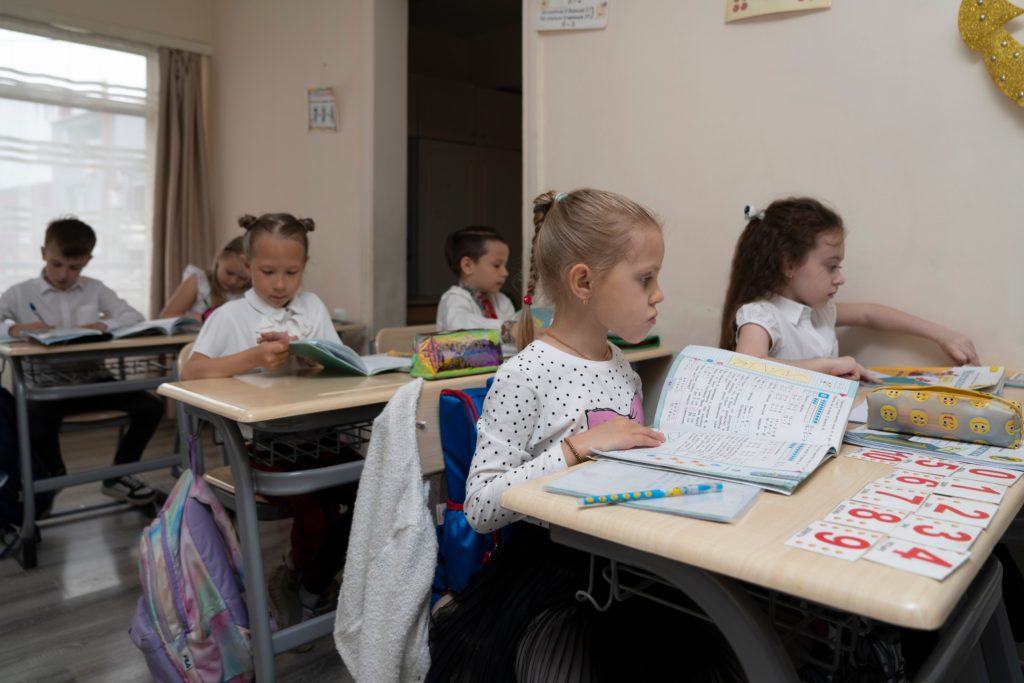
The Constitution of Georgia guarantees the right to education and academic freedom. General education (grades 1-12) is mandatory and fully funded by the State for everyone, per the procedures established by law (Eurydice, 2025). Statistics show that a 100% completion rate is achieved in terms of primary education, regardless of children’s socioeconomic status. However, already at the level of lower secondary education, small discrepancies related to children’s ethnicity and completion rates can be noticed.
While 100% of Georgian children complete this level of education, 98% of Azeri children do the same (Unicef, 2020). The upper secondary level is a critical bottleneck. In Georgia, 66% of children finish higher secondary school. Completion rates are higher among children from wealthy households and those living in metropolitan areas.
The largest disparities are linked to ethnicity and wealth: the wealthiest children are twice as likely to complete upper secondary school as the poorest. Azeris have a notably low completion rate among ethnicminority groups (33%), whereas children of Georgian heritage have a completion rate of 69% (Unicef, 2020).
Another concern is the quality of the education. According to the Organisation for Economic Co-operation and Development (OECD) and PISA results, around 30% of Georgian children score at least Level 2 proficiency in mathematics, reading, and science, while the OECD average is around 70% (OECD, 2022). This gap highlights the significant need for improvements to ensure the full realisation of the right to education.
Right to health
In 2013, the Georgian government introduced the universal health insurance program that covers all residents of the country except those with an annual income of 40,000 GEL (around 15,000 USD as of 2025) or more. The program provides full or partial financing of urgent and planned inpatient and outpatient services, with caps on the maximum amount for some services, including planned surgeries. Many medications are also partially or fully financed by this insurance. The content of the insurance package differs across age groups and family income status, with children under the age of six being entitled to the most generous packages (National Statistics Office of Georgia, 2023).
However, there remain differences between materially deprived and other children. According to a survey conducted by the National Statistics Office of Georgia during July-September 2022, nearly a quarter of deprived children (24.2%) missed at least one essential treatment compared to 4.6% of non-deprived children in the 12 months preceding the survey. There are also differences between children with functional difficulties and other children, with 41.5% of children with functional difficulties having missed an essential treatment at least once in the mentioned period, compared to 11% of children without functional difficulties (National Statistics Office of Georgia, 2023).
As for specific health risks, malnutrition remains a major challenge. According to the Global Hunger Index, 4.0% of the population is undernourished, with 5.1% of children under five being stunted (Global Hunger Index, 2024).
Another issue is lead poisoning in children, which can lead to brain and other organ damage. In 2018, 41% of children in Georgia had elevated blood lead levels. To address this, the Georgian government has upgraded its institutional capabilities, laboratory and surveillance capacity, front-line services, and regulatory action (Unicef, 2023).
In 2017, Georgia established a long-term Maternal and Newborn Health Strategy (2017–2030) and a short-term Action Plan (2017–2019) to improve maternal and neonatal care. The country also launched a regionalized perinatal care initiative to ensure quality services for mothers and babies, supporting progress toward reducing maternal and infant mortality (WHO, 2017). This led to the under-5 mortality rate decreasing to between 8‰ and 9‰. While this is not particularly low compared to other countries, it is a drastic step forward compared to the 36‰ registered back in 2000 (World Bank, 2023).
Right to water
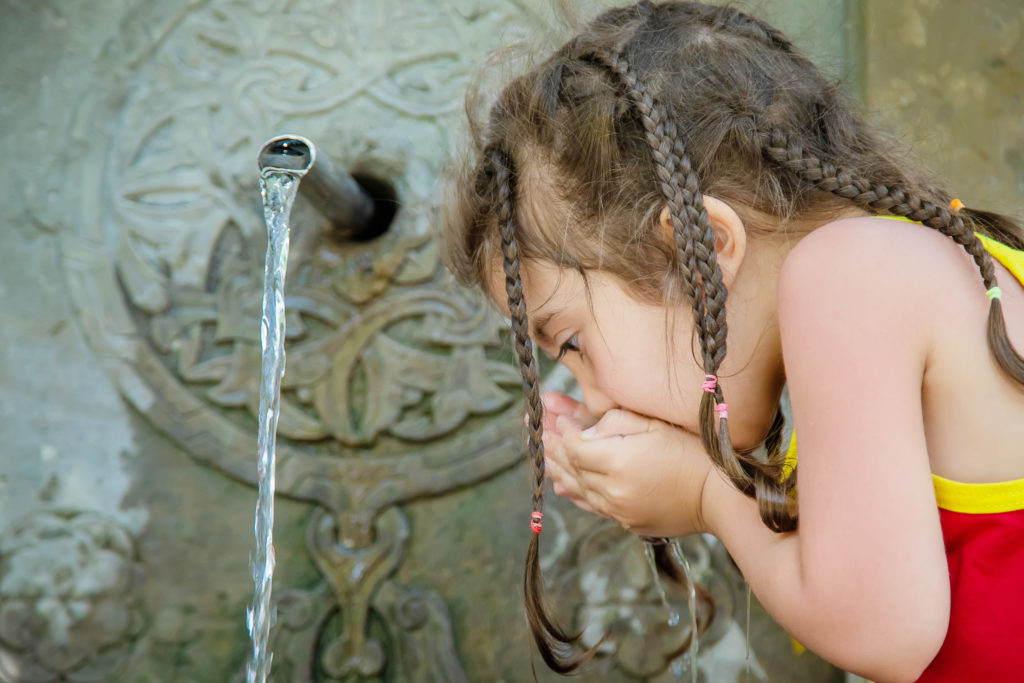
On-site assessments conducted across Georgia, especially in its rural areas, identified issues such as insufficient access to water, disparities in water quantity both across and within settlements, and long distances to water sources. Infrastructure problems, such as poorly maintained roads and the absence of comprehensive water networks, worsen the difficulties, especially for vulnerable groups. Additionally, the quality and safety of water often remain uncertain due to inadequate monitoring and a lack of transparent information, leaving residents uninformed about water safety and unprepared for potential interruptions (Public Defender of Georgia, 2025).
In rural areas, only a small number of villages benefit from a 24-hour water supply, with most communities relying on scheduled deliveries or alternative sources like rainwater, snow, or river water in cases of shortages. Although formal water fees are uncommon, residents incur various costs related to transportation, purchasing water, or connecting to limited water networks. Despite some progress being made in this area, the existing gaps in infrastructure, information sharing, and management require further efforts to ensure everybody, including children, has access to sufficient and safe water supplies (Public Defender of Georgia, 2025).
Risk Factors → Country-Specific Challenges
Violence against children
The Code on the Rights of the Child, adopted in 2019, explicitly bans all forms of corporal punishment of children in all settings, including homes. However, corporal punishment and verbal abuse remain ever-present disciplinary methods in Georgia (End Corporal Punishment, 2019).
Results of a multiple indicator cluster survey conducted in Georgia in 2020 show that, within a month prior to the survey, 70% of children aged 1 to 14 in Georgia were subjected to at least one form of violent discipline. Among these children, 66% experienced psychological aggression, such as shouting or verbal abuse, while approximately 31% were subjected to physical punishment (Unicef, 2020).
Severe forms of corporal punishment affected about 5% of children, highlighting the prevalence of harsh disciplinary practices. Despite this, over 90% of children were also subjected to non-violent disciplinary methods. However, most parents used these alongside violent forms of discipline, rather than exclusively employing non-violent approaches (Unicef, 2020).
Only 28% of children were disciplined solely through non-violent means, indicating that violent methods remain widespread. A closer look at specific disciplinary methods reveals that more than half of parents resort to yelling at their children, and around 20% experience hitting or slapping. The data suggests that violent discipline remains deeply ingrained in parenting practices, impacting a considerable proportion of children and raising concerns about the overall well-being and protection of children’s rights (Unicef, 2020).
Displaced children
Displaced children in Georgia are primarily a consequence of the long-standing conflicts in the regions of Abkhazia and South Ossetia, which have resulted in significant internal displacement since the early 1990s. By the end of 2024, the country identified 299,172 internally displaced people, many of whom are children. In addition, Georgia also hosts 31,029 registered refugees, mostly from Iraq, Iran, and Ukraine, who also include vulnerable children in need of support (UNHCR, 2024).
The displaced children and their families face persistent housing problems, including inadequate living conditions, poor sanitation, and unsafe structures. Many rely on minimal state aid of 45 GEL (around 17 USD as of 2025) per month, which is insufficient to meet basic needs. Unemployment among displaced individuals is critically high, with over 70% of them unemployed due to barriers like a lack of transportation, skills, and access to suitable job opportunities, especially in rural areas.
These factors lead to high levels of poverty, which is especially harsh on children. Additionally, there are difficulties accessing social services, healthcare, and secure employment, while long-term displacement has led to societal stigmatization, misconceptions about their legal status, and inadequate integration support (Estonian Refugee Council, 2024).
Displaced families also face challenges related to movement restrictions across the administrative boundary lines in Abkhazia and South Ossetia, which are controlled by de facto authorities supported by Russia. These restrictions include limited access to crossings, frequent closures, and surveillance by border guards, which hinder their ability to travel freely, access essential services, reconnect with family members, and engage in livelihood activities. The restrictions not only restrict movement but also undermine efforts to facilitate voluntary return and local reintegration (United Nations General Assembly, 2025).
Poverty
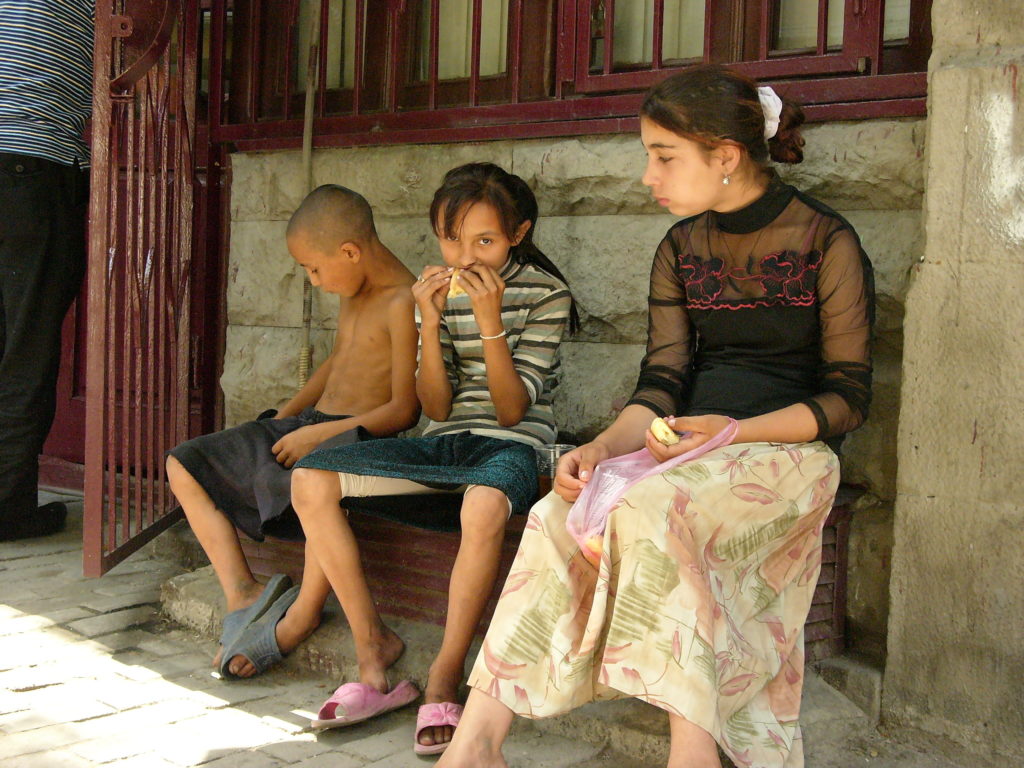
Children’s poverty in Georgia has been a longstanding challenge that has long-lasting negative effects on children’s development and future opportunities. This makes more comprehensive efforts in this area absolutely necessary. Recent data indicate that in 2023, 11.8% of the total population in Georgia lived below the national poverty line (ADB, 2025). Despite ongoing efforts, children in poor households continue to face difficulties in accessing basic services such as quality education, healthcare, and nutrition.
According to the 2019 Multiple Indicator Cluster Survey, only half of the children in Georgia aged 6 to 23 months had access to at least five of the eight food groups recommended for their age. Furthermore, 66% of these children received the minimum necessary amount of solid or soft food appropriate for their age, but just 27% had access to a diet that meets both the minimum dietary diversity and the required frequency of meals (PHR, 2019).
Fortunately, there is a declining trend in poverty levels. The percentage of the population in Georgia living below the national poverty line dropped significantly, from 21.7% in 2019 to 11.8% in 2023 (ADB, 2025). International organizations and the Georgian government have implemented social programs aimed at reducing economic disparities and supporting vulnerable families. As a positive example of these efforts, in 2019, the Georgian government increased the cash value of food vouchers from approximately 3.5 USD to 18.5 USD and introduced non-monetary assistance as well (ADB, 2025).
Discrimination
Georgia has made commendable legislative progress in promoting the rights of national minorities over the past years, notably through the adoption of anti-discrimination laws and efforts to promote diversity. However, there are still serious problems in terms of practical implementation and the effectiveness of minority rights protection.
The lack of well-organised data collection, especially regarding ethnic, religious, and linguistic minorities, slows down the development of targeted policies and undermines efforts to foster social inclusion. Issues such as discrimination against religious minorities and the politicization of minority issues add to the mistrust and make the creation of an environment of genuine tolerance and respect even more challenging (Council of Europe Office in Georgia, 2019).
Moreover, the societal challenges extend beyond legal reforms to encompass education, social cohesion, and hate speech. Efforts to promote minority languages and ensure their integration into public life are still insufficient, with persistent obstacles like inadequate teaching materials and a lack of trained teachers in minority languages.
Incidents of religious intolerance, hate speech, especially online, and physical retaliation against students indicate the urgent need for more effective measures to fight xenophobia. To move forward, Georgia must prioritize accurate data collection, transparent policy implementation, and targeted awareness campaigns, paired with strong enforcement of anti-discrimination legislation, to truly realize its commitments to diversity and minority rights (Council of Europe Office in Georgia, 2019).
Child marriage
The minimum age for marriage is eighteen years in Georgia. Still, Georgia ranks among the countries with the highest rates of child marriage in Europe. Data shows that 14% of girls in Georgia are married before turning eighteen, and 1% are married before the age of fifteen. Tracking child marriage cases is challenging because many families avoid official registration until the girl is considered of legal age and often, these marriages are conducted in rural churches or mosques, where couples are seen as married on a cultural or religious basis rather than on a legal one (Khalilov, 2019).
A 2017 study conducted by UN Women in Kvemo Kartli, a region characterized by a significant presence of ethnic minorities such as Azerbaijanis, Armenians, and Russians, showed that there is a prevalence of early marriage among these communities. Research revealed that 32% of women from ethnic minority groups who were married had entered into marriage or cohabitation before turning eighteen.
Notably, 5% of these women were married between the ages of thirteen and fourteen, and 16% married between fifteen and sixteen (Khalilov, 2019). These findings point to the critical urgency of tackling early marriage in ethnic minority communities to protect children’s rights and ensure that all girls in Georgia can safely reach their full potential.
Written by Zeljka Mazinjanin
Internally proofread by Aditi Partha
Last updated on September 4, 2025
References:
ADB (2025), 2025 Basic Statistics. Retrieved from ADB, available at https://www.adb.org/sites/default/files/publication/1047776/basic-statistics-2025.pdf, accessed on August 21, 2025.
BBC News (2019), Georgia profile – Timeline. Retrieved from BBC News, available at https://www.bbc.com/news/world-europe-17303471, accessed on August 19, 2025.
Britannica (2025), Georgia. Retrieved from Britannica, available at https://www.britannica.com/place/Georgia, accessed on August 19, 2025.
Children’s Rights Legislative Reform (n.d.), Brief Overview of the Code on the Rights of the Child of Georgia. Retrieved from Children’s Rights Legislative Reform, available at https://www.childrensrightsreform.org/images/uploads/Commentary-Georgia-CC.pdf, accessed on August 21, 2025.
Council of Europe (2025), Chart of signatures and ratifications of Treaty 201. Retrieved from Council of Europe, Treaty Office, available at https://www.coe.int/en/web/conventions/full-list?module=signatures-by-treaty&treatynum=201, accessed on August 21, 2025.
Council of Europe Office in Georgia (2019), National minorities’ rights in Georgia: legislation strengthened, but data collection, religious minorities rights protection, and minority languages teaching must be improved. Retrieved from Council of Europe Office in Georgia, available at https://www.coe.int/en/web/tbilisi/home/-/asset_publisher/oce8KQ78XEbs/content/national-minorities-rights-in-georgia-legislation-strengthened-but-data-collection-religious-minorities-rights-protection-and-minority-languages-teach, accessed on August 21, 2025.
End Corporal Punishment (2019), Georgia prohibits all corporal punishment of children. Retrived from End Corporal Punishment, available at https://endcorporalpunishment.org/georgia-prohibits-all-corporal-punishment-of-children/, accessed on August 21, 2025.
Estonian Refugee Council (2024), Understanding Displacement in Georgia: An In-Depth Analysis of IDP Needs. Retrieved from Estonian Refugee Council, available at https://www.pagulasabi.ee/sites/default/files/2024-05/Understanding%20Displacement%20in%20Georgia%20An%20In-Depth%20Analysis%20of%20IDP%20Needs.pdf, accessed on Spetember 4, 2025.
Eurydice (2025), Georgia, Primary education. Retrieved from Eurydice, available at https://eurydice.eacea.ec.europa.eu/eurypedia/georgia/primary-education, accessed on September 4, 2025.
Global Hunger Index (2024), Georgia. Retrieved from Global Hunger Index, available at https://www.globalhungerindex.org/georgia.html, accessed on August 21, 2025.
Global Finance (2024), Georgia. Retrieved from Global Finance, available at https://gfmag.com/country/georgia-gdp-country-report/, accessed on September 4, 2024.
HCCH (2024), Georgia ratifies the 2007 Child Support Convention and the 2007 Maintenance Obligations Protocol. Retrieved from HCCH, available at https://www.hcch.net/en/news-archive/details/?varevent=974, accessed on August 21, 2025.
Khalilov E. (2019), Child Marriage and the Georgian Example. Retrieved from Women Against Violence Europe, available at https://wave-network.org/child-marriage-and-the-georgian-example/, accessed on August 21, 2025.
National Statistics Office of Georgia (2023), Child Wellbeing in Georgia 2023. Retrieved from National Statistics Office of Georgia, available at https://www.geostat.ge/media/52968/Child-Welfare-Survey-%28CWS%29.pdf, accessed on August 21, 2025.
OECD (2022), PISA 2022 Results, Factsheets – Georgia. Retrieved from OECD, available at https://www.oecd.org/content/dam/oecd/en/publications/reports/2023/11/pisa-2022-results-volume-i-and-ii-country-notes_2fca04b9/georgia_b6a166d7/09138858-en.pdf, accessed on August 21, 2025.
Omnes (2024), Ethnicity, culture and religion in Georgia: a diverse country. Retrieved from Omnes, available at https://www.omnesmag.com/en/news/georgia-ethnicity-culture-and-religion/, accessed on August 21, 2025.
PHR (2019), Child Rights in Georgia, Report Card 2019/ Retrieved from PHR, available at https://phr.ge/documents/Report%20Card.pdf.pdf, accessed on August 21, 2025.
Public defender of Georgia (2025), Realisation of the Right to Water in Georgia. Retrieved from UNDP, available at https://www.undp.org/sites/g/files/zskgke326/files/2025-06/undp-georgia-pdo-report-right-to-water-eng.pdf, accessed on August 21, 2025.
UNHCR (2024), Georgia. Retrieved from UNHCR, available at https://www.unhcr.org/where-we-work/countries/georgia, accessed on September 4, 2025.
Unicef (2020), Child Disciplinary Practice in Georgia. Retrieved from Unicef, available at https://www.unicef.org/georgia/media/5511/file/Discipline_Report_ENGLISH.pdf, accessed on August 21, 2025.
Unicef (2020), Georgia Education Fact Sheets 2020. Retrieved from Unicef, available at https://data.unicef.org/wp-content/uploads/2020/11/FinalGeorgia-Education-Fact-Sheet-2020.pdf, accessed on August 21, 2025.
Unicef (2023), Ending Childhood Lead Poisoning in Georgia. Retrieved from Unicef, available at https://www.unicef.org/documents/ending-childhood-lead-poisoning-georgia, accessed on August 21, 2025.
United Nations (2024), Experts of the Committee on the Rights of the Child Welcome Georgia’s Child Rights Code, Ask about Measures Addressing Sexual Violence against Children and Child Marriage. Retrieved from the United Nations, Office of the High Commissioner, available at https://www.ohchr.org/en/meeting-summaries/2024/05/experts-committee-rights-child-welcome-georgias-child-rights-code-ask, accessed on August 21, 2025.
United Nations General Assembly (2025), Status of internally displaced persons and refugees from Abkhazia, Georgia, and the Tskhinvali region/South Ossetia, Georgia. Retrieved from the United Nations, available at https://docs.un.org/en/A/79/892, accessed on September 4, 2025.
United Nations Treaty Collection (1994), Convention on the Rights of the Child. Retrieved from United Nations Treaty Collection, available at https://treaties.un.org/pages/ViewDetails.aspx?src=TREATY&mtdsg_no=IV-11&chapter=4&clang=_en, accessed on August 21, 2025.
WHO (2017), Georgia Profile of Health and Well-being. Retrieved from Who, available at https://iris.who.int/bitstream/handle/10665/344133/9789289052726-eng.pdf, accessed on September 4, 2025.World Bank (2023),
Mortality rate, under-5 (per 1,000 live births) – Georgia. Retrieved from World Bank, available at https://data.worldbank.org/indicator/SH.DYN.MORT?locations=GE, accessed on August 21, 2025.
[1] This article by no means purports to give a full or representative account of children’s rights in Georgia; indeed, one of many challenges is the scant updated information on Georgian children, much of which is unreliable, not representative, outdated or simply non-existent.