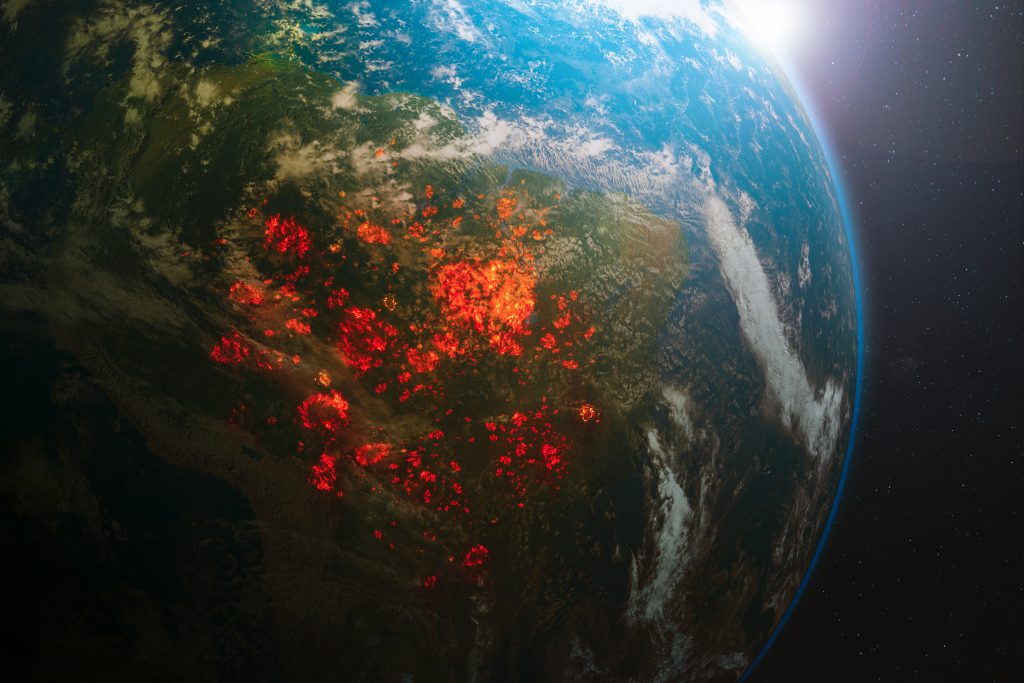

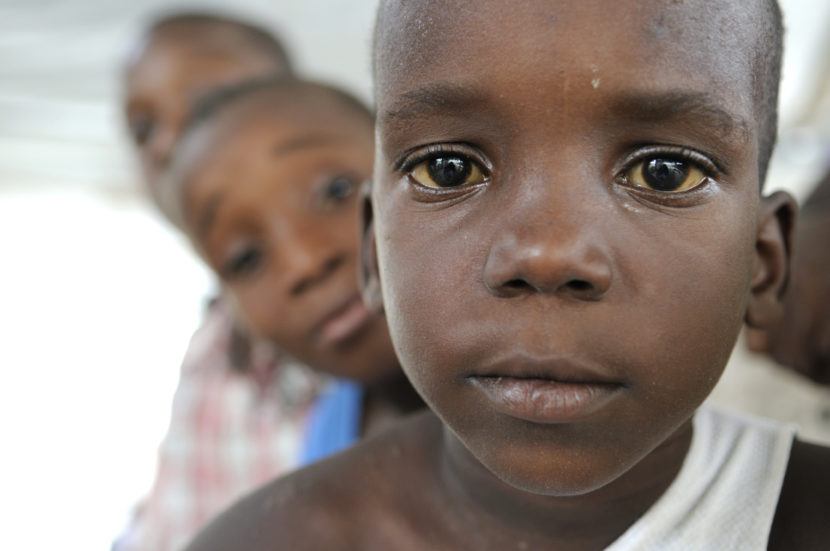
Haitian children are growing up amid relentless violence, displacement, and hunger. Since 2021, gang-related violence has escalated dramatically, reaching record levels in 2025. Entire neighbourhoods have fallen under gang control, forcing families to flee and leaving children without access to education, healthcare, or protection. As gangs tighten their control and public services collapse, children are increasingly vulnerable to exploitation, and neglect. Haiti is facing a crisis that demands urgent international attention and action.
Behind the humanitarian crisis in Haiti
In the aftermath of the assassination of President Jovenel Moïse in July 2021, Haiti has witnessed a precipitous escalation in violence perpetrated by armed gangs, resulting in the tragic loss of approximately 5,600 lives in the previous year (Amnesty International, 2025). Since 2024, the situation in the country has worsened into a severe humanitarian crisis. Attacks by the ‘Viv Ansanm’ gang coalition severely disrupted public services. This included electricity, water supply, sanitation, healthcare, education and transportation. Access to essential goods became severely limited.
Armed groups have taken control of 85 per cent of Port-au-Prince, making it the epicentre of extreme violence (Plan International, 2025; Aljazeera, 2025). Around 300 criminal groups are active in the country and the number of firearms in illegal circulation is estimated to be between 270,000 and 500,000. The majority of these firearms are controlled by gangs, despite the arms embargo and travel bans (Global Centre for the Responsibility to Protect, 2025; United Nations News, 2025).
At the same time, recurring environmental disasters have hit Haiti. Over the past 15 years, the country has been hit by a number of major natural disasters, including an earthquake in 2010, a hurricane in 2016, and another earthquake in 2021. These disasters destroyed infrastructure and further weakened already weakened institutions (UNICEF, 2025).
In 2025, more than 3.3 million children in Haiti will require humanitarian assistance (UNICEF, 2025). In the first three months of 2025 alone, at least 35 children were killed and ten others injured in a range of different incidents.
These included gang attacks, police operations against gangs, and so-called ‘mob justice’ actions carried out by vigilante groups and unorganised members of the population. In addition, around 316 kidnappings have also occurred, including of children, with the intention of demanding a ransom (United Nations Integrated Office in Haiti, 2025).
Enlistment of children and gang violence against children in Haiti
Over the past few months, gang violence has increased dramatically, causing terror among families and denying them access to basic necessities such as fresh food, water, healthcare and education. Gang activities further hampered local economic activities and the freedom of movement of the local population. The occurring violence has the harshest consequences on children (United Nations Security Council, 2024; United Nations Integrated Office in Haiti, 2025).
The ongoing hunger and extreme poverty experienced by many have driven hundreds, and potentially thousands, of children to join criminal groups. Within these groups, they are coerced into participating in illegal activities and face various forms of abuse, including girls who are subjected to labour and sexual exploitation. It is estimated that approximately half a million children live under the control of these groups. Up to half of these groups are now composed of children (UNICEF, 2024; Reuters, 2025; Human Rights Watch, 2025).
Children who refuse to join a gang are often threatened or abducted by gunmen, or their families are threatened. Some join under threat of violence against themselves or their families, while others do so in the hope of receiving money, food or protection. With many schools remaining closed, recruitment is surging, and children are becoming increasingly vulnerable.
Gang violence has left more than 1.4 million people homeless in recent years, including an estimated 680,000 children without homes. Makeshift shelters are inhabited by many of them, where they are preyed upon by gangs and face physical and sexual violence (IOM, 2025; United Nations News, 2025). The risk of sexual violence is particularly high for girls who are forced to join these criminal groups.
Sexual and gender-based violence
It has become a widespread practice for girls to be attacked on the street. The abduction of girls from their homes is perpetrated by group members with the aim of recruiting them. The girls are then taken to the homes of criminal leaders, where they are sexually assaulted, raped and forced to work. The sexual exploitation of girls by gang members is being committed in the context of “relationships” and exploitation (Human Rights Watch, 2024; Amnesty International, 2025).
Gender-based violence is rampant and particularly affects young girls, with more than 6,400 cases reported in 2024. Members of criminal groups allegedly commit most of such violence, which includes widespread sexual violence used as a weapon of war, leading to high rates of early and unwanted pregnancies.
The survivors are often unable to access protection and care services or only have very limited access. Alarmingly, perpetrators committed gender-based violence against 50 per cent of the people affected during displacement, while families were fleeing their homes because of the violence (United Nations News, 2024; Human Rights Watch, 2025; Plan International, 2025).
Mass displacement of Haiti’s children
Nearly 1.3 million Haitians have been forced to flee their homes as a result of the violence, with half of them estimated to be young people (Aljazeera, 2025; United Nations Integrated Office in Haiti, 2025). Smugglers increasingly use dangerous sea routes to transport Haitian nationals to countries such as the Dominican Republic, the Bahamas, Jamaica and the Turks and Caicos Islands. These nationals then try to reach the US and Canada.
Local infrastructure and services are also under significant strain. This is particularly the case in the provinces where there are many pressing needs. These include food insecurity, adequate shelter and access to healthcare and education. Most of the displaced population live in informal settlements with limited access to food, water, sanitation, shelter and medical care. Criminal groups or high-risk zones control 75 per cent of these sites, increasing their exposure to violence (Human Rights Watch, 2025).
In Haiti, children and adolescents who have been displaced are facing significantly elevated levels of violence, which includes sexual violence, exploitation and abuse. This increase in violence is particularly worrying, with reports of a surge of as much as 1,000 per cent in the past year (International Center for Transitional Justice, 2025).
Malnutrition and health crisis in Haiti
The health system in Haiti is on the verge of total collapse. Approximately 20 per cent of health facilities remain operational, with a mere 40 per cent functioning on a nationwide basis. The ongoing violence has led to over 40,000 health workers seeking refuge abroad. Two out of five Haitians are unable to access urgently needed medical care due to the system crumbling under violence and instability (Human Rights Watch, 2025).
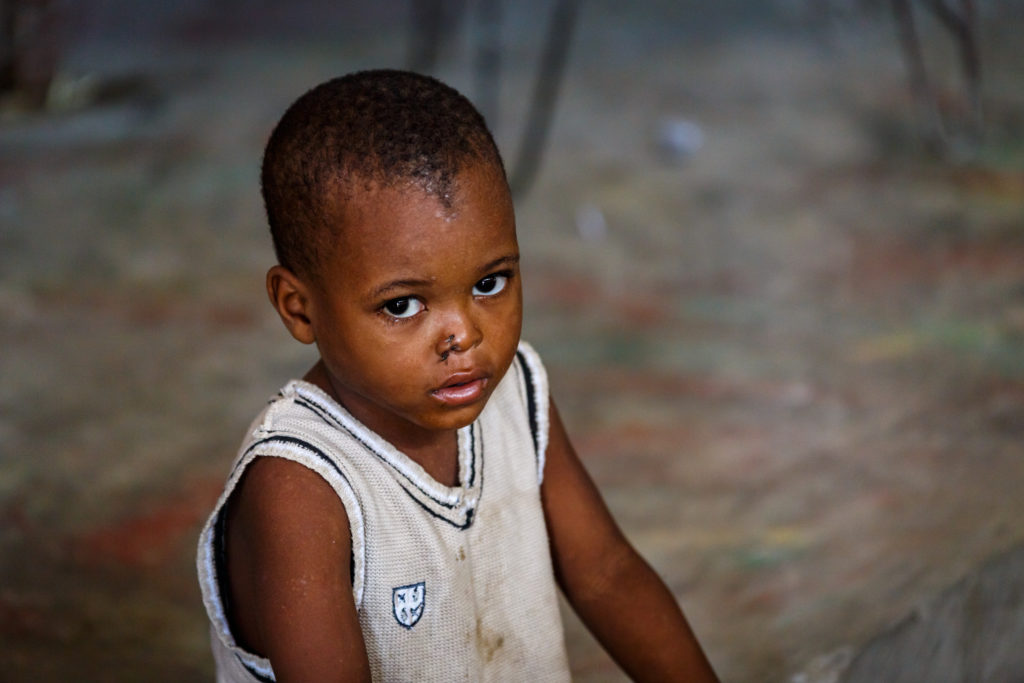
Infrastructure pertaining to water and sanitation has disintegrated in numerous displacement sites and areas under the control of armed groups. Moreover, in excess of one million children are deprived of regular access to potable water, thereby engendering an elevated risk of waterborne diseases.
In a country where over 60 per cent of the populace subsists on less than 4 dollars per day and hundreds of thousands of Haitians are undernourished or on the verge of starvation, enlisting children proves easy (Aljazeera, 2025). The number of children facing severe acute malnutrition is estimated to be around 125,000, while the number in need of humanitarian aid is close to 3 million, which is almost half of Haiti’s child population (Human Rights Watch, 2024). The number of children facing critical levels of food insecurity is now over one million. It is projected that approximately 288,544 children under five will suffer from acute malnutrition this year (UNICEF, 2025).
Barriers to learning for Haiti’s Children
The education system is disintegrating as teachers are compelled to depart due to the violence occurring, resulting in children being deprived of educational opportunities. Since January 2024, there have been more than 900 school closures.
The reasons for these closures include attacks on schools, fear of violence and the use of schools as shelters for displaced people. The result of these closures is that an estimated 160,000 children are no longer able to access education or school meals (Human Rights Watch, 2024; United Nations Security Council, 2024; Plan International, 2025).
Protecting Haiti’s children from violence and exploitation
In an increasingly violent environment, it is crucial to combat corruption and mass crimes, including sexual violence. It is also essential to set up reintegration programmes for children involved in criminal activities related to gang membership, particularly those imprisoned for such offences (OHCHR, 2025; United Nations Integrated Office in Haiti, 2025). To this day, the government lacks a comprehensive strategy to protect its children and needs more resources to ensure the protection of all children, including providing them with access to education, legal pathways out of gangs and access to justice.
Prevention and protection are essential in addressing the reasons behind children being forced to join and remaining in criminal groups. Haiti needs a comprehensive strategy for children associated with criminal groups. This strategy must be rooted in the Convention on the Rights of the Child in international human rights standards. These standards include those on juvenile justice and reintegration and should recognise children as victims.
More international support is urgently needed to enhance the capabilities of the Haitian National Police and the multinational security support mission so that they can prioritise child protection. Additional international funding is required to support education and child protection efforts, as well as to strengthen Haiti’s educational system. The Ministries of Education, Social Affairs, and Labour should urgently develop a long-term strategy to ensure that children associated with criminal groups and those in vulnerable communities have access to basic necessities and services, including education (Human Rights Watch, 2024; UNICEF 2025).
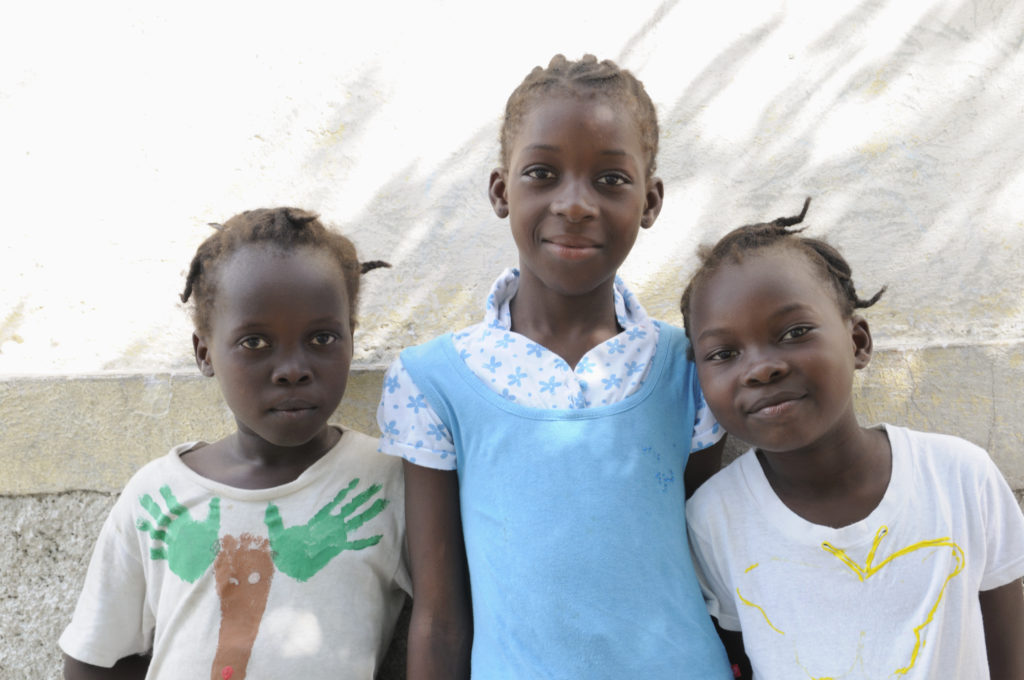
Humanium, as a child-rights organisation actively conducting numerous projects worldwide, remains committed to safeguarding children’s rights to protection, education, and health. If you want to contribute to Humanium’s specific causes to improve children’s lives, please consider making a donation, volunteering or becoming a member.
Written by Moïra Phuöng Van de Poël
Bibliography:
Aljazeera (2024, November 22). Haiti’s children ‘dragged into hell’ as gang violence rages. Retrieved from Aljazeera at https://www.aljazeera.com/news/2024/11/22/haitis-children-dragged-into-hell-as-gang-violence-rages, accessed on 8 November 2025.
Aljazeera (2025, August 28). United Nations says children make up 50 percent of gang members in Haiti. Retrieved from Aljazeera at https://www.aljazeera.com/news/2025/8/28/united-nations-says-children-make-up-50-percent-of-gang-members-in-haiti, accessed on 8 November 2025.
Aljazeera (2025, November 25). Gang recruitment of children in Haiti rises by 70 percent: UN. Retrieved from Aljazeera at https://www.aljazeera.com/news/2024/11/25/gang-recruitment-of-haitian-children-soars-by-70-percent-un, accessed on 8 November 2025.
Amnesty International (2025, February 12). Haiti: Children suffering gang recruitment, attacks and sexual violence amid escalating crisis – new report. Retrieved from Amnesty International at https://www.amnesty.org/en/latest/news/2025/02/haiti-children-suffering-gang-recruitment-attacks-sexual-violence/, accessed on 8 November 2025.
Global Centre for the Responsibility to Protect (2025, July 15). Haiti – Populations at risk. Retrieved from Global Centre for the Responsibility to Protect at https://www.globalr2p.org/countries/haiti/, accessed on 8 November 2025.
Human Rights Watch (2024, October 9). Haiti: Criminal Violence, Hunger Trapping Children Transitional Government Should Prioritize Their Protection, Reintegration. Retrieved from Human Rights Watch at https://www.hrw.org/news/2024/10/09/haiti-criminal-violence-hunger-trapping-children, accessed on 8 November 2025.
Human Rights Watch (2025, January). Haiti – Events of 2024. Retrieved from Human Rights Watch at https://www.hrw.org/world-report/2025/country-chapters/haiti, accessed on 8 November 2025.
IOM (2024, October 2). Over 700,000 Displaced in Haiti, Half are Children as Humanitarian Crisis Worsens. Retrieved from IOM at https://www.iom.int/news/over-700000-displaced-haiti-half-are-children-humanitarian-crisis-worsens, accessed on 8 November 2025.
IOM (2025, October 15). Displacement in Haiti Reaches Record High as 1.4 million People Flee Violence. Retrieved from IOM at https://www.iom.int/news/displacement-haiti-reaches-record-high-14-million-people-flee-violence, accessed on 8 November 2025.
International Center for Transitional Justice (2025, January 17). Almost One in Eight Children Internally Displaced in Haiti as Armed Violence Continues. Retrieved from International Center for Transitional Justice at https://www.ictj.org/latest-news/almost-one-eight-children-internally-displaced-haiti-armed-violence-continues, accessed on 8 November 2025.
OHCHR (2025, July 11). Spreading gang violence poses major risk to Haiti and Caribbean sub-region. Retrieved from OHCHR at https://www.ohchr.org/en/press-releases/2025/07/spreading-gang-violence-poses-major-risk-haiti-and-caribbean-sub-region, accessed on 8 November 2025.
Plan International (2025, March 20). Children in Haiti in danger and out of school because of armed violence. Retrieved from Plan International at https://plan-international.org/news/2025/03/20/children-in-haiti-in-danger-and-out-of-school-because-of-armed-violence/, accessed on 8 November 2025.
Reuters (2025, October 14). UN warns of more Haitian children in crossfire as gang recruitment grows. Retrieved from Reuters at https://www.reuters.com/world/americas/un-warns-more-haitian-children-crossfire-gang-recruitment-grows-2025-10-14/, accessed on 8 November 2025.
UNICEF (2024, May 31). Violence drives Haiti’s children into armed groups; up to half of all members are now children. Retrieved from UNICEF at https://www.unicef.org/press-releases/violence-drives-haitis-children-armed-groups-half-all-members-are-now-children, accessed on 8 November 2025.
UNICEF (2025, October). Child alert: Haiti’s children confront a polycrisis. Retrieved from UNICEF at https://www.unicef.org/child-alert/haitis-children-confront-polycrisis, accessed on 8 November 2025.
UNICEF (2025, October 8). Number of displaced children in Haiti almost doubles in one year. Retrieved from UNICEF at https://www.unicef.org/press-releases/number-displaced-children-haiti-almost-doubles-one-year, accessed on 8 November 2025.
United Nations Integrated Office in Haiti (2025, March). Quarterly Report on the Human Rights Situation in Haiti. Retrieved from United Nations Integrated Office in Haiti at https://binuh.unmissions.org/sites/default/files/quarterly_report_on_the_human_rights_situation_in_haiti_jan_-_march_2025.pdf, accessed on 8 November 2025.
United Nations News (2024, November 24). Haiti: Child recruitment by armed groups surges 70 per cent. Retrieved from United Nations News at https://news.un.org/en/story/2024/11/1157401, accessed on 8 November 2025.
United Nations News (2025, October 8). Haiti: ‘Unprecedented’ number of children on the run. Retrieved from United Nations News at https://news.un.org/en/story/2025/, accessed on 8 November 2025.
United Nations News (2025, October 17). Haiti is under a UN arms embargo: So why are 500,000 illegal weapons in circulation. Retrieved from United Nations News at https://news.un.org/en/story/2025/10/1166121, accessed on 8 November 2025.
United Nations Security Council (2024, April 16). United Nations Integrated Office in Haiti – Report of the Secretary-General. Retrieved from United Nations Security Council at https://www.securitycouncilreport.org/atf/cf/%7B65BFCF9B-6D27-4E9C-8CD3-CF6E4FF96FF9%7D/N2409157.pdf, accessed on 8 November 2025.
United Nations Security Council (2024, September 30). Letter dated 30 September 2024 from the Panel of Experts established pursuant to Security Council resolution 2653 (2022) addressed to the President of the Security Council. Retrieved from United Nations Security Council at https://binuh.unmissions.org/sites/default/files/s-2024-704_panel_of_experts_report.pdf, accessed on 8 November 2025.
United Nations Security Council (2025, January 22). UN Security Council Briefing on the Situation in Haiti. Retrieved from United Nations Security Council at https://www.unodc.org/unodc/en/speeches/2025/220125-un-security-council-briefing-haiti.html, accessed on 8 November 2025.