

Realizing Children’s Rights in Germany

Germany ratified the Convention on the Rights of the Child (CRC) in 1992 and has since adjusted its child protection framework in line with the treaty. However, challenges that continue to hinder the full realisation of children’s rights are still noticeable, namely in relation to child poverty, child sexual abuse, discrimination against minority children and juvenile justice.
Population: 83,6 million
Population aged 0–14: 5.9%
Life expectancy: 80.5 years
Under-5 mortality rate: 3.4 ‰
Germany at a glance
The Federal Republic of Germany is located in north-central Europe. The German constitution, adopted in 1949, created a federal system that grants significant governmental powers to its sixteen constituent states (Länder), for instance, related to culture and education. Germany is bordered by Denmark, the Netherlands, Belgium, Luxembourg, France, Switzerland, Austria, the Czech Republic, and Poland (Britannica, 2025).
Germany has the largest population among European Union (EU) countries, accounting for roughly 19% of the total EU population, with approximately 83.6 million people. Germany’s population is significantly larger than that of the next most populous EU countries, France and Italy. Together, the three account for nearly half of the EU’s total population (47%) (EUROSTAT, 2025). Around 78% of the population lives in urban areas, with around 22% residing in rural communities (SOS Children’s Villages, n.d.).
Germany was unified in 1871 when Prussian Prime Minister Otto von Bismarck united numerous German-speaking states into the German Empire, which quickly became a major European power with overseas colonies in Africa, Asia, and the Pacific. After its defeat in World War I, the empire collapsed, giving way to the unstable Weimar Republic. Economic crisis and political unrest led to the rise of Adolf Hitler and the Nazi regime, which established the Third Reich and pursued a brutal campaign of expansion and genocide.
Following Germany’s defeat in World War II in 1945, the Allies divided the country into four zones, eventually forming two states: the Federal Republic of Germany (West Germany) and the German Democratic Republic (East Germany). This division lasted over 40 years, symbolised by the Berlin Wall, until its fall in 1989. The country was reunified in 1990, with Berlin restored as its capital (Britannica, 2025).
In recent years, Germany has faced challenges integrating large numbers of refugees (more than one million migrants), especially after the Arab Spring and Syrian Civil War. This has fuelled ethnic tensions and strengthened nationalist parties, particularly in eastern regions where unemployment was double that of the west (Britannica, 2025). The former East Germany has narrowed the gap with the former West Germany substantially in recent decades. In the early 2000s, the unemployment rate was about 10% higher in the former East than in the former West – nearly five times the gap in 2018 (Gramlich, 2019).
Germany has been a member of the North Atlantic Treaty Organisation (NATO) since 1955 and was a founding member of the European Economic Community (now the European Union). West Germany’s rapid economic recovery in the 1950s (Wirtschaftswunder, or “economic miracle”) brought it into a leading position among the world’s economic powers, a position that it has maintained (Britannica, 2025).
Status of children’s rights [1]
Germany ratified the Convention on the Rights of the Child (CRC) on 6 March 1992. The ratification was initially accompanied by reservations that subordinated CRC’s principles to the law on foreigners and parental/family law (ProNATs, 2020). These reservations were mainly supported by the lack of willingness of the majority of the Länder to accept their withdrawal.
In 2004, the Committee on the Rights of the Child recommended that Germany expedite the process for the withdrawal of the reservations and increase its efforts to convince the Länder of the need to withdraw them (CRC, Concluding Observations, 2004). On 15 July 2010, Germany withdrew the reservation that it had lodged at the time of ratification. The CRC thus unrestrictedly applies in Germany with the rank of a federal law (CRC, Concluding Observations, 2019).
Since Germany ratified the CRC, the inclusion of specific children’s rights in Germany’s constitution, the Basic Law, has been discussed. In January 2021, the German Cabinet adopted a bill to explicitly include children’s rights in the Basic Law by extending Article 6. This aims to make children’s rights more visible and ensure their best interests are always considered. However, this initiative is still ongoing (The Federal Government, 2021). However, as of 2025, no amendment has been passed yet, and no concrete progress has been made in this regard.
Germany ratified the Optional Protocol to the Convention on the Rights of the Child on the Involvement of Children in Armed Conflict (OPAC) in 2004, the Optional Protocol to the Convention on the Rights of the Child on the Sale of Children, Child Prostitution and Child Pornography (OPSC) in 2009 and the Optional Protocol to the Convention on the Rights of the Child on a Communications Procedure (OPIC) in 2013 (UN Treaty Collection, n.d.).
In 2015, the German Institute for Human Rights was entrusted with promoting, supporting and monitoring the implementation of the Convention on the Rights of the Child in Germany and established the National CRC Monitoring Mechanism for this purpose. The Monitoring Mechanism contributes to raising awareness of children’s rights, advising on CRC interpretation to policymakers at the federal, Länder and local level, as well as the courts, the legal profession and civil society, and reporting to the Committee on the Rights of the Child about the implementation of children’s rights in Germany (National CRC Monitoring Mechanism, n.d.).
Addressing the needs of children in Germany
Right to education
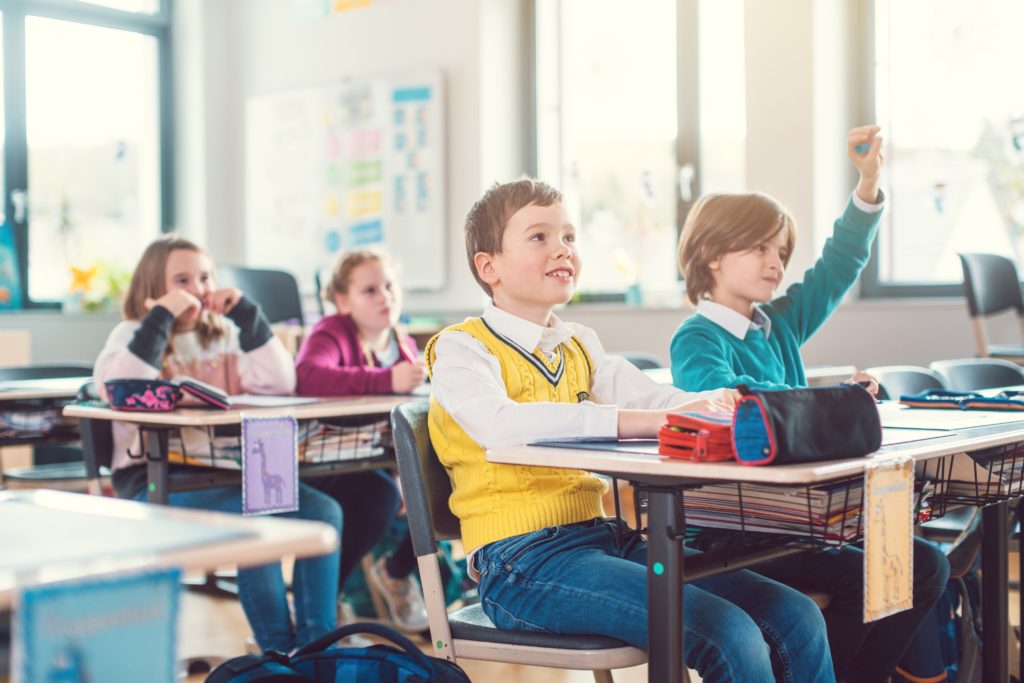
In Germany, the responsibility for the education system is divided between the Federation and the Länder. The Basic Law defines the Federal Government’s responsibilities in the field of education. Unless the Basic Law awards legislative powers to the Federation, the Länder have the right to legislate on the school sector, the higher education sector, adult education and continuing education. Administration of the education system in these areas is almost exclusively a matter for the Länder (Eurydice, 2025).
Early childhood education is provided for children until the age of six, at which time they usually start school. Children of school age who have not yet attained a sufficient level of development to attend a school have a further option in some Länder, namely Schulkindergärten and Vorklassen. These institutions are either assigned to the early childhood or the primary sector according to the particular Land (Eurydice, 2025).
As a rule, general compulsory schooling begins for all children in Germany in the year in which they reach the age of six and involves nine years of full-time schooling. All pupils in Germany enter the Grundschule, which in almost all Länder covers grades one to four (in Berlin and Brandenburg, grades one to six) (Eurydice, 2025).
Following the primary school stage, after grade four (in Berlin and Brandenburg after grade 6), an early division into the educational pathways leading to different qualifications (Erster Schulabschluss, Mittlerer Schulabschluss, Allgemeine Hochschulreife) takes place. Vocational education and training takes place in the duales System (dual system). Training is carried out in two places of learning: at the workplace and in a Berufsschule (vocational school) (Eurydice, 2025).
Young people who do not attend a full-time general education school or vocational school at the upper secondary level once they have completed their period of compulsory general schooling must still attend part-time schooling (compulsory Berufsschule attendance – Berufsschulpflicht), which usually lasts three years (Eurydice, 2025).
Right to health
Healthcare for children in Germany is free, provided they are co-insured under their parents’ or guardians’ health insurance. Germany has two forms of health insurance: statutory (Gesetzliche Krankenversicherung, GKV) and private (Private Krankenversicherung, PKV) health insurance. Statutory insurance membership is compulsory for all employees whose annual income is below the compulsory insurance threshold (Versicherungspflichtgrenze). Approximately 90% of the population are members of statutory health insurance funds (GKV) (Health for all, 2018).
Children are covered only up to a certain age, depending on their education status. Children with disabilities are covered without an age limit if they are unable to earn a living because of their disability (Health for all, 2018).
After the birth of a child, parents receive a medical examination record for their child, which details when certain health checks are due. In general, this routine schedule consists of ten health checks, called U1 to U9, including U7a. The “U” is short for “Untersuchung” (“examination”). The examinations are covered by statutory health insurance. The first health check (U1) takes place immediately after birth. The U2 health check takes place between the 3rd and 10th day of life, at the hospital or at a paediatrician’s practice. Health checks U3 to U9 are carried out at a paediatrician’s practice during the period up to the 64th month of life. The adolescent health check J1 also takes place there between ages 12 and 14 (Health for all, 2018).
Right to protection
Child protection is overseen by public authorities. Local institutions must establish a Youth Welfare Office (Jugendamt), while the supra-local institution establish a regional or State Youth Welfare Office (Landesjugendamt). Each Länder has to set up this State Youth Welfare Office (Landesjugendamt) (Nunes, n.d.).
Youth Welfare Office (Jugendamt) is responsible for all families residing in Germany, regardless of their nationality or residence status, and it is specifically tasked with the support and the protection of children, adolescents and families.
The State Youth Welfare Office (Landesjugendamt) acts as the oversight and advisory authority for child and youth services organisations (e.g. youth work, residential care), arranges training programmes for people working in child and youth services, sets up state-based funding initiatives, draws up professional standards and thus has a general influence on the structure of child and youth services (Youth Wiki, Youth policy decision-making, 2025).
The German Federal Child Protection Act (Bundeskinderschutzgesetz) contains provisions for the use of Early Childhood Intervention (Frühe Hilfen) through Early Childhood Intervention networks and services. These interventions encompass “Pilotage services” (Lotsendienste) and home visiting services by health professionals, and they are aimed at supporting families with a child aged 0-3 years, providing additional support for those in difficult circumstances (Federal Ministry for Education, Family Affairs, Senior Citizens, Women and Youth, 2025).
Since January 2018, as part of this Act, the Federal Foundation for Early Childhood Intervention (Bundesstiftung Frühe Hilfen) has been in place. The foundation has the objective of supporting families to contribute to the healthy upbringing of their children and to protect them from violence. With the establishment of the Federal Foundation for Early Childhood Intervention, federal funding for early childhood intervention became mandatory. The Federal Government has committed around 51 million euros a year to bolster funding provided by the federal states and municipalities (Federal Ministry for Education, Family Affairs, Senior Citizens, Women and Youth, 2025).
Germany’s Youth Protection Act (Jugendschutzgesetz) is, on the one hand, designed to protect children and young people in the public sphere. It regulates the sale and consumption of tobacco, electronic cigarettes, electronic shishas and alcohol, and the entry to nightclubs and bars. The Youth Protection Act targets retailers, the hospitality and catering sector and the organisers of public events, placing them under an obligation to protect children and young people from potential risk. At the same time, it provides parents with valuable guidance on bringing up and protecting their children (Federal Ministry for Education, Family Affairs, Senior Citizens, Women and Youth, 2025).
In addition, the Youth Protection Act requires film and gaming platforms to label their content with age ratings. The Federal Agency for Child and Youth Protection in the Media oversees the platform providers’ measures. These are required under the Digital Services Act to ensure that their service is safe when used by minors. This includes effective prevention measures such as reporting systems or independent advice and support services. Moreover, age verification is a key component for child safety on online platforms (Federal Ministry for Education, Family Affairs, Senior Citizens, Women and Youth, 2025).
Right to freedom
The ultimate right to participate in a democracy is expressed by voting rights. People in Germany have been allowed to vote at the age of 18 since 1972 – prior to which the age to vote was kept at 21. Lowering the active voting age to 16 for elections to the European Parliament and the German Bundestag is one of the central pledges of the Federal Government in the 20th legislative period (Youth Wiki, Youth participation, 2023).
By contrast, citizens can vote on topical issues at the state (Länder) level in all 16 federal states. State laws govern the voting processes, and these laws are different in each state. The voting age for participation in popular initiatives (Volksinitiativen; known as Volksanträge in Saxony) and referenda is different in each state. For example, in Brandenburg and Berlin, the minimum voting age is sixteen, while in Bavaria and North Rhine-Westphalia, the minimum age is eighteen (Youth Wiki, Youth participation, 2023).
In terms of youth participation, Germany has no government-run youth parliament or similar structure on a national level. At the federal level, there are various participation formats such as federal youth conferences (Bundesjugendkonferenzen) or YouthPoliticsDays (JugendPolitikTage) (alternating annually) (Youth Wiki, Youth representation, 2023).
Children’s and youth advisory boards exist at all levels, helping policymakers by providing input on sustainability, representing youth perspectives and suggestting ways to strengthen support for the interests of young people. Each advisory board/council has its own way of electing delegates and working (Youth Wiki, Youth representation, 2023). Here are two examples:
- Federal level: The Youth Advisory Board of the Federal Ministry for Economic Cooperation and Development (Bundesministerium für wirtschaftliche Zusammenarbeit und Entwicklung, BMZ) lobbies to make German development policy more child and youth friendly. The board takes part in a range of events. It also suggests ways to increase the participation of children and young people in development policy and writes policy papers on making this happen. Its members meet several times a year. The youth advisory board also plans meet-ups with children and young people from partner countries (Youth Wiki, Youth representation, 2023).
- Regional (Länder) level: The Child and Youth Board of North Rhine-Westphalia represents children and young people in matters that affect them by participating in decisions on state policy. It is made up of delegates from all child and youth committees in North Rhine-Westphalia. At the start of the local legislative period, each of these committees elects two delegates and two deputies to the council. The delegates elect from amongst themselves five spokespersons of the child and youth board. These spokespersons head the council meetings and represent the council in public. The team of spokespersons is elected for a legislative period of two years (Youth Wiki, Youth representation, 2023).
Risk factors –> Country-specific challenges
Child poverty
Although Germany has the world’s third-largest economy after the United States and China and just ahead of Japan, 22,9% of children are at risk of poverty or social exclusion (AROPE), placing the country in the bottom third in Europe (Eurostat, 2024). They account for one in five children, which represents 2,9 million children and young people under the age of eighteen (Hoffmann, 2024). In Berlin, one in four children grows up in poverty. Those who live in the city’s eastern district of Marzahn-Hellersdorf tend to face many obstacles in life, such as illness, limited access to nutritious food and leisure activities, including sport, making it especially difficult to break the cycle of poverty (DW, 2025).
One of the key challenges lies in the limited financial coping among households. With 31.9% of the population unable to meet unexpected financial expenses, the country ranks 19th, suggesting that nearly one in three individuals lacks the economic buffer needed to manage extra costs. Households struggle to afford expenses that are non-essential but a part of social norms in a given country: 20,5% report being unable to afford a one-week annual holiday, and 15,1% are unable to replace worn-out furniture, placing the country 11th and 12th, respectively, on these indicators (UNICEF, 2025).
Forms of social deprivation are also emerging as concerning areas: 12,4% of individuals cannot regularly engage in leisure activities (ranking 21st), and 8,9% are unable to afford monthly social gatherings (ranking 22nd out of 29 countries). The country shows poor performance in access to a protein-rich meal at least every other day (23rd in the ranking). In 2024, around 11% of the population could not eat a balanced meal consisting of meat, fish, or a vegetarian equivalent on alternate days (UNICEF, 2025).
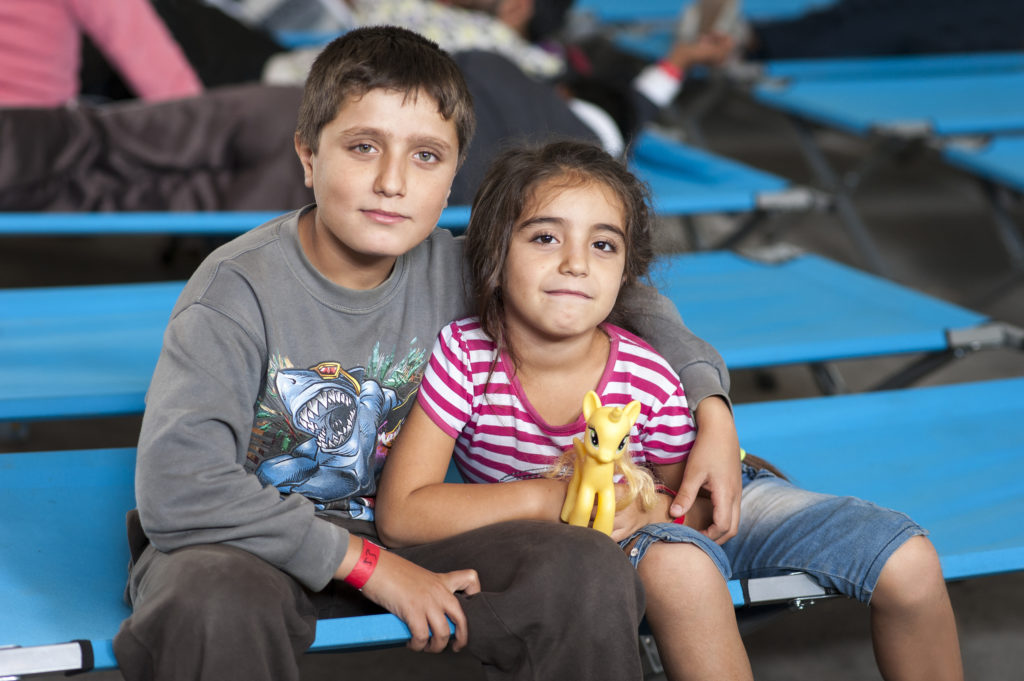
The children most at risk of poverty in Germany are children with a migrant background, particularly refugee children, children from single-parent households and children from families with more than two children (Eurochild, 2022). The so-called Child protection program (“Kindergrundsicherung”) was a hotly debated topic in the former German government, which should provide for a reform of social transfers. The question of the extent to which monetary transfers for low-income families could eliminate child poverty then was and still is controversial.
The 2023 parts of that former government were in favor of long-term child poverty solutions and considered the integration of young parents into gainful employment to be the most important basis for this. However, the draft law on basic child support then adopted by the former federal government in September 2023 did not contain any statements on measures that would help to encourage young parents who are able to work to participate in catch-up education and gainful employment (Hoffmann, 2024). In conclusion, this draft can now be considered as a failure, since there were early elections for the German parliament (Bundestag) and therefore a change of government.
Child abuse
In 2022, the police crime statistics recorded 15.520 cases of child sexual abuse and 42.075 cases of distributing, acquiring, possessing and producing “child pornography”. However, the number of unreported cases is many times higher. The World Health Organisation (WHO) assumes that up to one million children and adolescents in Germany have already experienced or are experiencing sexual violence inflicted by adults. This is around one to two children in every school class (Independent Federal Commissioner Against Child Sexual Abuse, n.d.).
The figures listed in the crime statistics have been rising steadily for several years. This could be the result of an increased willingness to report. The number of abuse images posted on the internet has doubled between the year 2020 (21.868 cases) and the year 2022 (48.821 cases). As only a small proportion of the offences are reported or documented in the care systems, many offences are not statistically recorded and therefore remain hidden (Independent Federal Commissioner Against Child Sexual Abuse, n.d.).
The competent Ministry has worked closely with the Independent Federal Commissioner against Sexual Abuse of Children and Adolescents (Unabhängige Bundesbeauftragte gegen sexuellen Missbrauch von Kindern und Jugendlichen) to develop policies and programmes to prevent sexual violence and to protect children and young people. These also address people in the immediate environment of children, especially parents and teachers, who are to be involved, sensitised and trained to act as part of a robust and reliable network (Federal Ministry for Education, Family Affairs, Senior Citizens, Women and Youth, 2025).
In 2025, the Act to Strengthen the Structures against Sexual Violence against Children and Adolescents (Gesetz zur Stärkung der Strukturen gegen sexuelle Gewalt an Kindern und Jugendliche) came into effect. The Act institutionalises the office of the Independent Federal Commissioner against Sexual Abuse of Children and Adolescents and establishes a reporting obligation for the Independent Federal Commissioner on the extent of sexual violence against children and adolescents (Federal Ministry for Education, Family Affairs, Senior Citizens, Women and Youth, 2025).
Child trafficking
Germany’s Federal Criminal Police Office reported a total of 576 investigations into incidents of human trafficking in 2024, a 13% jump from 2023 and the highest level since the Federal Criminal Police Office (BKA) began compiling such data in 2000. The largest share of cases (364) involved sexual exploitation, the highest level recorded by Germany’s Federal Criminal Police Office (BKA) in a decade (Shelton, 2025).
Such exploitation is increasingly taking place in private homes, a setting that is difficult to monitor. This leads the Federal Criminal Police Office (BKA) to conclude that the actual number of crimes taking place is far greater than they have the capacity to know. Victims and suspects often come from other European countries, with notable increases among Chinese and Colombian victims (Shelton, 2025).
Minors are particularly at risk, with more than 200 cases involving children and adolescents, almost all in the context of commercial sexual exploitation. The contact is often established online using the so-called “lover-boy method“, which consists of traffickers who use false promises of love as a weapon to lure and manipulate their victims. Once they have victims under their influence, they exploit them, for instance, in the sex industry or for other illegal activities. They are often kept in this situation through coercive control, including through a combination of affection, violence and/or other threats against them and their families (IOM, 2024).
Discrimination
Inequality in the educational system continues to persist in Germany. Studies have shown for decades that students from a higher socioeconomic background outperform their lower socioeconomic peers with identical cognitive ability, and they are also more likely to be recommended for the highest educational tracks in Germany and to enter universities. Immigrant students and students from lower-income households are also less likely to advance in their education, as education in rural areas of Germany lags behind that in cities.
Evidence shows that children from Turkish, Kurdish, or Arabic backgrounds, known in Germany as “migrant” children, even if they are second or third generation immigrants, are disproportionately represented in the lowest level Hauptschule. They attend Hauptschule twice as often as those from similar socioeconomic backgrounds. Despite some progress, migrant children remain underrepresented in the highest-level Gymnasiums (Selekisho, n.d.).
Several elementary and secondary schools in Berlin isolate migrant children from native-born German students by placing them in separate classes. The reason expressed is that their German language abilities are insufficient for regular classes. In fact, even though they speak German as a second language, their language skills are generally sufficient for regular classes, but they function as a proxy for discrimination based on ethnicity or other questionable characteristics. The education provided in these segregated classrooms is far inferior to that provided in regular schools. Discriminatory practices stigmatise migrant students, impede their ability to properly integrate and contribute to the German society (Selekisho, n.d.).
Roma and Sinti children continue to face discrimination and experience hostility from teachers and other children at school. The 2024 report “Antiziganism in the educational sector using schools and daycare centres as an example” collected several experiences of discrimination against Roma children in school. In one case, some elementary school students bullied their Sinto classmate to the point where he was too afraid to go to school. Teachers then threatened his parents with reporting their children’s frequent absence to the youth welfare office, that institution which could have the child removed from his family (Pieper, 2025).
In another case, a daycare centre deemed that a five-year-old, trilingual Sinto child had a developmental delay. It wanted to send him to a special needs kindergarten, even though a paediatrician could not detect any developmental issues. There are several cases in which schools refused admission to Sinti and Roma children or wanted to move them to special schools because they believed Sinti and Roma families in general cause problems (Pieper, 2025).
Juvenile justice
Germany’s crime data show that there has been an increase in crime among children and young people. According to statistics released by the Federal Criminal Police Office (BKA), a total of 5,6 million crimes were registered in Germany in 2022, up by 11,5% from 2021. The figures also show an overall increase in crime of 3,5% when compared to 2019, the last year without COVID-19 restrictions (Whittle, 2023).
The number of child suspects under the age of fourteen has risen to 93.095, a 35,5% increase from the previous year. Around 189.149 suspects were between the ages of fourteen and eighteen. In 2019, this figure was 177.082. The most frequent crime committed by children and young people is theft, followed by assault, damage to property and drug-related crimes (Whittle, 2023).
Over the years, several innovative strategies have been developed and tested in Germany in connection with preventing crime among children and young people. For instance, the Centre for the Prevention of the Youth Crime (Arbeitsstelle Kinder- und Jugendkriminalitätsprävention) was set up in 1997 to promote both innovative and tested approaches in preventive work, to establish standards of quality in youth crime prevention and to encourage cooperation among institutions and individuals engaged in this field (Federal Ministry for Education, Family Affairs, Senior Citizens, Women and Youth, 2025).
Written by Arianna Braga
Internally proofread by Aditi Partha
Last updated on 19 January 2026
References:
Britannica (2025). Country page on Germany. Retrieved from Britannica at https://www.britannica.com/place/Germany, accessed on 23 August 2025.
Children and Youth (2025). Children and Youth. Retrieved from the Federal Ministry for Education, Family Affairs, Senior Citizens, Women and Youth at https://www.bmbfsfj.bund.de/bmbfsfj/meta/en/youth, accessed on 1 September 2025.
CRC, Concluding Observations (2004). Concluding Observations: Germany. Retrieved from Refworld at https://www.refworld.org/policy/polrec/crc/2004/en/16084, accessed on 27 August 2025.
CRC, Concluding Observations (2019). Concluding Observations: Germany. Retrieved from United Nations at https://docs.un.org/en/CRC/C/DEU/5-6, accessed on 27 August 2025.
DW (2025). Germany: Condemned to life in poverty? Retrieved from Deutsche Welle (DW) at https://www.dw.com/en/germany-berlin-child-poverty-poor-upward-mobility/video-72847686, accessed on 6 September 2025.
Eurochild (2022). Country profile 2022 – Germany. Retrieved from Eurochild at https://eurochild.org/uploads/2023/01/Germany_Invisible-children-Eurochild-2022-report-on-children-in-need-across-Europe.pdf, accessed on 6 September 2025.
Eurostat (2024). Children (aged less than 18) at risk of poverty or social exclusion – EU2030 target. Retrieved from Eurostat at https://ec.europa.eu/eurostat/databrowser/view/tepsr_lm412/default/table?lang=en, accessed on 6 September 2025.
EUROSTAT (2025). Population and population change statistics – Statistics Explained. Retrieved from the European Commission at https://ec.europa.eu/eurostat/statistics-explained/SEPDF/cache/1787.pdf, accessed on 23 August 2025.
Eurydice (2025). Country page on Germany. Retrieved from Eurydice at https://eurydice.eacea.ec.europa.eu/eurypedia/germany/overview, accessed on 1 September 2025.
Federal Ministry for Education, Family Affairs, Senior Citizens, Women and Youth (2025). Children and Youth. Retrieved from Federal Ministry for Education, Family Affairs, Senior Citizens, Women and Youth at https://www.bmbfsfj.bund.de/bmbfsfj/meta/en/youth, accessed on 6 September 2025.
Gramlich, J. (2019). East Germany has narrowed economic gap with West Germany since fall of communism, but still lags. Retrieved from Pew Research Center at https://www.pewresearch.org/short-reads/2019/11/06/east-germany-has-narrowed-economic-gap-with-west-germany-since-fall-of-communism-but-still-lags/, accessed on 22 September 2025.
Health for all (2018). Health for all. A guide to the German health care system. Retrieved from Federal Ministry of Health at https://www.hzdr.de/db/Cms?pOid=58827, accessed on 1 September 2025.
Hoffmann, E. (2024). Child poverty: causes, effects, ways out. Retrieved from Konrad Adenauer Stiftung at https://www.kas.de/en/single-title/-/content/child-poverty-causes-effects-ways-out, accessed on 6 September 2025.
Independent Federal Commissioner Against Child Sexual Abuse (n.d.). Figures on Child Sexual Abuse in Germany. Retrieved from Independent Federal Commissioner Against Child Sexual Abuse at https://beauftragte-missbrauch.de/en/themen/definition/figures-on-child-sexual-abuse-in-germany, accessed on 6 September 2025.
IOM (2024). Understanding the ‘lover boy’ technique of human trafficking. Retrieved from IOM at https://romania.iom.int/news/understanding-lover-boy-technique-human-trafficking, accessed on 6 September 2025.
National CRC Monitoring Mechanism (n.d.). About the National CRC Monitoring Mechanism. Retrieved from the German Institute for Human Rights at https://www.institut-fuer-menschenrechte.de/en/institute/departments/national-crc-monitoring-mechanism/about-the-national-crc-monitoring-mechanism, accessed on 27 August 2025.
Nunes et al. (n.d.). P4P Country Information on Child Protection Systems. Retrieved from Queen’s University of Belfast at https://www.qub.ac.uk/sites/participation-for-protection/FileStore/Filetoupload,886285,en.pdf, accessed on 1 September 2025.
Pieper, O. (2025). Germany: Sinti and Roma children suffer discrimination. Retrieved from Deutsche Welle at https://www.dw.com/en/germany-sinti-and-roma-children-suffer-discrimination/a-72114110, accessed on 6 September 2025.
ProNATs (2020). Children’s rights in Germany. Retrieved from ProNATs at https://pronats.org/en/information/childhood-and-work/childrens-rights-in-germany, accessed on 26 August 2025.
Selekisho, L. (n.d.). Challenges in the German educational system. Retrieved from Broken Chalk at https://brokenchalk.org/challenges-in-the-german-educational-system/, accessed on 6 September 2025.
Shelton, J. (2025). Germany: Police raise alarm over spike in child trafficking. Retrieved from Deutsche Welle (DW) at https://www.dw.com/en/germany-police-raise-alarm-over-spike-in-child-trafficking/a-73800323, accessed on 6 September 2025.
SOS Children’s Villages (n.d.). Country page on Germany. Retrieved from SOS Children’s Villages at https://www.sos-childrensvillages.org/where-we-help/europe/germany, accessed on 23 August 2025.
The Federal Government (2021). Children’s rights to be enshrined in the German Basic Law. Retrieved from The Federal Government at https://www.bundesregierung.de/breg-en/service/archive/rights-of-child-in-basic-law-1841338, accessed on 1 September 2025.
UN Treaty Collection (n.d.). Status of Treaties. Retrieved from United Nations Treaty Collection at https://treaties.un.org/Pages/ViewDetails.aspx?src=TREATY&mtdsg_no=IV-11-d&chapter=4&clang=_en, accessed on 26 August 2025.
UNICEF (2025). Child poverty in Germany and the EU: a comparison of monetary and non-monetary indicators. Retrieved from UNICEF at https://headless-live.unicef.de/caas/v1/media/377438/data/a04d223522925067b17c326d27d68f73, accessed on 6 September 2025.
Whittle, H. (2023). Germany sees rise in crime among children. Retrieved from Deutsche Welle (DW) at https://www.dw.com/en/germany-debates-lowering-age-of-criminal-responsibility/a-65180780, accessed on 6 September 2025.
Youth Wiki, Youth participation (2023). 5.2 Youth participation in representative democracy. Retrieved from the European Commission at https://national-policies.eacea.ec.europa.eu/youthwiki/chapters/germany/52-youth-participation-in-representative-democracy, accessed on 1 September 2025.
Youth Wiki, Youth policy decision-making (2025). 1.4 Youth policy decision-making. Retrieved from the European Commission at https://national-policies.eacea.ec.europa.eu/youthwiki/chapters/germany/14-youth-policy-decision-making, accessed on 22 September 2025.
Youth Wiki, Youth representation (2023). 5.3 Youth representation bodies. Retrieved from the European Commission at https://national-policies.eacea.ec.europa.eu/youthwiki/chapters/germany/53-youth-representation-bodies, accessed on 1 September 2025.
[1] This article by no means purports to give a full or representative account of children’s rights in Germany; indeed, one of many challenges is the scant updated information on the children of Germany, much of which is unreliable, not representative, outdated or simply non-existent.